

Top News
Israeli Fears of Trump's Declaration to End the War: Communications Between Tehran and Washington
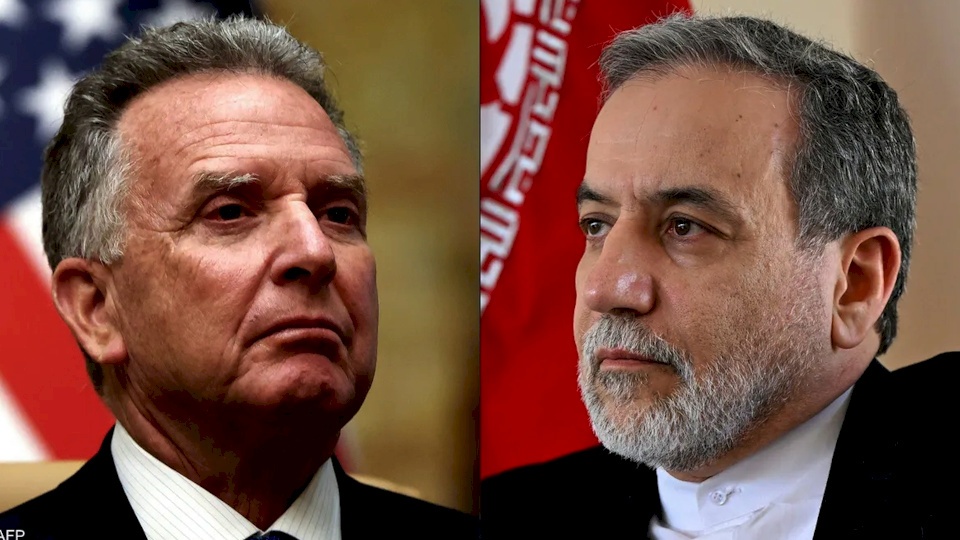
SadaNews - Communications are underway between Iran and the United States regarding a possible ceasefire in exchange for reopening the Strait of Hormuz, according to an Israeli report on Wednesday evening. Meanwhile, U.S. Vice President J.D. Vance engaged in talks with intermediaries from Pakistan about the war on Iran, the latest of which was Tuesday, indicating a broadening of his role in mediation efforts.
Israeli Channel 12 reported on Wednesday evening that "communications are taking place between the United States and Iran regarding a possible ceasefire in the war in exchange for reopening the Strait of Hormuz," citing three high-level U.S. officials.
Despite these talks, U.S. officials confirmed that there is no guarantee of reaching an agreement, and that these communications could also fail.
Should negotiations fail, this would mean that the United States would significantly escalate the war, including launching attacks on Iranian oil sites, and "possibly taking other actions."
According to the report, the U.S. President made a phone call to Saudi Crown Prince Mohammed bin Salman a few hours ago, "updating him on the latest developments and the possibility of reaching a ceasefire."
Informed sources said that Trump might have a phone call later Wednesday night with Israeli Prime Minister Benjamin Netanyahu and the UAE leader.
**Tel Aviv's Concerns**
The Israeli Public Broadcasting Corporation (Kan 11) reported that Israel fears President Trump might unexpectedly announce the "ripening" of negotiations, justifying this by a complete leadership change in Iran.
An Israeli source mentioned that the negotiations between the United States and Iran "are not progressing positively, and there is disagreement within the Iranian leadership about how to respond to the U.S. proposal for reaching an agreement, with some senior officials seeing a need to respond positively, while others prefer to continue the fight."
The newspaper also reported Wednesday evening that the United States and Israel coordinated decisive steps expected to be implemented in the coming days.
**Trump's Vice President Spoke with Intermediaries about the War on Iran**
According to Reuters news agency on Wednesday, citing a source, U.S. President Donald Trump has tasked Vance to clarify in private talks that he is ready for a ceasefire on the condition that certain U.S. demands are met, including reopening the Strait of Hormuz.
Vance also conveyed what the source described as a "stern message," indicating that Trump’s patience is running out, warning that pressure on Iranian infrastructure will increase unless Tehran agrees to a deal.
The source stated that Pakistan is playing a mediating role between the United States and Iran.
Vance is taking a larger role in attempts to negotiate an end to the war, which has now entered its fifth week.
Vance is widely seen as a potential candidate for the 2028 presidential elections.
He takes a cautious approach to the war, reflecting his ongoing doubts about prolonged U.S. military intervention abroad.
Trump has threatened to bomb Iranian infrastructure but postponed launching such attacks on the Iranian electrical grid until April 6, hoping to reach an agreement with Tehran.
China and Pakistan proposed a joint five-point initiative on Tuesday during a meeting in Beijing between Chinese Foreign Minister Wang Yi and Pakistani Deputy Prime Minister and Foreign Minister Mohammad Ishaq Dar, aimed at "restoring peace and stability in the Gulf and the Middle East."
The initiative calls for an immediate cessation of hostilities, with maximum efforts made to prevent the conflict's expansion, ensuring humanitarian aid reaches all war-affected areas.
It also urges the initiation of peace talks as soon as possible while emphasizing the need to preserve the sovereignty, territorial integrity, and independence of countries, including Iran and Gulf states, considering dialogue and diplomacy as the only viable option for resolving disputes, alongside a commitment from all parties to resolve differences peacefully and to refrain from using or threatening force during negotiations.
The initiative emphasizes the protection of non-military targets by adhering to the principle of protecting civilians in armed conflicts, ceasing their targeting or that of civilian facilities, including critical infrastructure such as energy and desalination facilities and electricity facilities, as well as peaceful nuclear facilities like nuclear power plants, with full adherence to international humanitarian law.
Regarding navigation, the initiative calls for ensuring the security of shipping routes, asserting that the Strait of Hormuz and its surrounding waters constitute a vital global passage for the transport of goods and energy, stressing the necessity of protecting ships and their crews, ensuring safe and timely passage for civilian and commercial vessels, and working to restore normal navigation in the strait as soon as possible.
The fifth point emphasizes the priority of the United Nations Charter by calling for the strengthening of multilateral action and supporting the reaching of a comprehensive agreement that establishes a framework for lasting peace based on the principles of the UN Charter and international law.
 Follow the latest Sada News via Google News
Read Also

Smotrich: Israel Has No Interest in Joining the War Against Iran

Occupation Issues Military Order to Seize 5 Dunams of Land in Jaba'

Axios: Proposal for a 10-day Ceasefire Between Washington and Tehran and Two Options for M...

In a Rapid Pace.. The Occupation Builds a Huge Earth Barrier Inside Gaza

Meeting Between Aoun and Trump Expected Alongside 'Experimental Areas'

Gaza Health Warns of Collapse of Oncology Services Due to Depletion of Treatments and Susp...

The Occupation Demolishes a House in the Town of Sa'ir near Hebron
