

Aircraft Mimicking Birds... Will They Redefine the Future of Drones?
SadaNews - The traditional design in the world of drones has relied on propellers and engines, a method that has proven effective but imposes clear limitations on movement and flexibility. Today, researchers are trying to rethink this model by returning to birds as an ancient source of inspiration.
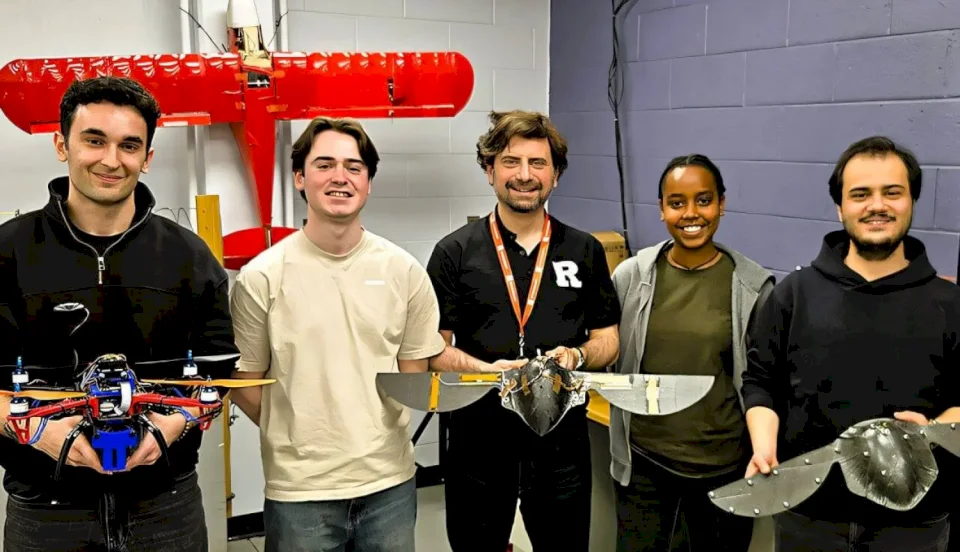
A recent study highlights a new generation of flying robots, known as "ornithopters", which are aircraft that mimic the natural flying method of birds through flexible wings that move and adapt to the air, rather than relying on fixed propellers.
Traditional drones depend on complex mechanical systems that include motors, gears, and moving parts. However, this new model is moving towards what could be described as "solid-state" design where these components are completely eliminated. Instead, researchers utilize smart materials that rely on what is known as the piezoelectric effect, materials that change shape when an electrical force is applied to them. This way, the wings can be moved directly by electricity without the need for mechanical connections. This shift not only reduces design complexity, but it also paves the way for smoother, more adaptable movement to the environment, where the wings can bend and twist continuously, just like birds in flight.
Greater Flexibility in Complex Environments
The significance of this approach lies in its ability to navigate complex environments. Traditional aircraft often struggle in tight or unpredictable spaces, such as crowded urban areas or obstacle-filled natural environments. In contrast, the flexible wings provide a higher maneuverability and quick responsiveness to changes in airflow. This makes these robots suitable for a wide range of applications, such as search and rescue operations, environmental monitoring, infrastructure inspection, and delivery in cities. In such scenarios, the challenge is not just in flying but in adapting to a continuously changing environment.
Mimicking Nature... Without Imitating It
Although the idea is inspired by birds, the goal is not simply to mimic nature. Researchers point out that they are not aiming to construct a mechanical replica of a bird's wing, but rather to understand the fundamental principles that make natural flight efficient, and then redesign them in simpler, more efficient ways. In this model, materials play a central role, including carbon fibers that act like a structure resembling bones and feathers, while piezoelectric materials serve the role of muscles.
Thus, the wing itself becomes an integrated system of motion, rather than merely a surface moved by external parts.
A Digital Model for Understanding Flight
In addition to physical development, the study focused on building a comprehensive computational model that simulates the process of flight. This model integrates multiple elements simultaneously, such as wing movement, body dynamics, aerodynamic dynamics, electrical systems, and control mechanisms. This allows researchers to test designs virtually before manufacturing them, speeding up the development process and reducing the need for costly and repetitive experiments.
Despite the advancements made by these models, key challenges remain, particularly the performance of the materials used. Current piezoelectric materials do not yet provide the strength or efficiency required to achieve the desired performance in large-scale practical applications. However, researchers view this issue as potentially temporary; the computational model allows for predicting how these systems might improve with material developments in the future.
More Than Just Aircraft
The importance of this research is not limited to drones alone. The same principles can be applied in other fields, such as renewable energy. For example, flexible materials could be used to continuously adjust the shape of wind turbine blades, which could improve their efficiency in capturing energy. This reflects a broader trend in engineering, where the goal is no longer just to build stronger systems, but smarter and more adaptable systems.
This study suggests that the future of drones may not simply involve improving current systems but a complete redefinition of the way flight is approached. Instead of relying on complex mechanical systems, the industry could be moving toward simpler component designs that are, however, more complex in terms of behavior and interaction with the environment. In this context, the aircraft becomes less like a rigid machine and more like a living organism capable of adaptation.
What Really Changes?
The change lies not just in the shape of the aircraft but in the design philosophy itself. The shift from propellers to flexible wings reflects a deeper transformation from systems dependent on force and stability to systems reliant on flexibility and responsiveness. While these technologies are still in research phases, the future direction of aviation may be closer to nature than previously thought.
 Follow the latest Sada News via Google News
After Deschamps' Departure... Zinedine Zidane Tops the Candidates to Lead France

Mbappe Surpasses Messi and Becomes the All-Time Top Scorer in the World Cup

England Defeats France and Achieves Largest World Cup Achievement Since 1966

Messi Refused to Play for Spain and Missed 3 World Cups

Publishers Sue Google for Allegedly Using Books to Train Artificial Intelligence

Google Expands Capabilities of Google Search Console to Support Social Media Accounts

The Mediterranean Table... An Ancient Diet Revealing Its New Secrets for Health and Longev...
