

From Venezuela to Iran: How Trump's Power Strategy Changed Global Calculations?
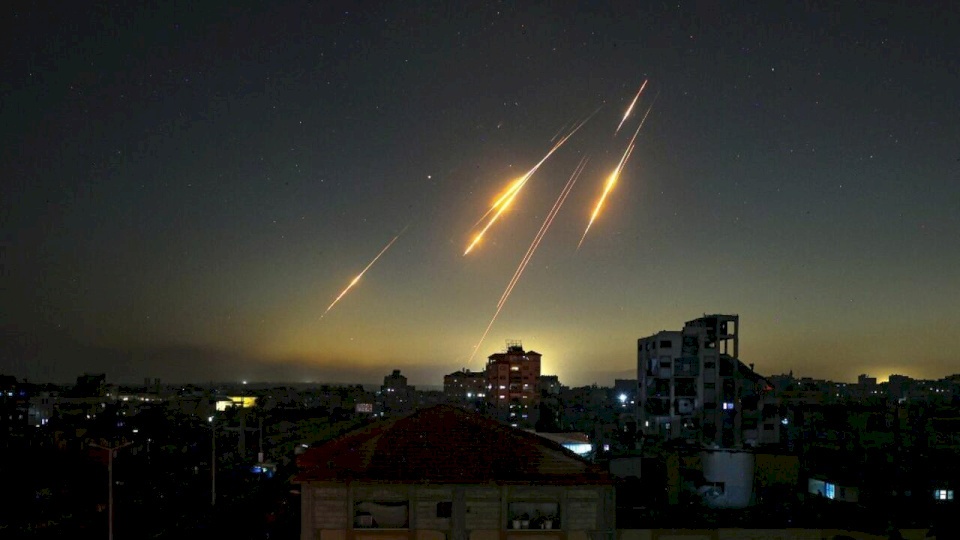
SadaNews - On January 3, 2026, the United States carried out a military operation in Venezuela that led to the arrest of President Nicolás Maduro. Less than two months later, on February 28, the United States and Israel launched a war on Iran, resulting in hundreds of thousands of casualties and displaced individuals, disrupting navigation in the Strait of Hormuz, and increasing oil prices by 40%. Between these two events lies a link revealing a profound shift in the management of international affairs, moving away from political diplomacy and relying on maximum use of force.
Richard Juan, Director of the Global Issues and International Institutions Program at the International Crisis Group, analyzes the relationship between these two paths, stating, "The very lukewarm international response to President Donald Trump's arrest of the Venezuelan president showed Washington that it can escape any blatant violations of international law." He believes that "the success of operations in Venezuela has boosted Trump's readiness to take even bigger risks."
Juan notes that the current U.S. administration "uses raw power instead of persuasion to shape international diplomacy," considering that "this approach may be crude but at least it works in the short term." According to this analysis, this method has compelled countries to rethink how they deal with the United States and their regional and international calculations.
According to a report from the International Crisis Group titled "Conflict and Consequences: The Global Impact of the New War in the Middle East," the war on Iran has entered its third week with no clear end in sight, having wide-ranging implications for the global economy, regional stability, and international law.
From Beijing to Moscow, and from European capitals to New Delhi, governments are seeking new formulas to deal with the evolving reality: how to balance economic interests with political considerations? To what extent can maximum force reshape the rules of the international order built after World War II?
The Stance of Major Powers
The international reactions to the war reveal complex equations governing the behavior of major powers, where economic interests intersect with strategic calculations and political considerations. While most governments refrain from expressing clear positions, each state is rearranging its priorities in accordance with its relations with Washington and its interests in the region.
Richard Juan explains to Al Jazeera Net the background of this international reluctance, stating that "Trump has a clear record of attacking countries that criticize him," adding that "at a time when many governments are struggling to cope with the economic impact of rising energy prices due to the war on Iran, the last thing they would want is to say anything that would lead to Trump’s threats of imposing tariffs."
Regarding China, the director of the International Issues Program at the International Crisis Group explains that it "is likely happy to see the United States focus its military resources on the Middle East rather than Asia," but at the same time, "it prioritizes good economic relations with the United States" in preparation for the upcoming summit between President Trump and Chinese President Xi Jinping scheduled for the end of March.
According to the Crisis Group report, Beijing has condemned the military operations against Iran but with great caution, as it seeks to secure the passage of Chinese ships through the Strait of Hormuz, and it has achieved some success in this endeavor.
Regarding Russia, it has announced its opposition to the war but its actual support for Iran remains "ambiguous and deniable," according to the group’s report. Moscow benefits from rising oil prices and the temporary lifting of some U.S. sanctions.
Juan states that Russian President Vladimir Putin "offered to mediate to end the war with Iran," and it is assumed that he "hopes to push Trump to offer better terms for Moscow regarding the future of Ukraine."
The speaker concludes with an analysis that aims at strategic dimensions in the perspectives of both China and Russia toward this war: "The current state of the war is a double win for both Beijing and Moscow, although each had good relations with Iran in the past. They can observe the United States consuming its military resources in the Gulf, and they can exploit the opportunity to gain diplomatic and economic concessions from an occupied Washington."
In Europe, the stances varied from one country to another, with most countries refraining from commenting on the legitimacy of the military operations, except for Spain, Norway, and Turkey, which expressed concern about the implications for international law, according to the Crisis Group report.
Juan explains this variance in his statements to Al Jazeera Net by noting that "Trump’s angry reaction to Spain’s refusal to support the war sent a message to other countries," adding that "even some countries that have had conflicts with Trump in the past, such as Brazil and South Africa, have maintained a low-profile stance regarding Iran."
Escalation Against Gulf Countries
The closure of the Strait of Hormuz has transformed the Gulf region from a global energy supply hub into a focal point of economic crisis, with repercussions extending to all continents. With the halt of oil and gas flows from the region that exports one-fifth of global production, governments found themselves facing a real test of their ability to manage an unprecedented energy crisis.
Iran responded to the U.S.-Israeli military operations with missile strikes targeting oil facilities in Gulf countries, leading to disruption in oil, gas, and fertilizer exports from the region, and crude oil prices have risen by 40% since the outbreak of the war.
The American president has called on several countries and alliances to contribute to the formation of a naval force to protect navigation in the Strait of Hormuz, but the response was limited. Japan announced that "there are no plans to deploy its naval forces in the Strait," while Britain and France provided defensive support to protect the Gulf without direct offensive participation.
The Crisis Group report confirms that the economic repercussions have extended globally in the form of severe fuel shortages in Asia, Africa, and Latin America, disrupted supply chains, and rising fertilizer prices that threaten food security in several regions. The United Nations has warned of deteriorating humanitarian conditions and disruptions in aid delivery to Lebanon, Afghanistan, Pakistan, Palestine, and Yemen.
The Position of International Law and the United Nations
The war on Iran poses fundamental questions about the future of international law and the United Nations system; while the United Nations Charter prohibits the use of force except in self-defense against an imminent threat, the international reactions have varied between reluctance and silence, with few voices pointing out the legal dimensions of the war.
Juan analyzes this for Al Jazeera Net, stating that "the Iranian attacks on Gulf states have made it easy for governments to avoid focusing on the United States and Israel," explaining that "it is easy and diplomatically convenient to call for de-escalation from all parties instead of focusing on the legality of the American and Israeli strikes."
According to the Crisis Group report, most of Washington’s allies avoided referencing the legal texts within the United Nations Charter. On March 11 of this year, 135 countries participated in sponsoring a resolution for the Security Council condemning the Iranian operations against Gulf states without referencing the American and Israeli attacks, reflecting a shift in the international stance.
Juan points out a quick comparison between the positions of governments that used to loudly criticize Israel regarding Gaza and their stance on the war on Iran, where they have become more cautious, considering that this "tends to prove the hypothesis that the Palestinian issue has a special status in international public opinion."
As for the United Nations, its role has been limited; the Secretary-General issued statements calling on all parties to exercise restraint, but the actual diplomatic impact remained weak. The international organization warned of escalating humanitarian repercussions, without a real capacity to influence the course of events, according to the group’s report.
In conclusion of his statements to Al Jazeera Net, the director of the International Issues Program at the Crisis Group poses a pivotal question: "Will the war continue?" He answers that the longer the war lasts, the more likely it is that various governments will conclude that Trump has miscalculated."
He adds that this "does not necessarily mean that these governments will change their positions in condemning U.S. actions in the Gulf, but Trump may face a higher level of skepticism if he embarks on other foreign adventures."
 Follow the latest Sada News via Google News
Trump: We will make great progress with Beirut.. Aoun: It is time for Lebanon to be stable

The Lebanese Army Deploys in the South and Comes Under Gunfire; Israel Clarifies

Bezhkian: Directives from the Leader to End the State of No War, No Peace

Saudi Arabia condemns the Houthi threats to navigation and pledges to protect its ships

Global Warning to Americans Due to Rising Tensions in the Middle East

Houthi Movement Announces Ban on Maritime Navigation Against Saudi Arabia

Earthquake of 5.5 Magnitude Hits Western Iran
