

Efforts to Ceasefire in Lebanon in Exchange for Israeli Readiness to Escalate: Aoun Calls for Direct Negotiations
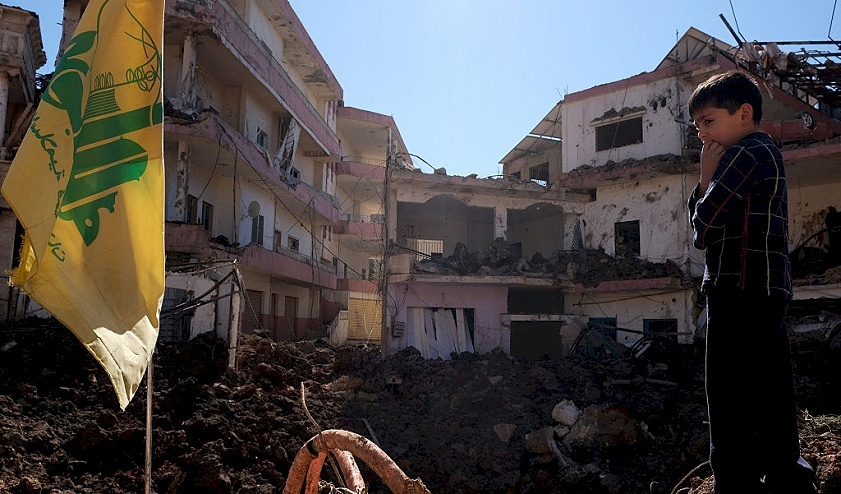
SadaNews - Israeli reports discuss initial moves from Lebanon linked to attempts to push for a ceasefire between Israel and Hezbollah, while the Israeli government continues to explore options for expanding military operations and ground incursions into southern Lebanon while escalating its air attacks.
Israeli Channel 12 reported that discussions are ongoing in Israel on how to deal with Lebanese efforts for a ceasefire, noting that the political leadership in Israel is weighing "the option of launching a broad military operation to eliminate the party," against merely achieving what Israel considers a "strategic accomplishment" that involves separating the relationship between Iran and the Lebanese Hezbollah in the context of the war.
The channel added that the Israeli Security Cabinet (kitchen cabinet) is preparing to discuss the possibility of implementing a ground operation aimed at expanding what Israel describes as a "security belt" within Lebanese territory, in a move that could also be used as a pressure tool amid current developments.
In a related context, the correspondent for Israeli Channel 12 and the American website "Axios" reported that the Lebanese government has proposed an initiative for direct negotiations with Israel mediated by the American administration, with the aim of ending the war and reaching an agreement to normalize bilateral relations. The report cited five informed sources that the Lebanese proposal has been met with cold and skeptical responses from both the United States and Israel.
According to the report, the Lebanese government is deeply concerned that the war could cause significant damage to the country. It is noteworthy that Hezbollah engaged in the fighting on the second day of the war on Iran by launching rockets and drones towards Israel, while Israel responded with extensive airstrikes including on the capital Beirut, in addition to its ground troops' incursion into southern Lebanon and reinforcing its military presence there.
The report noted that the Lebanese government contacted last week the mediator Tom Barak, the American ambassador to Turkey, asking him to mediate with Israel, according to an American official, an Israeli official, and three informed sources. It added that the Lebanese government also suggested conducting immediate direct negotiations with Israel at the ministerial level in Cyprus.
The report cited sources as saying that the American response was sharp, with Barak stating that the discussion would not be fruitful unless accompanied by "real steps" concerning Hezbollah's weapons. The sources also reported that the Israeli government rejected the Lebanese initiative, considering that the time is no longer suitable for such moves and that its focus is currently on eliminating Hezbollah.
According to the report, Lebanese President Joseph Aoun, Prime Minister Nawaf Salam, and Speaker of the House Nabih Berri expressed anger after Hezbollah joined the war, after having received reassurances from the party's political leaders in previous weeks that it would not engage in confrontations related to the war between Israel and Iran.
The report stated that these developments have strengthened the conviction among some Lebanese officials that the political wing of the party does not have real control over its military wing, and that the Iranian Revolutionary Guard has decisive influence over its decisions. It mentioned that the Lebanese government made unprecedented decisions in this context, namely banning the military wing of Hezbollah and ordering the expulsion of Iranian Revolutionary Guard elements from Lebanese territory.
However, the commander of the Lebanese army, General Rudolf Haykal, refused to deploy army forces to confront Hezbollah amid ongoing fighting, according to the sources, which caused tension with Prime Minister Nawaf Salam and led to American pressure on the Lebanese president to dismiss him.
The report noted that the Lebanese government feels frustrated by the American administration's neglect of its diplomatic moves, with one source stating that "there is no interest from the Trump administration in dealing with the Lebanese file." Another source added that "no one in Washington is responding to their calls."
Preparations for a Ground Incursion "to Expand the Buffer Zone"
In the same context, the Israeli public broadcasting authority (KAN 11) reported that Lebanon reached out to Israel through intermediaries asking it to reduce its attacks within Lebanese territory. According to sources familiar with the communications, Israel conditioned that the Lebanese government be able to prevent Hezbollah from launching rockets toward Israel, while the Lebanese government replied that it does not have the capacity to achieve that.
The channel added that the UN envoy to Lebanon is visiting Israel against the backdrop of these developments, while an Israeli source stated that "a military operation in Lebanon has become inevitable," referring to a potential wide ground incursion of the occupying forces into Lebanese territory.
According to the report, Israel is considering significantly expanding the "buffer zone" in southern Lebanon as part of ongoing military operations against Hezbollah. It said that Netanyahu discussed this issue in security consultations held on Monday evening with the participation of Minister of Security Israel Katz and senior officials in the military and security apparatuses.
The report added that Israel has sent a threatening message to the Lebanese government stating that its forces may initiate a wide ground operation if Lebanon does not "control the situation." In turn, the Lebanese authorities informed Israel via the U.S. that they do not have the capacity to prevent all rocket launches by Hezbollah toward Israel.
The newspaper "Yedioth Ahronoth" reported that the Israeli army recommended to the political leadership to consider expanding ground operations within Lebanese territory and establishing a buffer zone along the border with Israel, during limited meetings held in recent days.
According to the newspaper, the army presented several options to the political leadership, including expanding ground military operations within Lebanon and controlling several kilometers to establish what the report describes as a "deep buffer zone," which includes displacing the populations in those areas. The report indicated that this step is proposed under the pretense of confronting the launch of anti-tank rockets toward border Israeli sites.
According to what was reported by the newspaper "Haaretz," there is concern within the Israeli army about the increasing use by Hezbollah of the Iranian-made anti-tank missile of the type "Almas-3," which is a long-range missile that can be launched from the ground or via drones. The newspaper reported that assessments in the army suggest that this missile may have been used on Friday in an incident in southern Lebanon in which fighters from the "Givati" Brigade were injured during field activity.
The newspaper indicated that the "Almas-3" missile is considered the most advanced version of the series of Iranian anti-tank missiles, with a range of about 10 kilometers when launched from the ground, and may reach about 16 kilometers when launched from the air, while reports mentioned a range that could reach up to 25 kilometers.
According to sources in Israeli security agencies, the missile's capabilities of being launched from long distances and at elevated angles, in addition to the possibility of directing it via a camera mounted at its tip, may enable Hezbollah to target military sites, armored vehicles, or towns near the border with difficulty in pinpointing the source of the launch and targeting the cell responsible for it.
Aoun Calls for a Ceasefire and Direct Negotiations
Earlier today, Lebanese President Joseph Aoun called for a comprehensive ceasefire and the start of a direct negotiation process between Lebanon and Israel, emphasizing that the Lebanese government has decided to ban any military or security activities for Hezbollah.
Aoun stated, during a virtual meeting via "Zoom" with European Council President Antonio Costa and European Commission President Ursula von der Leyen, that more than 600,000 Lebanese have been displaced from their homes as a result of Israeli attacks, pointing out that his country is facing a "more dangerous situation" as the escalation widens.
He added that those who launched rockets toward Israel "wanted to bring down the State of Lebanon under aggression and chaos, even at the cost of destroying dozens of villages and the fall of tens of thousands of Lebanese, for the calculations of the Iranian regime," adding that the Lebanese authorities "have thwarted that so far and will continue to work to eliminate it."
Aoun pointed out that Lebanon had proposed months ago an initiative aimed at gradually dismantling the causes of the escalation, through an Israeli withdrawal from at least one point of Lebanese territory, in exchange for the deployment of the Lebanese army there, under international supervision, in preparation for reaching a final cessation of hostilities and permanent security arrangements on the border, but he said that this initiative "did not receive a response."
He added that the Lebanese government made a "irreversible" decision on March 2 to ban any military or security activities for Hezbollah, stressing that Beirut seeks to implement this decision clearly.
Aoun called on the international community to support a new initiative aimed at establishing a complete ceasefire and stopping Israeli land, air, and naval attacks on Lebanon, and providing logistical support to the Lebanese army so that it can control areas of tension and confiscate weapons within them and disarm Hezbollah.
He explained that the proposed plan also includes starting direct negotiations between Lebanon and Israel under international sponsorship to reach the implementation of these arrangements. Aoun also affirmed Lebanon's solidarity with Arab countries that have faced Iranian attacks, referring to Saudi Arabia, Qatar, the UAE, Kuwait, Bahrain, Oman, Iraq, and Jordan, in addition to other countries including Turkey, Azerbaijan, and Cyprus.
 Follow the latest Sada News via Google News
Washington Investigates Possible Russian Role in Iranian Attacks on Its Sites

Mossad Chief Visited Washington to Discuss Iran and Its Nuclear Program

Report: Washington Informed Israel It Is Preparing to Intensify Attacks on Iran and Use St...

Organization of Islamic Cooperation Condemns Nauru's Decision to Open an Embassy in Occupi...

Video:: Nablus: Settlers Evict Tubasi Family from Their Home in Jaloud and Take Over It

Netanyahu: I Intend to Form a Broad National Unity Government

Syrian Foreign Minister Meets with Yasser Abbas in Damascus
