

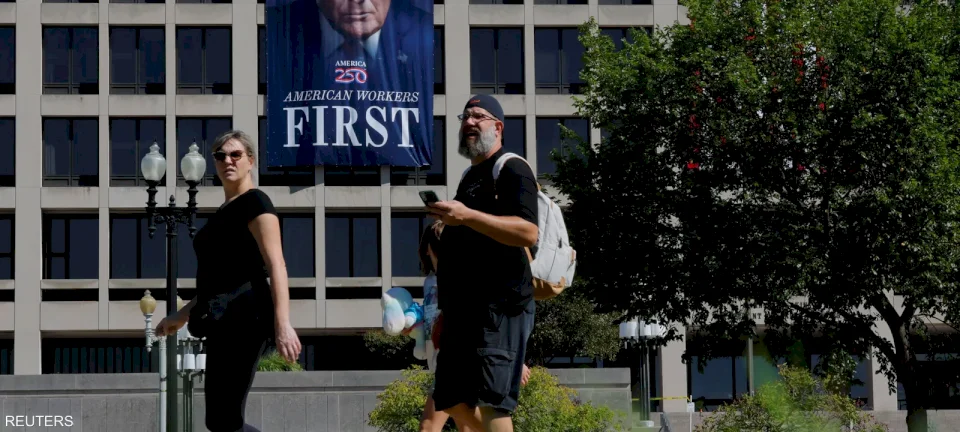
Shock in U.S. Job Data Shakes Confidence in Labor Market
SadaNews Economy - The U.S. economy recorded an unexpected decline in jobs in February amid a strike by healthcare workers and cold temperatures, while the unemployment rate rose to 4.4%, which could indicate a deterioration in labor market conditions, placing the Federal Reserve in a difficult position amid rising oil prices.
A report on employment issued by the Bureau of Labor Statistics under the Department of Labor last Friday revealed that non-farm jobs decreased by 92,000 in the last month, marking one of the largest declines since the COVID-19 pandemic, following a downwardly revised increase of 126,000 jobs in January.
Economists surveyed by Reuters had expected an increase of 59,000 jobs after a rise of 130,000 in January.
Estimates ranged from a loss of 9,000 jobs to an addition of 125,000 jobs. In addition to the strike of 31,000 healthcare workers at Kaiser Permanente and the cold weather, the drop in the employment rate last month also served as a correction following the significant increase recorded in January.
Omer Sharif, head of Inflation Insights, told Bloomberg, "This relates to a labor market that is so weak that it can't withstand a strike by 31,000 doctors in the healthcare sector because no one else is hiring."
These numbers may refocus the Federal Reserve's attention on the labor market as it assesses the duration of keeping interest rates steady. Policymakers have recently become more attentive to inflation, even before the U.S.-Israeli war on Iran raised investor concerns regarding price pressures and inflation.
In an interview with CNBC following the report's release, San Francisco Federal Reserve President Mary Daly stated, "Perhaps the hopes for stability in the labor market were overly optimistic, and we really need to keep a close watch on the labor market."
Economists said the job gains in January were bolstered by an update to the new and terminated job registration system used by the Bureau of Labor Statistics to estimate jobs added or lost due to the opening or closing of businesses in any given month.
The official data also showed an increase in the unemployment rate to 4.4%, while the participation rate - the share of the working population or those seeking work - fell to its lowest level since 2021.
The labor market is trending towards stabilization after stumbling in 2025 amid what economists described as a state of uncertainty caused by the sweeping tariffs imposed by President Donald Trump under a law designated for national emergency use.
 Follow the latest Sada News via Google News
London Stock Exchange Enters the Era of 24/7 Trading

Shamaran Petroleum: Suspension of Oil Production in Duhok Fields in the Kurdistan Region o...

Dollar Steadies Near One-Week High Amid War Developments

Trump Imposes Tariffs on Canadian Imports... Ottawa Vows to Respond

Oil Prices Drop After Reports of Mediation Efforts Between the U.S. and Iran

Gold Price Rises Supported by Increased Buying Amid Lower Prices

Due to "Hazardous and Counterfeit Products".. Europe Fines "AliExpress" $627 Million
