
Georgieva Warns of Iran War Testing Global Economic Resilience
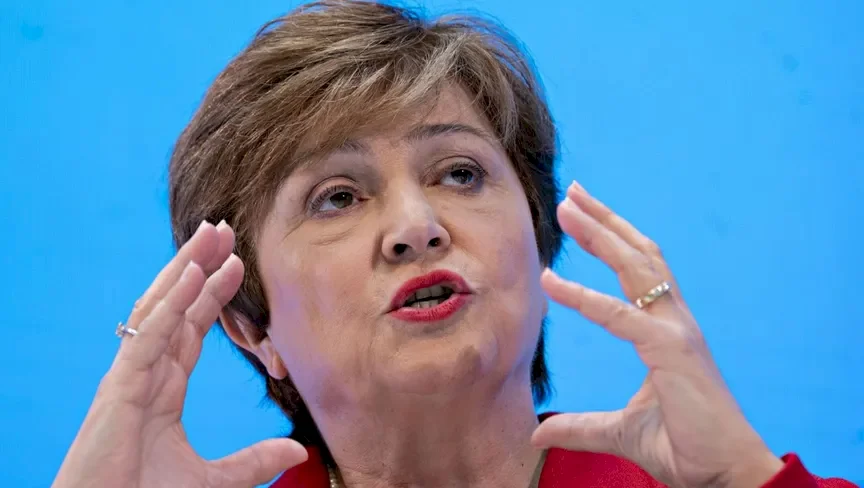
SadaNews - The Director of the International Monetary Fund, Kristalina Georgieva, stated that the war in the Middle East will test the resilience of the global economy, warning that "new shocks in various forms and sizes" will continue to emerge.
Confirming the IMF's concern over the suffering and loss of lives resulting from the Middle East crisis, Georgieva warned that prolonged conflict could affect energy prices, market sentiment, economic growth, and inflation, "placing new burdens on policymakers everywhere."
Speaking at the "Asia 2050 Conference" in Bangkok, Georgieva noted, "We are in a world experiencing more frequent and unpredictable shocks," adding, "Most of the time, we cannot predict exactly what they will be. But we can strive to be prepared for them at all times."
Iran's response to U.S. and Israeli strikes has disrupted traffic and oil flow through the Strait of Hormuz, and Bloomberg Economics scenarios suggest that rising energy prices could fuel inflation and harm global growth.
Iran War Raises Cost of Shipping U.S. Oil to Asia to Highest Level
In addition to tariff disruptions, which Georgieva warned last month could undermine the U.S. economy, described as "vibrant."
Georgieva stated that the IMF is closely monitoring the conflict in the Middle East and will incorporate its outcomes into the "World Economic Outlook" report to be published in April.
IMF's Global Growth Forecasts
As of last January, the IMF revised its global growth forecast slightly upward to 3.3% for 2026 and 3.2% for the next year.
The head of the "International Monetary Fund" praised Asia for rebuilding institutions, foreign reserves, and investor credibility following the financial crisis between 1997 and 1998.
However, Georgieva warned that the region still needs to prepare for a world of "recurring shocks" that include technology, trade, and geopolitical tensions.
She urged Asia to strengthen internal links to protect itself from trade uncertainties likely to persist. The region can accelerate integration by reducing non-tariff barriers.
Georgieva said, "There is no point in lamenting what happens outside your geographic bounds," adding, "Focus on what you can control, on what you can do to make your country, your economy the best it can be in this world we have entered."
The war in the Middle East has already affected global markets, with some of the most impacted indices being the tech-heavy gauges in South Korea and Taiwan, which have seen foreign investors sell billions of dollars worth of stocks.
Georgieva stated, "The sooner we see the end of the catastrophe, the better for the whole world."
 Follow the latest Sada News via Google News
Gold Retreats as Dollar Approaches Its Highest Levels

النفط فوق 100 دولار متجها لتحقيق رابع مكسب أسبوعي على التوالي

U.S. House of Representatives Approves Budget Plan to Fund War on Iran

Gold Retains Gains Despite Rising Concerns Over U.S. Interest Rate Hikes

Oil Prices Surge Amid Growing Supply Disruption Risk from the Region

The World Bank Warns: "The Worst-Case Scenario" for Global Growth is Approaching

Trump Prepares to Impose New Tariffs on Dozens of Economies
