

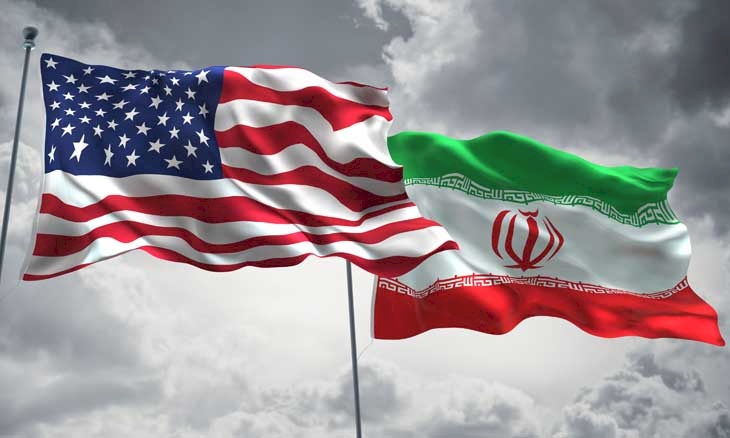
The Third Round of US-Iranian Negotiations Begins in Geneva
SadaNews - The third round of indirect negotiations between the United States and Iran began today, Thursday, in Geneva, amid ongoing US military buildups in the Middle East and escalating mutual warnings of the possibility of slipping into military confrontation.
The Omani Foreign Ministry announced the launch of the new round under the auspices of Muscat, confirming that Foreign Minister Badr Al-Busaidi held consultative meetings in Geneva, including a meeting with the Director General of the International Atomic Energy Agency, Rafael Grossi, to discuss the technical aspects related to the Iranian nuclear file and "new ideas" proposed at the negotiating table.
In this context, the Iranian news agency "Fars" reported that the talks officially started, noting that the Iranian delegation is headed by Foreign Minister Abbas Araghchi, while the US delegation includes special envoys Steve Wietkoff and Jared Kushner. The Iranian Foreign Ministry mentioned that Tehran enters the round "with seriousness and flexibility," and that the negotiations focus on the "nuclear issue," with the likelihood of the IAEA's Director General joining the consultations.
Iranian Foreign Ministry spokesman Ismail Baqaei emphasized that the third round of talks with the United States would only address the nuclear file and lifting sanctions on Tehran. He stated, "The topic of negotiations focuses on the nuclear file."
He added that Tehran will push for the lifting of sanctions and the affirmation of Iran's right to "peaceful use of nuclear energy," noting that the Iranian delegation conveyed these viewpoints to Omani Foreign Minister Badr Al-Busaidi, who is mediating in the negotiations.
Iranian President Masoud Bezhakian confirmed before the round began that his country is not seeking to possess nuclear weapons "at all," adding that Supreme Leader Ali Khamenei had clearly stated this position before. On the other hand, US President Donald Trump accused Tehran of pursuing "malevolent" nuclear ambitions, emphasizing that his country would not allow Iran to possess nuclear weapons, despite his preference for a diplomatic solution.
The Omani Foreign Ministry clarified that Al-Busaidi discussed with Araghchi on Wednesday evening the "views and proposals" that the Iranian side would present during the third round, without revealing their details, while the Omani minister is expected to convey these proposals to the US delegation as part of the ongoing mediation.
Trump's Advisors Prefer an Israeli Attack Before US Intervention
Alongside the diplomatic path, the "Politico" website reported, citing informed sources, that senior Trump advisors prefer Israel to initiate an attack on Iran before any direct US intervention in the event of a conflict. According to the report, this scenario is seen as potentially leading to an Iranian response that would help garner domestic American support for any subsequent military action.
The report noted that recent opinion polls show broad support, especially among Republicans, for taking a hardline stance against Iran, while at the same time there are reservations about engaging in a broad war. According to "Politico," Trump's team is examining how to align any potential action with the general American mood and minimize political and military costs.
Disputes Over Missiles and Sanctions
Disagreements between the two sides revolve around the scope of a potential agreement. Washington demands a complete halt to uranium enrichment activities, the transfer of enriched stockpiles outside Iran, and the inclusion of the ballistic missile program in the understanding, in addition to discussing Tehran's regional role. US Secretary of State Marco Rubio hinted that Iran's refusal to discuss its missile program represents a "very big problem."
In contrast, Tehran insists on confining negotiations to the nuclear file and demands the lifting of economic sanctions in exchange for imposing restrictions on its program, asserting that its nuclear program is peaceful. The Iranian Foreign Ministry spokesman Ismail Baqaei described the US accusations regarding the development of intercontinental ballistic missiles as "big lies."
Informed Iranian sources told "Al-Arabi Al-Jadid" that the Iranian delegation is heading to today's negotiations with a "package of proposals that include the maximum possible Iranian flexibility regarding the negotiating contracts within the limits of Iranian red lines, to address US concerns or, to put it better, pretexts about Iran's nuclear program."
They added that the package also "focuses on the issue of lifting sanctions, as without that, this flexibility cannot be translated into practical measures," confirming that the Iranian proposals address important topics such as solutions regarding uranium enrichment without infringing on the "fixed Iranian right to own the fuel cycle," the enrichment level, Iran's reserves of enriched uranium, and "important guarantees for the peaceful continuity of the nuclear program, including mechanisms for monitoring and verification."
The same sources clarified that the proposals "were carefully formulated under the ceiling of the known Iranian red lines and at their boundaries without infringing upon them," expressing confidence that "the flexibility shown by Tehran in this package aims to reach an agreement."
This round comes after the resumption of talks on February 6, following a halt that occurred due to the war that broke out in June 2025, which lasted 12 days, during which the United States participated by bombing nuclear sites inside Iran. Amid ongoing US military buildups, both sides assert their openness to dialogue while keeping the option of force on the table, making the outcomes of the current round open to all possibilities.
 Follow the latest Sada News via Google News
Bezhkian: Directives from the Leader to End the State of No War, No Peace

Saudi Arabia condemns the Houthi threats to navigation and pledges to protect its ships

Global Warning to Americans Due to Rising Tensions in the Middle East

Houthi Movement Announces Ban on Maritime Navigation Against Saudi Arabia

Earthquake of 5.5 Magnitude Hits Western Iran

To Enhance His Support for "Increasing Children"... Vance Announces the Birth of His Fourt...

Death of a Mosque Imam in Armed Attack in Southeastern Iran
