

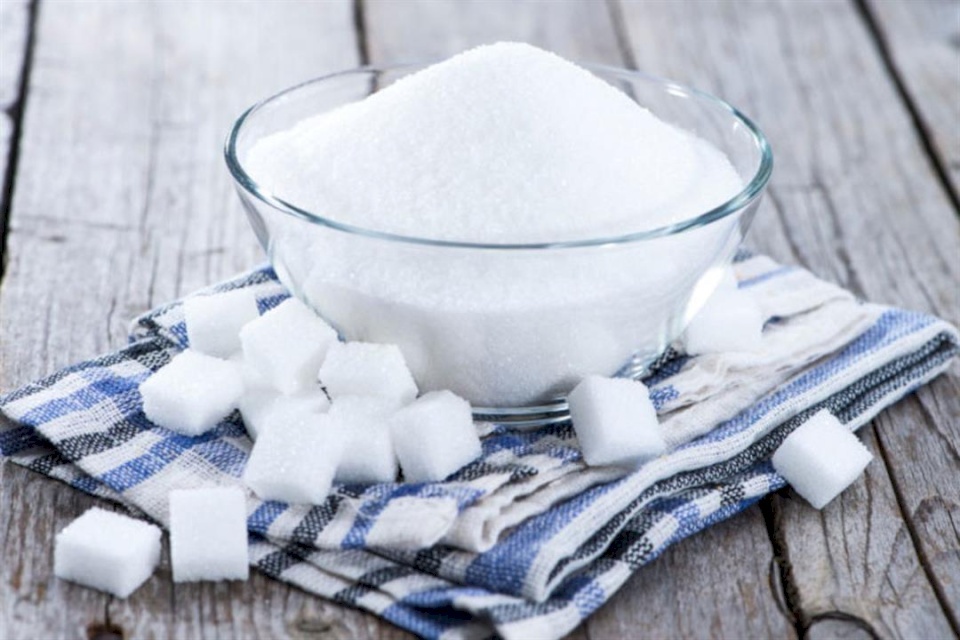
Egypt Restarts Sugar Exports After Three-Year Hiatus
SadaNews - Egypt has reopened the door for sugar exports this January, after a halt that lasted nearly three years, in a move aimed at absorbing a local surplus of nearly one million tons, which has led to price declines and significant losses for manufacturers, according to three sources.
Before sugar exports were resumed this month, the Ministry of Investment and Foreign Trade decided last October to extend the export ban on all kinds for an additional six months, under decision number 394 of 2025, allowing exports only for quantities exceeding local market needs, according to estimates from the Ministry of Supply and with the approval of the Minister of Trade and Industry, aiming to ensure supply availability and price stability.
The export ban on sugar was first issued in 2023 for three months, and then extended multiple times to maintain price stability and ensure supply availability within the Egyptian market.
Sugar prices fell by 10% this January, reaching 27 Egyptian pounds per kilogram compared to the same month last year, when prices did not drop below 30 pounds. This decline is attributed to a stable supply in the market and an abundance of supplies, which contributed to achieving a relative balance between supply and demand, according to Hazem El-Monofy, head of the Eye Association for Trader and Consumer Protection and a member of the Foodstuffs Division of the Federation of Chambers of Commerce.
There is a large surplus
Hassan El-Fendy, head of the sugar division in the Egyptian Industries Federation, told "Al-Sharq" that the government allowed the export of sugar this month, reversing the decision to halt exports that had been in place for years, due to a large surplus in the Egyptian market.
El-Fendy explained that the amount of imported sugar in the Egyptian market is estimated at about one million tons, which is imported as raw material and refined in Egypt, making it cheaper than locally produced sugar by about 3,000 pounds per ton due to a significant drop in global prices.
Last year, sugar factories in Egypt faced a severe crisis that made them unable to cope with the high production costs, amid unfair competition with other companies that import raw materials from abroad at low prices, refine them locally, and sell them at prices lower than fully manufactured sugar inside Egypt. Despite the Ministry of Investment's decision to ban the import of refined sugar for three months ending in February 2026, some companies resorted to circumventing this by importing raw sugar and re-refining it locally for sale in the country.
Egypt has about 16 large sugar production companies in the largest Arab country by population, eight of which are state-owned. Profits of "Delta Sugar", the largest listed sugar company on the Egyptian stock exchange, dropped by about 60% in the first nine months of 2025 to approximately 387.167 million pounds.
Egypt's Sugar Consumption
El-Fendy added that the consumption in the Egyptian market is nearly 3.5 million tons, which Egyptian companies currently produce, with a surplus of about one million tons.
Islam Salem, the former president of Cargill International and head of a company operating in the agricultural sector in Egypt, stated that reopening the door for Egyptian sugar exports, after a halt for years since the Corona pandemic, will provide liquidity for manufacturers enabling them to continue their production cycle during the upcoming manufacturing season next month, rather than accumulating stock and disrupting the production cycle.
In the years leading up to 2023, specifically from 2020 until the 2023 decision, exporting sugar was not completely prohibited but was part of normal trade movement, with some temporary regulations related to the balance of the local market, without imposing a general export ban.
Salem added that Egyptian sugar factories sell one ton of sugar for about 22,000 pounds delivered at the factory, while the final costs reach about 31,500 pounds after adding manufacturing and financing costs.
Salem expects sugar production from the beet crop to start by the end of February, which will increase the supply of this strategic commodity.
The government has started responding to companies
The head of a private sugar company in Egypt told "Al-Sharq", on the condition of anonymity, that the government has begun responding to requests for sugar exports from Egyptian companies, however, exporting the strategic commodity currently is not profitable for the companies due to the drop in global prices and high production costs in Egypt, but companies need to offload their stock.
He added that imported sugar entering Egypt from abroad is still imported by private sector companies, which re-refine it at about 30% less cost than producing sugar from beet, pointing out that companies need to join the export support program to compete in foreign markets.
Last year, the Egyptian government decided to import one million tons of white sugar to solve the crisis of scarcity of supply in local markets at that time, after chaos prevailed in pricing commodities in the Egyptian markets due to the unavailability of hard currency for importers, leading some sectors to price and sell their products in dollars, such as iron, fertilizers, and feeds.
 Follow the latest Sada News via Google News
Strait of Hormuz Approaches Maritime Paralysis After American and Iranian Strikes

Oil Prices Surge as US Airstrikes on Iran Renew

Gold Holds Steady Near $4080 Amid Middle East Escalation

The IMF Forecasts a Contraction in the Middle Eastern Economy This Year and a Faster Recov...

6000 Sailors Still Stranded in the Gulf

Floating Iranian Oil Faces Uncertain Fate After U.S. Exemption Cancellation

Brent Surpasses $76 After U.S. Strikes on Iran