

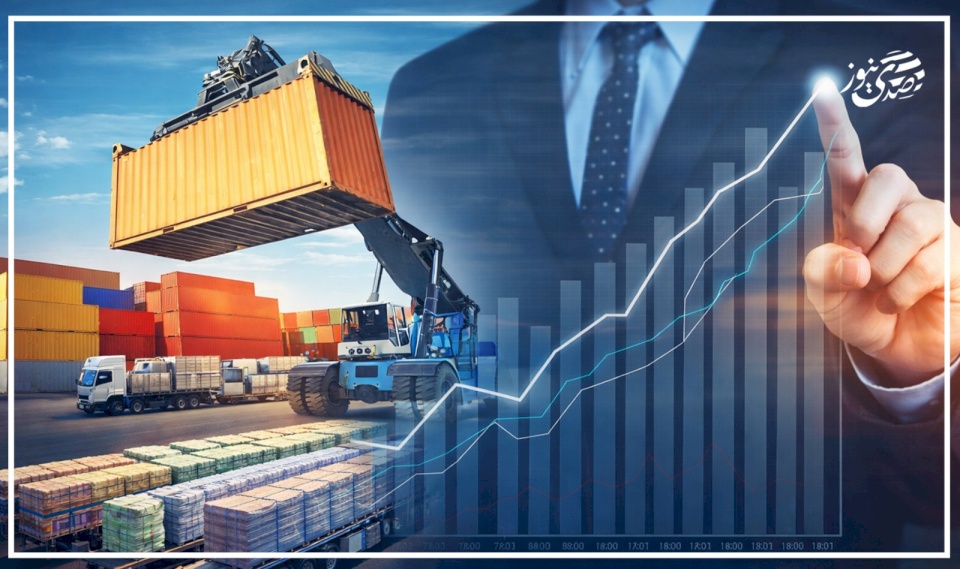
The Trade Balance of Palestine: A Structural Imbalance Reinforced by Political and Economic Factors and Government Trends
Special SadaNews - Palestine's trade balance suffers from a significant deficit in favor of imports, which reflects an economic and financial policy that has been practiced over the past years, summarized by the Palestinian governments' search for rapid and guaranteed fiscal revenues at the expense of developing productive sectors.
Overall, imports in most years in Palestine reach four times the exports, meaning that the entire Palestinian economy is a consumer economy that relies on providing tax revenues for the government that are quickly collected, while not building a solid economic base that achieves sustainability.
Figures released by the Ministry of National Economy show that the total value of goods and services imports reached approximately $6.54 billion by the end of 2024 (including fuel, electricity, and basic commodities), while the total value of exports was $1.71 billion USD.
The trade balance (the difference between exports and imports) recorded a deficit of about $4.83 billion USD in 2024.
These figures reflect the continuation of the structural deficit in the trade balance, with Israel remaining the largest trading partner, as the value of imports from Israel reached approximately $3.64 billion by the end of 2024, while the exports to Israel amounted to about $1.6 billion.
Israel is considered the main source of imports (around 60% during some periods in 2024) and the primary destination for exports (around 87% of exports). According to the announced figures, China is the second trading partner with imports totaling about $5687 million and exports not exceeding $16 million, while Turkey comes in third with imports valued at $402 million and exports of about $23.7 million.
The significant imbalance between exports and imports in Palestine – where imports exceed exports by about four times – is explained by a series of intertwined structural, political, and economic factors, which make this imbalance a chronic structural phenomenon rather than just a transient trade issue.
Economic expert Dr. Saeed Sabri told "SadaNews": The first of these factors is the lack of effective Palestinian control over the crossings and borders. Palestine does not have true sovereignty over its trade outlets, and all import and export operations practically pass through Israel, subjecting them to its security and regulatory measures, which increases the cost of exporting, prolongs the clearance time, and restricts the Palestinian producer's ability to access foreign markets consistently.
The second factor is related to the Paris Economic Protocol, which established a forced customs union model with Israel, where Palestine does not have an independent customs policy, nor the freedom to negotiate separate international trade agreements, and is obliged to apply the same Israeli customs tariff. This reality opens the Palestinian market to imports without any real protective tools for the local product.
Thirdly, the imbalance reflects the weakness of the Palestinian production base. Agriculture suffers from land confiscation and water scarcity, the industry is small in scale, fragmented, and lacking capital and technology, and there are no major export industries or value chains capable of generating sustainable export surplus. In contrast, the Palestinian economy relies on a consumer model based on salaries, remittances, and aid more than on production and manufacturing.
Fourthly, the structure of trade itself is unbalanced, as data indicate that more than 70% of Palestinian imports come from Israel, including food, energy, raw materials, and intermediate goods, meaning that Palestine imports even basic inputs that should form the basis for local production. This creates a closed economic cycle in which Palestinian income continuously leaks abroad.
Fifthly, the absence of a national currency exacerbates the imbalance, as Palestine does not have an independent monetary policy that enables it to use the exchange rate as a tool to support exports or improve competitiveness, depriving the economy of one of the most important tools for global trade balance known worldwide.
Therefore, Dr. Sabri states that the deficit in the Palestinian trade balance is not the result of administrative weakness or technical shortcomings in export policies, but rather an expression of a dependent and politically constrained economic model, lacking tools for trade and productive sovereignty. Thus, addressing this imbalance cannot be achieved merely through export support programs, but requires a structural change in the economic and political framework governing Palestine's relation to trade, resources, and markets.
For his part, economic journalist Ayham Abu Ghosh told "SadaNews" that the structural imbalance in the trade balance in favor of imports results from several factors, the most prominent of which is the Israeli occupation controlling all trade crossings and prohibiting Palestinians from investing in Area C, which has advantages for developing productive sectors that form the basis for exports, in addition to the destruction of the production base in the Gaza Strip due to a series of wars, and thirdly the lack of government policy that encourages productive sectors by providing tax exemptions and investment advantages; rather, the governments have encouraged consumption for reasons related to improving tax collection.
He points out that the policies of successive governments in Palestine over the years have pushed towards consumption as it provides quick and realized tax revenues for them, but this has certainly been at the expense of building a strong productive economic base that ensures for Palestinians some degree of economic independence.
Abu Ghosh warns that this policy has led to further Israeli control over the Palestinian economy, as the clearance tax (customs and value-added tax and purchase tax) is imposed on goods imported from abroad or Israel, which now constitutes around 68% of the total revenues of the Palestinian public treasury, indicating that this has shackled the Palestinian economy from investment opportunities and the advantages of sound planning to build and enhance a productive base that could increase resilience factors, especially in times of crises.
 Follow the latest Sada News via Google News
Soaring Oil Prices Burn the Pockets of the Palestinian Citizen "The Poor"

Millions of Dollars in Losses.. "SadaNews" Reveals Shocking Figures for Traders from Pales...

The Problem of Shekel Overcrowding Worsens.. Fuel Station Owners Threatened with Closure o...

The Palestinian Economy at a Crossroads: 4 Files Awaiting Resolution

Government Debt Puts Health Sector on the Brink of Collapse

Currency Exchange Rates Against the Shekel (April 3)

Public Debt: Did the Palestinian Government Violate the New Law by Raising the Debt Ceilin...
