
After rejecting Maliki.. What are Trump's economic cards to pressure Iraq?
SadaNews - "Trump puts Iraq in an extremely precarious economic position"..
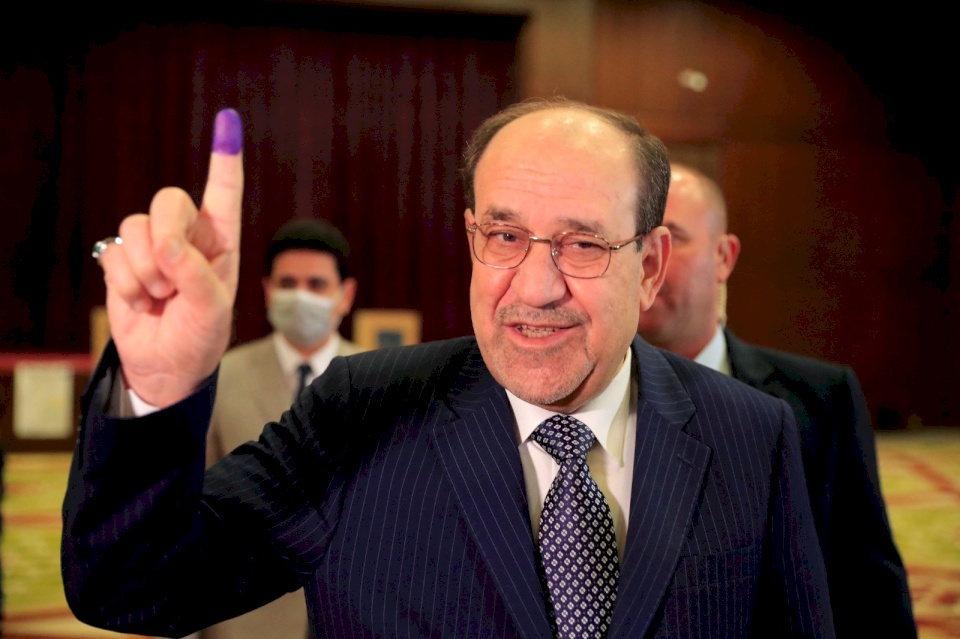
Baghdad's calculations regarding the potential return of Nouri al-Maliki to the Iraqi government have turned 180 degrees after the U.S. president explicitly threatened Iraq that if Maliki, known for his inclinations towards Tehran, enters power through the front door, American protection would immediately exit through the back door.
Trump, famous for his sharp tone, used three explicit threats in his tweet expressing his opposition to Maliki's election: "No more assistance to Iraq if he wins, no chance for Baghdad's success, and the state may sink into chaos and poverty."
This threat should not be read in isolation, but rather within a much broader economic context where the United States already possesses cards above and below the table that it can use to pressure - and even paralyze - any government that does not align with Trump in Baghdad, with oil, which finances about 90% of the state revenues, at the heart of this equation.
Why does Maliki's victory not serve Washington's economic interests in the region?
This becomes apparent when comparing Washington's economic influence in Iraq during the tenure of former Prime Minister Muhammad Shia' al-Sudani and Maliki's two terms in office from 2006 to 2014:
Sudani provided an important meeting point with Washington's priorities, especially in the dollar issue, energy, and financial discipline. He showed flexibility in applying strict American standards that involve tightening oversight on the flow of dollars into Iraq by imposing strict restrictions on local banks to curb currency smuggling to Iran and money laundering. In the energy sector, Sudani opened the door wide to enhance the presence of American companies through agreements and negotiations with companies like "Chevron" and "ExxonMobil", which "economically benefited Washington by expanding its oil investments and politically by reducing Iraq's dependence on Iranian energy imports" according to Reuters.
In contrast, Maliki's rule witnessed a gradual negative shift in economic cooperation with Washington. In his early years, Iraq benefited from a high flow of oil revenues, but weak oversight of the banking system made the country an easy environment for dollar leakage, especially after the tightening of American sanctions on Iran, which put Baghdad on a collision course with Washington's financial priorities, according to the British newspaper "Financial Times". In the energy sector, despite launching large oil licensing rounds after 2009, the government tilted towards diversifying partnerships towards Chinese and Russian companies, while Iraq continued to rely almost entirely on Iranian gas and electricity, limiting American influence, which reflected a cooling in financial cooperation and a growing Iranian influence at the time, a scenario that Washington fears to repeat if Maliki returns to power.
Economist Abdul Rahman Sheikhly believes that in the event of Maliki's victory, "there will be complications" regarding Americans' awareness of Maliki's ties to Iran, which intersects with the American desire to cut any communication between Baghdad and Tehran.
However, Abdul Rahman Al-Mashhadani, a professor of international finance at the Iraqi University, disagrees, stating that Maliki's victory - or anyone else's - will not affect those interests. Because "Maliki will consider that all centers of power are now in Washington's hands, and he cannot do without them."
What economic pressure cards does Trump possess to undermine Maliki's rule if he wins?
It can be said that Trump can play on Iraq's nerves with three cards: the first: Iraqi oil revenues protected by a decision from the U.S. president, as the United States effectively controls Iraqi oil revenues since the invasion it launched in 2003 by managing them through the Federal Reserve, and the purpose of this step at the time was to protect Baghdad from accumulated sanctions and legal issues from the era of the ousted President Saddam Hussein.
Al-Mashhadani states: "Everyone knows that if the American president lifts his hand, all Iraqi funds will go up in smoke, because there are many legal cases filed against the Iraqi government as claims dating back to Saddam's time, some of which have already been ruled upon in American courts, and the owners of these cases are waiting for such moments to seize Iraqi properties."
The second: restricting dollar transfers to Iraq as happened in the last three years, where Washington punished banks under the pretext of money laundering and financing terrorism, and to this day these banks remain under the sanctions imposed by the U.S. Treasury and the Federal Reserve. Al-Mashhadani pointed out, "We are suffering greatly from this issue, and there is a significant shortage of dollars in the Iraqi market for this reason."
The third: indirectly causing the collapse of the Iraqi dinar and worsening social conditions by restricting access to dollars, which will fuel inflation, especially since Iraq has not been able to build an agricultural or industrial base that meets local market needs in the two decades following the invasion. And 90% of market needs are imported with hard currency, even those imported from neighboring Arab countries like the UAE, according to Al-Mashhadani.
Sheikhly summarizes the matter by saying: "They will have the freedom to pressure the overall movement of the Iraqi economy."
Additional pressure cards
However, there are other indirect sources of pressure that Washington can use to corner Iraq, most notably the threat of military assistance. More than 70% of the Iraqi army's armament is of American origin, whether through new contracts or what the U.S. military left after its withdrawal from Iraq, according to Al-Mashhadani. U.S. military assistance also constitutes an important part of the discussions surrounding the annual Iraqi budget since supporting Iraqi military forces ranges between one billion and three billion dollars annually, and the significance of this assistance increases amid the ongoing threats from terrorist groups and ISIS on the borders.
Nabil Al-Azzawi, a researcher in Iraqi political affairs, told "Al-Sharq" that the coordination framework that nominated Maliki "should read Donald Trump’s economic message amid the current delicate state of the country and the limitations of options and absence of consensus."
Restricting Iraqi investments in Treasury bonds managed by the U.S. government. According to data from the U.S. Treasury, Iraq's holdings of these bonds amount to about 32 billion dollars until October 2025.
Obstructing the work of American intermediary banks: such as "Citibank" and "JP Morgan", which facilitate Iraqi trade movement, and on which Baghdad relies for international transfers and the flow of funds in and out of the country. Foreign investments may also face shocks "as investors are always looking for political and security stability that may be disrupted if Maliki takes government against Washington's desire," according to Sheikhly.
What is the potential impact on the oil market if threats escalate?
So far, no direct impacts from Trump's threat to Iraq have reflected on the oil market despite the recent rise in Brent crude prices to nearly 70 dollars a barrel due to his intense pressure and military threats to Iran, which may increase if Iraq becomes more involved in the conflict.
Additionally, any potential disruption in Iraqi oil flows could have a direct impact on the market, as Iraq is considered the second largest oil producer in OPEC after Saudi Arabia, with its production coming directly after Saudi Arabia and Russia within the "OPEC+" alliance.
If Maliki's rise to power leads to disruptions in the sector, it may absorb part of the current oil surplus in the market, especially as Iraq has been one of the countries that significantly raised its production in recent times, facing accusations of exceeding its oil quota in "OPEC", which it tried to compensate for last year.
On the investment front, Sheikhly points out that Sudani's administration witnessed an active and somewhat ambitious movement in the oil, gas, and even renewable energy sectors, as well as record levels of oil licensing issuance, which could be disrupted if the policies change with whoever takes over the new government, especially Maliki, who "did not have significant achievements in this regard during his previous two terms" according to Sheikhly.
 Follow the latest Sada News via Google News
London Stock Exchange Enters the Era of 24/7 Trading

Shamaran Petroleum: Suspension of Oil Production in Duhok Fields in the Kurdistan Region o...

Dollar Steadies Near One-Week High Amid War Developments

Trump Imposes Tariffs on Canadian Imports... Ottawa Vows to Respond

Oil Prices Drop After Reports of Mediation Efforts Between the U.S. and Iran

Gold Price Rises Supported by Increased Buying Amid Lower Prices

Due to "Hazardous and Counterfeit Products".. Europe Fines "AliExpress" $627 Million
