

Hormuz Strait and Potential Escalation of War with Iran
SadaNews - Developments in the military and political scene in the region increase the likelihood of the war with Iran entering a more dangerous phase. In recent days, Israel and the United States have intensified their targeting of sites linked to Iran's military capabilities, with the current focus of the conflict being the Hormuz Strait.
Iran has effectively imposed a closure of the strait by threatening commercial ships and attacking some of them, leading to the disruption of nearly 15% of global oil supplies, as well as liquefied natural gas exports from Qatar, the world's largest producer, which represents 20% of global LNG exports.
According to American sources and media reports, the Trump administration did not plan seriously to face the closure of the Hormuz Strait, which is another indication of its short-sightedness in waging and preparing for war.
Trump is attempting to address the closure of the strait by establishing an international maritime coalition to ensure navigation through it. However, the British magazine "The Economist" indicated that Trump will face difficulties in fulfilling his promise to open and secure the strait due to its geography, which favors Iran, and the unwillingness of shipping and insurance companies to take risks.
Conversely, Iran also faces a dilemma, as the closure of the strait has so far only been a tactical victory that has not achieved its strategic goal of ending the war, according to "The Economist". The battle over the Hormuz Strait could drive both sides toward a dangerous escalation.
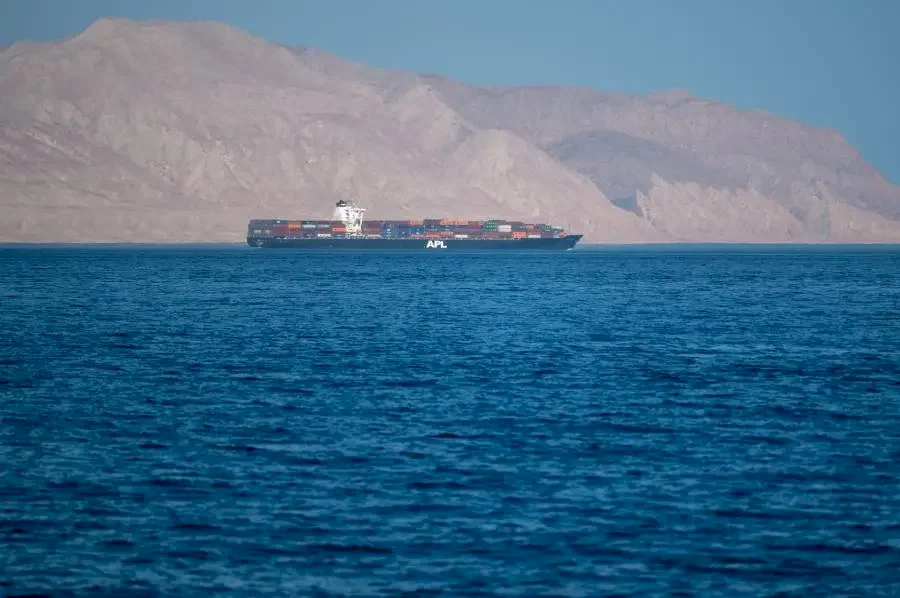
The strait is only 54 kilometers wide at its narrowest point and is surrounded by mountains on both sides, making its reopening extremely difficult for the United States.
Iran does not need to target every passing ship; it just needs to convince their owners and crews of the danger they may face. Thus, sending U.S. forces to secure the strait does not seem plausible, according to "The Economist"; given the amount of force required, and Iran can continue to fire on American forces from its territory.
If Trump fails to open the strait, he may escalate elsewhere
The magazine reminds us that Trump has been obsessively focused on Qeshm Island for decades, which houses Iran's main oil export port. In a 1988 interview, he stated that if he were president, he would "destroy it." On March 13, the U.S. bombed dozens of Iranian military targets on the island, aiming at missile and naval mine depots, but did not target the oil port.
Commentators on "Fox News" and Senator Lindsey Graham are calling for the occupation of the island, with Graham writing that "whoever controls Qeshm Island controls the fate of this war." He ended his tweet with the phrase "Semper Fi," an abbreviation of the U.S. Marine Corps motto.
Graham posted the tweet just hours after the Pentagon announced the redeployment of a Marine reconnaissance unit from Japan to the Middle East, specializing in such missions.
The United States may be able to seize the island. However, what happens next is unclear, as it would have to secure its forces on territory situated within the range of Iranian missiles and drones.
According to "The Economist," Trump may use the occupation of the island to pressure Iran into an agreement, but the Iranian regime is stubborn. Oil markets would be negatively affected by a further decline in supplies, as Iran still exports more than a million barrels a day to China, and the likelihood of longer land warfare would increase.
The closure of the strait has caused oil prices to rise above $100 per barrel. Many Asian governments have reduced the use of air conditioning in their offices and have cut back the work schedule for government employees to four days a week or encouraged them to work from home to cope with the energy shortage.
The effects of these disruptions are also beginning to extend to non-oil sectors of the economy, with helium prices, used in healthcare and industry, doubling since the war began, while urea prices, a fertilizer, have risen by more than half.
Despite these price hikes and material shortages, Iran has not yet inflicted considerable damage on the United States that would compel Trump to end the war.
Moreover, what limits current price increases is the existence of two oil pipelines that bypass the Hormuz Strait. The first, in Saudi Arabia, transports up to 7 million barrels per day, which equals two-thirds of its production, to Red Sea ports.
The second, in the United Arab Emirates, transports about half of the country’s production of 3.4 million barrels per day to the port of Fujairah, located outside the strait.
Nevertheless, these lines represent only a partial solution for Saudi Arabia and the UAE, according to "The Economist", and do not provide any significant assistance to Bahrain, Kuwait, and Qatar, which are unable to deliver their oil and gas to buyers. However, these lines will ensure a continued flow of a large share of Gulf oil, as dozens of oil tankers are currently sailing toward the western coast of Saudi Arabia to load oil.
It is likely that Iran will continue to seek to disrupt shipping through these lines, and on the nights of March 12 and 13, Tehran launched more than 50 drones at Saudi oil facilities, after having been very limited at the beginning of the war.
On March 14, it attempted to target the Fujairah oil port. The drone was intercepted, but the debris caused a fire and led to a temporary halt in oil exports. Although they resumed the next morning, the attack served as a reminder that the Hormuz Strait is not the only weak point in Gulf oil supplies. More of these attacks are likely to occur, and it is not unlikely that Iran will also attempt to target the pipelines themselves; the pipeline in Saudi Arabia is particularly exposed, stretching more than 1200 kilometers across the desert.
With such a large number of oil tankers heading to the Red Sea, Iran may encourage the Houthis to resume their campaign against maritime traffic. The Houthis largely disrupted shipping in the Red Sea in 2024 by launching missiles at vessels. One such attack may now be enough to incite panic in the markets, according to "The Economist".
Conversely, if Iran engages in any of these actions, it may drag the Gulf states into war themselves, and the Saudis have warned that any damage to their oil facilities would represent a crossing of the "red line".
"The Economist" concludes that both sides are in a stalemate; the U.S. has no easy path to reopen the Hormuz Strait, while Iran may not be able to compel Trump to end the war by keeping the strait closed.
 Follow the latest Sada News via Google News
Macron: France Requested EU Assistance to Deal with Fires

Ukrainian Drones Target St. Petersburg Area in Russia

Man Stabs Two People in New York While Shouting 'Allahu Akbar'

Tehran Responds: Trump Threatens to Use Iranian Funds to Compensate Damaged Ships

American Escalation Using B-1 Bomber Against Targets of the Iranian Revolutionary Guard

Iranian Revolutionary Guard Targets Al-Adairi Camp and Ali Al-Salem Air Base in Kuwait

Massive Fire in Spain Forces Residents of 34 Villages to Evacuate
