

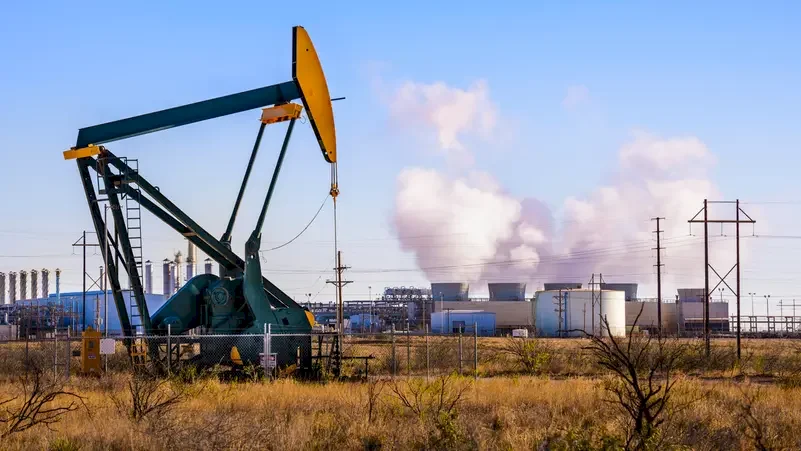
The Oil Market May Absorb Maduro's Shock Amid Global Supply Abundance
SadaNews - While the arrest of Venezuelan President Nicolás Maduro following U.S. airstrikes is a highly significant geopolitical development, preliminary reports indicate that the global oil market will largely handle this move calmly.
According to sources familiar with the matter, the oil infrastructure in Venezuela has not been impacted following a series of American attacks in Caracas and other states. The individuals, who requested not to be named for confidentiality reasons, stated that key facilities such as José Port, Amuay Refinery, and the oil areas in the Orinoco Belt are still operational.
Venezuelan Oil Accounts for a Minimal Share of Global Supply
Although Venezuela was previously a major player in oil production, its output has sharply declined over the past two decades, now representing less than 1% of global supplies. Recent U.S. pressures on Maduro's regime, including the confiscation of tankers carrying Venezuelan crude, have forced the country to begin shutting down some oil wells.
At the same time, global oil supplies are expected to exceed demand by about 3.8 million barrels per day by 2026, a record level, according to the International Energy Agency. Crude prices have recently dropped to around $60 per barrel.
One retail trading product over the weekend, managed by IG Group, showed that U.S. crude prices rose at one point by nearly two dollars compared to Friday's close.
Expectations of a Rise in Brent Crude Post-Venezuela Operation
Arne Lohmann Rasmussen, chief analyst at A/S Global Risk Management, stated: "I estimate that Brent crude prices will increase slightly at the opening on Sunday evening, by about one to two U.S. dollars or even less." He added: "Even under normal circumstances, a disruption of this scale can be handled by the market. In particular, all forecasts indicate a significant surplus in supplies during the first quarter, driven by seasonal demand weakness and increased production from the OPEC+ alliance."
Venezuela is a member of the Organization of Petroleum Exporting Countries (OPEC), which is scheduled to hold a meeting on Sunday alongside its allies, including Russia. The planned video conference meeting is expected to maintain the halt on scheduled production increases, according to three delegates earlier this week.
The confiscation of tankers in the Caribbean in recent weeks has raised concerns among sanctions-affected ship operators. According to vessel tracking by Bloomberg on Friday, at least seven ships altered their course or stopped at sea. This adds to four other ships that had changed course immediately after U.S. forces boarded the vessel Skipper in mid-December.
Venezuelan Oil Industry in Jeopardy
Despite the volatility of last month, American oil company Chevron continued its operations in the country under a sanctions exemption granted by the Trump administration.
The company stated in a statement issued on Saturday: "Chevron remains focused on the safety and well-being of our employees, as well as the safety of our assets." It added: "We continue to operate with full compliance with all relevant laws and regulations."
The arrest of Maduro has sparked speculation about the long-term fate of the Venezuelan oil industry. The country's oil reserves are estimated to be greater than those of Saudi Arabia, and it has attracted some of the largest global companies over the past century.
However, two waves of nationalization left a negative impression on companies such as Shell, ExxonMobil, and ConocoPhillips. Exxon and Conoco then sought compensation after their assets were seized by the late President Hugo Chávez.
Alongside Chevron, companies such as Spanish Repsol, Italian Eni, and French Maurel et Prom remain present in Venezuela, participating in oil and gas projects with the state oil company Petróleos de Venezuela.
In a comment following Maduro's arrest, President Donald Trump raised the possibility of increasing U.S. presence in the Venezuelan oil sector, stating to Fox News on Saturday: "We will be very, very much involved in it."
 Follow the latest Sada News via Google News
The World Bank Warns: "The Worst-Case Scenario" for Global Growth is Approaching

Trump Prepares to Impose New Tariffs on Dozens of Economies

Gold Surpasses $4,100 as Selling Pressure Eases

Oil Rises for the Fourth Day as Supply Risks Escalate

An Additional $8 Billion.. A New Account from the Pentagon on the Cost of the War with Ira...

London Stock Exchange Enters the Era of 24/7 Trading

Shamaran Petroleum: Suspension of Oil Production in Duhok Fields in the Kurdistan Region o...
