

Report: The occupation targeted more than 11,200 dunams in the West Bank during 2025
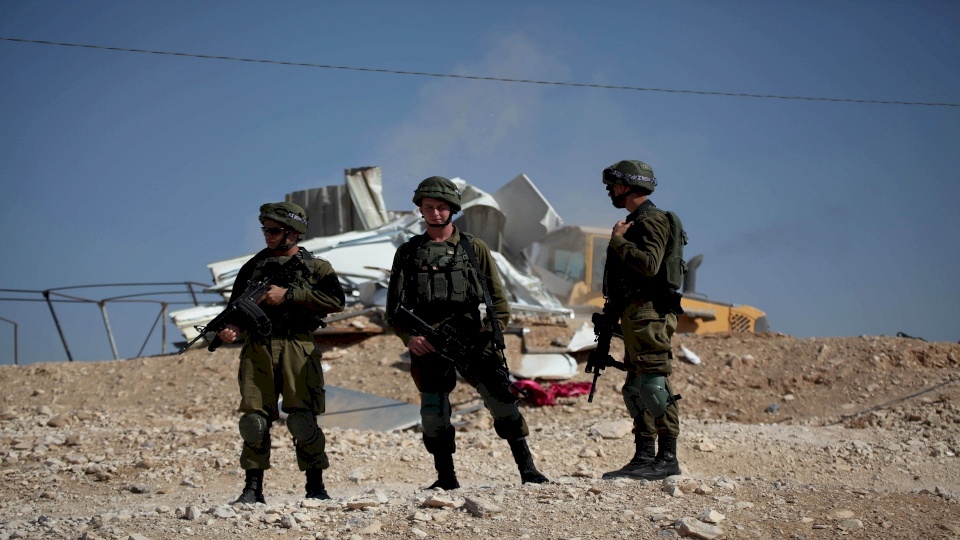
SadaNews - The Applied Research Institute - Jerusalem (ARIJ) reported that the year 2025 witnessed the issuance of 146 military orders by the Israeli occupation army, targeting a total area of over 11,200 dunams of Palestinian land across various governorates of the West Bank, in addition to restricting access to more than 25,000 dunams of agricultural land during the olive picking season.
In a report issued today, Thursday, it clarified that the distribution of the notifications among the governorates, with the number of dunams and their percentage of the total area seized, is as follows:
Bethlehem: 63 dunams, representing 0.57%, with two notifications.
Ramallah: 1,301 dunams, representing 11.59%, with 22 notifications.
Hebron: 52 dunams, representing 0.47%, with eight notifications.
Nablus: 6,906 dunams, representing 61.5%, with 176 notifications.
Salfit: 168 dunams, representing 1.50%, with six notifications.
Qalqilya: 522 dunams, representing 4.65%, with six notifications.
Tulkarm: 204 dunams, representing 1.82%, with one notification.
Jenin: 356 dunams, representing 3.17%, with seven notifications.
Jerusalem: 555 dunams, representing 4.94%, with three notifications.
Jericho: 4 dunams, representing 0.04%, with one notification.
Tubas: 1,096 dunams, representing 9.76%, with 14 notifications.
The institute pointed out that since the occupation of the West Bank in 1967, the Israeli occupation authorities have adopted a broad methodology by using military orders as a "legal" tool to impose geographical and demographic realities on Palestinian land. These orders have become a "procedure" adopted by the occupation authorities to confiscate Palestinian land under various flimsy pretexts, the most notable of which is their declaration of "State land" or lands classified as "nature reserves or green areas", and others classified as "firing zones" or "closed military areas", as well as others such as "expropriation for public benefit" or "Israeli archaeological areas", among others.
It emphasized that the Israeli confiscation orders and practices are among the most prominent tools used directly by the occupation authorities to control Palestinian lands, in addition to the colonial expansions and plans that are being proposed year after year to expand settlements and colonial outposts as well as infrastructure.
It added that these measures, whether issued under the pretext of "military purposes" or "public benefit" or "nature reserves" or "security pretexts", among others, are considered contrary to the Fourth Geneva Convention of 1949, which prohibits the occupying power from seizing private property except in cases of urgent military necessity, as well as the Hague Regulations which emphasize the need to respect private property and prohibit its confiscation.
It is worth noting that the advisory opinion issued by the International Court of Justice in 2004 regarding the legal consequences of the construction of the wall in the occupied Palestinian territories reaffirmed the applicability of the rules of international humanitarian law and human rights law to the occupied territories, and indicated that these occupation measures that change and affect the demographic and geographical status of Palestinian land violate the right to self-determination of the Palestinian people and impact the possibilities of establishing a geographically continuous and viable Palestinian state.
 Follow the latest Sada News via Google News
Morocco Hosts Formative Exercise for International Stabilization Force in Gaza

Sheikh Holds Meeting with Security Leaders to Follow Up on Current Developments

Hebrew Channels: The Likelihood of Israel's Participation in the Attack on Iran is Increas...

Netherlands Sets September Deadline for Ban on Settlement Products

12 Martyrs in Gaza Strip since Dawn Today

A Series of Important Decisions Taken.. The Cabinet Discusses Developments in the Deterior...

Organizations of the Temple Prepare for the Largest Raid on Al-Aqsa on What is Called the...
