

Where Does the Second Phase of the Ceasefire Agreement Stand?!
SadaNews Report - The second phase of the ceasefire in the Gaza Strip is facing significant complications due to the complex conditions imposed by the United States, particularly on Hamas.
The American envoy Steve Whitecoff announced on January 14 that the transition to the second phase of the ceasefire has begun, following Israel's success in recovering the last body of its soldier after Hamas provided, via intermediaries, the coordinates of its burial site.
The terms of this phase, as announced by the American administration and followed by SadaNews, include the establishment of a Peace Council and its executive arm, the International Stability Force (Peacekeeping Force) according to United Nations Security Council Resolution 3803.
The Peace Council has actually been formed, and its first meeting took place last Thursday in Washington, attended by representatives from more than 20 countries. Some countries announced their readiness to deploy troops as part of the international stability forces to Gaza, with Indonesia being one of the prominent countries thus far. President Donald Trump announced the participation of Egypt, Morocco, and other countries whose involvement has yet to be independently confirmed by their representatives, despite their expressed readiness.
Since the announcement of the second phase, the crisis of forming the Stability Force Committee has represented a dilemma for Trump and the United States, as participating countries refuse to take any military role in disarming Hamas and the resistance.
The second phase stipulates the withdrawal of the occupying army to the red line, reducing the area controlled by Israel to approximately 20% of the Gaza Strip's territory.
As of now, Israel has not taken this step and insists on maintaining its forces at the yellow line, primarily linking it to the disarmament process of Hamas and other factions, which in turn refuse to do so without reaching agreements regarding their weapons.
The agreement aims to prevent Israel from reoccupying the Gaza Strip or permanently annexing it, a threat that the government of Benjamin Netanyahu continues to wield each time it states that this will be implemented if Hamas does not surrender its weapons, whether heavy or light.
On the ground, it appears that Israel wants to remain at the yellow line, effectively occupying more than 53% of the territory, and its military chief Eyal Zamir has clearly stated that this is the new boundary. Netanyahu has continuously talked about Israel's full security control over the Gaza Strip.
The agreement also outlines a plan to deal with the resistance's weapons and to destroy what remains of tunnels in Gaza.
Hamas seeks to reach a comprehensive Palestinian national agreement regarding weapons and their future so that it does not appear to have surrendered or compromised on arms and the option of resistance. It is also trying to reach understandings with intermediaries about its weapons and the weapons of the factions without allowing for their forceful disarmament.
Hamas is particularly looking to achieve an agreement that freezes the use of weapons in any case for ten years or more, or places them under the protection of any of the intermediaries or a Palestinian entity agreed upon.
Clearly, Israel rejects this, but the United States might be more open to it as long as it achieves its goal of ensuring that Gaza does not pose a threat to Israel and that Hamas does not maintain control over the region.
The second phase calls for establishing a post-war governance system represented by an executive council composed of international figures, led by Nikolay Mladenov, who formed the National Committee for Gaza's Management after lengthy discussions about its members, before reaching an agreement on them. However, as of now, Israel continues to refuse to allow its members into the Strip to assume their governmental duties in place of Hamas. In contrast, Hamas is trying to integrate officials and elements within its government and security apparatus into the composition of the governmental work, a move that is rejected by both the executive council and the Peace Council.
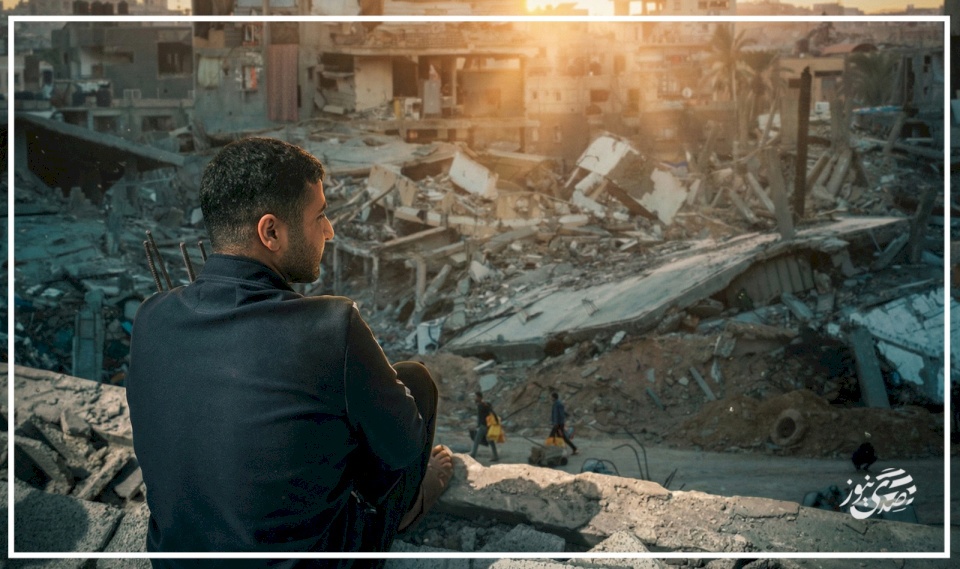
Amid all these stipulations, there remains a clause concerning the start of a reconstruction plan for the strip and the removal of rubble and debris, an issue that has not yet been agreed upon and is linked by Israel and the United States to the disarmament of Hamas and the factions, while the Palestinian resistance demands that it starts immediately and without being tied to anything else.
American envoy Jared Kushner presented documents indicating that reconstruction will begin in Rafah in the areas under Israeli control, provided that Hamas surrenders its weapons and withdraws from the scene.
Despite the announcement of the start of the second phase, in reality, as SadaNews reported, the first phase has not been fully implemented, which included reopening the Rafah crossing, expanding the scope of humanitarian aid deliveries, and reconstructing hospitals and schools, as well as rehabilitating infrastructure.
In fact, Israel accepted, at the beginning of this month, to open the Rafah crossing after prolonged evasion; however, it was able to impose its vision regarding the number of travelers going back and forth, all of whom are patients and their companions. Instead of allowing 150 patients daily, only about 50 travelers returning are allowed, and approximately the same number departing.
Meanwhile, humanitarian aid still does not meet the minimum daily requirements, as Israel focuses on introducing goods for the private sector aiming to achieve substantial financial profits. Meanwhile, senior officers in its army were smuggling prohibited goods into the sector for personal financial gain, receiving bribes from various parties to allow their smuggling through the crossings.
 Follow the latest Sada News via Google News
High-level sources reveal to SadaNews: Washington seeks to hold a Gaza Reconstruction Conf...

Iraqji Reveals Details of the Attack on the Iranian Supreme Leader's Headquarters

صراع على إرث خامنئي وسط غياب مجتبى.. والمتشددون يتهمون قادة إيران بـ«الانقلاب»

The European Union Reiterates Its Call for Israel to Refrain from Expanding Settlements in...

"Mamdani Berlin".. The German Left Bets on a Politician of Turkish Descent to Lead the Cap...

Hebrew Channel: Kushner Pushing to Enhance Communication Between the United States and the...

SadaNews Report: Israeli Elections with a Settlement Flavor!
