

Top News
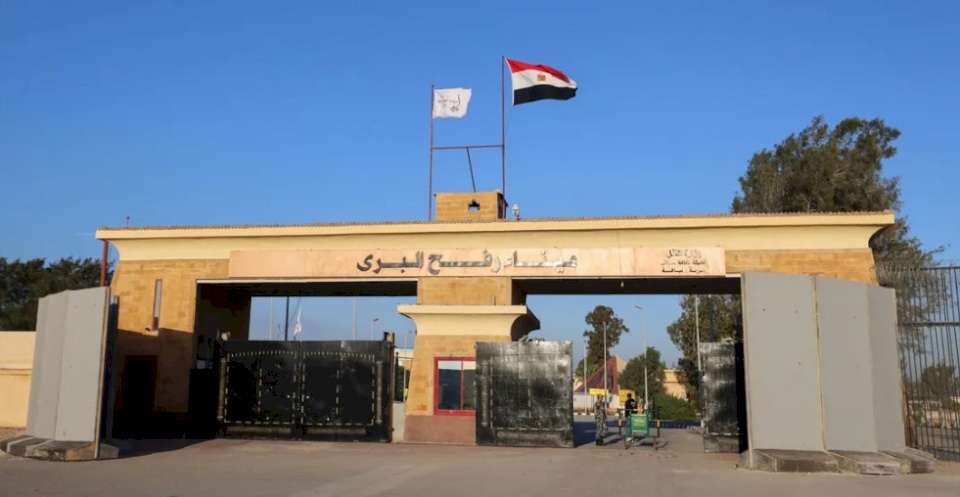
Arab and Islamic countries: Concerned about Israeli statements regarding the opening of the Rafah crossing to evacuate Gaza residents to Egypt
SadaNews - Foreign ministers from the Arab Republic of Egypt, the Hashemite Kingdom of Jordan, the United Arab Emirates, the Republic of Indonesia, the Islamic Republic of Pakistan, the Republic of Turkey, the Kingdom of Saudi Arabia, and the State of Qatar expressed deep concern regarding the statements issued by the Israeli side about opening the Rafah crossing in one direction to evacuate residents of the Gaza Strip to the Arab Republic of Egypt.
The ministers emphasized in a joint statement this evening their complete rejection of any attempts to displace the Palestinian people from their land, reaffirming the necessity of full adherence to the plan of U.S. President "Donald Trump," which included opening the Rafah crossing in both directions, guaranteeing freedom of movement for the residents, and not forcing any of the Gaza residents to leave. Instead, they emphasized creating the appropriate conditions for them to stay on their land and participate in building their homeland, within a comprehensive vision for restoring stability and improving their humanitarian conditions.
The ministers reiterated their appreciation for President "Trump's" commitment to establishing peace in the region, stressing the importance of proceeding with implementing President "Trump's" plan in all its entitlements without delay or disruption, achieving security and peace, and establishing the foundations of regional stability.
In this context, the ministers emphasized the necessity of ensuring a complete ceasefire, putting an end to the suffering of civilians, ensuring the entry of humanitarian aid into the Gaza Strip without restrictions or obstacles, initiating early recovery and reconstruction efforts, and preparing the conditions for the return of the Palestinian Authority to assume its responsibilities in the Gaza Strip, establishing a new phase of security and stability in the region.
They also confirmed their countries' readiness to continue working and coordinating with the United States and all relevant regional and international parties to ensure full implementation of Security Council Resolution 2803 and all relevant Council resolutions, and to provide the conducive environment for achieving a just, comprehensive, and sustainable peace in accordance with international legitimacy and the principle of the two-state solution, leading to the establishment of an independent Palestinian state on the lines of June 4, 1967, including the occupied territories of Gaza and the West Bank, with East Jerusalem as its capital.
 Follow the latest Sada News via Google News
Read Also

Morocco Hosts Formative Exercise for International Stabilization Force in Gaza

Sheikh Holds Meeting with Security Leaders to Follow Up on Current Developments

Hebrew Channels: The Likelihood of Israel's Participation in the Attack on Iran is Increas...

Netherlands Sets September Deadline for Ban on Settlement Products

12 Martyrs in Gaza Strip since Dawn Today

A Series of Important Decisions Taken.. The Cabinet Discusses Developments in the Deterior...

Organizations of the Temple Prepare for the Largest Raid on Al-Aqsa on What is Called the...
