
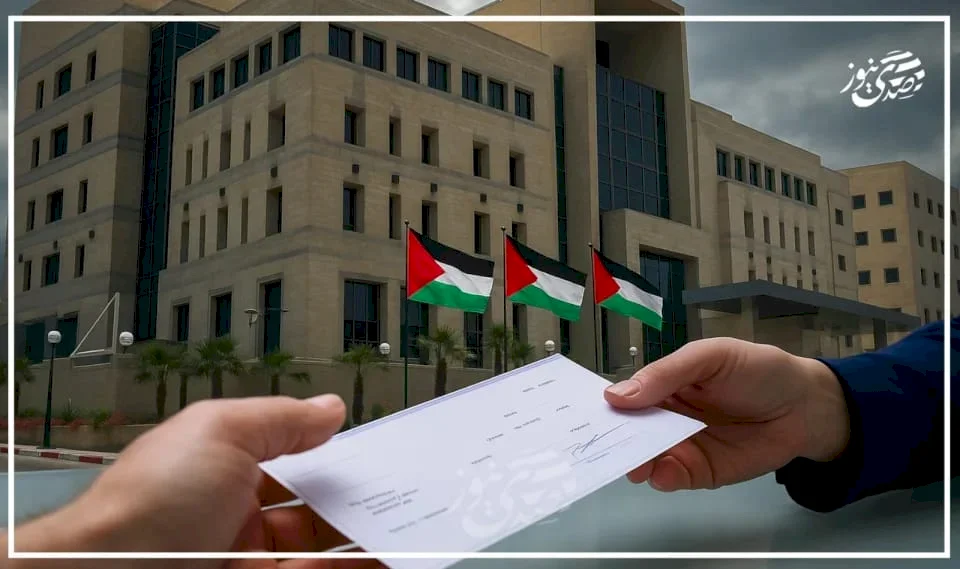
Monetary Authority to SadaNews: We have completed the legal studies related to the regulation and restriction of check endorsement operations
Exclusive to SadaNews: The Monetary Authority confirmed that it has completed the legal studies related to the regulation and restriction of check endorsement operations. However, the approach to limiting this practice is being carried out gradually and thoughtfully, due to the direct link of endorsement to financing business activities and providing liquidity in the Palestinian market.
The Monetary Authority told "SadaNews" that controlling endorsement operations is an important regulatory step to limit the transfer of credit risks between parties, noting that the current economic reality enforces the application of this approach in a balanced manner that ensures the continuity of commercial activity without disrupting cash flows in the market, especially in light of the prevailing culture that treats checks as a delayed payment tool and a means of settling commercial obligations, rather than merely as an immediate cash payment tool. This has led to the establishment of endorsed checks as a primary means for settling inter-debts among traders, which requires the development of a comprehensive legislative and regulatory system that keeps pace with any shift in this direction gradually and safely.
Expansion of Electronic Payment Tools
In parallel, the Monetary Authority pointed out that it is working within its strategy for digital transformation to expand modern electronic payment tools, aimed at reducing dependence on traditional checks and enhancing the efficiency and security of the payment system. This direction complements the recently issued law to reduce cash usage, which aims to enhance reliance on electronic payment methods and limit cash transactions, contributing to improving the efficiency of financial transactions and enhancing transparency and financial inclusion.
In this context, the Monetary Authority has developed an advanced infrastructure that includes a Real-Time Gross Settlement (RTGS) system for settling transfers between banks instantly and finally, along with an electronic bill presentment and payment platform (E-SADAD). Additionally, there is the iBURAQ instant payment system, which enables real-time transfers and payments 24/7 without fees, as well as the electronic payment gateway (SADAD GATE), allowing companies to offer direct payment services to their customers through digital applications and platforms.
The Monetary Authority is also working on enhancing the proliferation of electronic wallets and point-of-sale systems, while introducing QR payment services soon, as well as launching a direct debit system, which represents a qualitative step in organizing installment operations in a safe and effective manner, limiting the use of checks as collateral tools and enhancing the efficiency of electronic payment systems and their role in the Palestinian market.
What about the Electronic Check?
Regarding the electronic check, which has been discussed repeatedly as one of the tools to limit returned checks, the Monetary Authority pointed out that it recognizes its increasing importance as a modern tool that can contribute to developing and enhancing the efficiency of the payment system, due to its advantages, including: controlling the issuance process of checks through prior verification of customer financial solvency, reducing the volume of returned checks, and limiting the phenomenon of endorsement by restricting the negotiability of checks, in addition to improving the management of delayed checks within a more efficient regulatory and supervisory framework.
The main obstacles in this regard stem from the nature of prevailing commercial transactions, which still broadly depend on delayed paper checks as a credit and collateral tool; this necessitates a gradual transitional phase ensuring market readiness and the continuity of economic activity without impacting trade and liquidity flows.
In response to a question from "SadaNews" about the dangers of continuing to circulate checks as a main tool in the market despite the rise in the value of returned checks over the past two years due to economic conditions, the Monetary Authority stated that due to the prevailing culture in the Palestinian market, checks are the primary payment method after cash, and form a cornerstone in facilitating financial transactions and financing short-term economic activities, providing flexibility that contributes to the continuity of commercial movement, especially amid current political and economic challenges.
In this framework, the Monetary Authority has taken several measures aimed at reducing returned checks and enhancing discipline in check usage, most notably implementing a classification system for returned checks, regulating the issuance of checkbooks to customers, including not granting checkbooks to clients classified in categories (C) and (D), regardless of the number of books requested. Furthermore, the legal period for settling the amount of returned checks has been reduced from (12) days to (5) business days, and requiring the person requesting a stop on the check to reserve its entire value.
Additionally, the Monetary Authority launched a unified credit inquiry system for private sector companies, aimed at enabling firms to verify their clients' classifications and financial obligations with financial institutions before commencing transactions and accepting their checks, alongside launching an individual inquiry application (PMA) in September 2023, which allows individuals to inquire about their check classifications.
Moreover, the Monetary Authority is set to soon launch the "direct debit" system, which will provide an organized and secure mechanism to implement installment operations, contributing to reducing the use of checks as a collateral tool, and enhancing the efficiency and role of electronic payment systems in the Palestinian market.
Improvement in Returned Checks
Data from 2024 and 2025 indicate that the values of checks presented for clearing and returned remain within acceptable limits given the current exceptional circumstances. In 2025, the number of checks circulated in Palestine was around 5.7 million checks, with a total value of 20.25 billion dollars, of which approximately 602 thousand checks amounting to 1.37 billion dollars were returned due to insufficient funds, accounting for 10.5% in number and 6.8% in value, reflecting an improvement compared to 2024, when the return rate of checks was 16.7% in number and 8.3% in value.
 Follow the latest Sada News via Google News
Soaring Oil Prices Burn the Pockets of the Palestinian Citizen "The Poor"

Millions of Dollars in Losses.. "SadaNews" Reveals Shocking Figures for Traders from Pales...

The Problem of Shekel Overcrowding Worsens.. Fuel Station Owners Threatened with Closure o...

The Palestinian Economy at a Crossroads: 4 Files Awaiting Resolution

Israeli Discussions Explore Ways to Tackle Rising Crime Against Banks and Their Employees

Bringing in New Foreign Workers to Israel Instead of Palestinians

The Monetary Authority Organizes Training on Developing Financial Technology Systems and S...
