

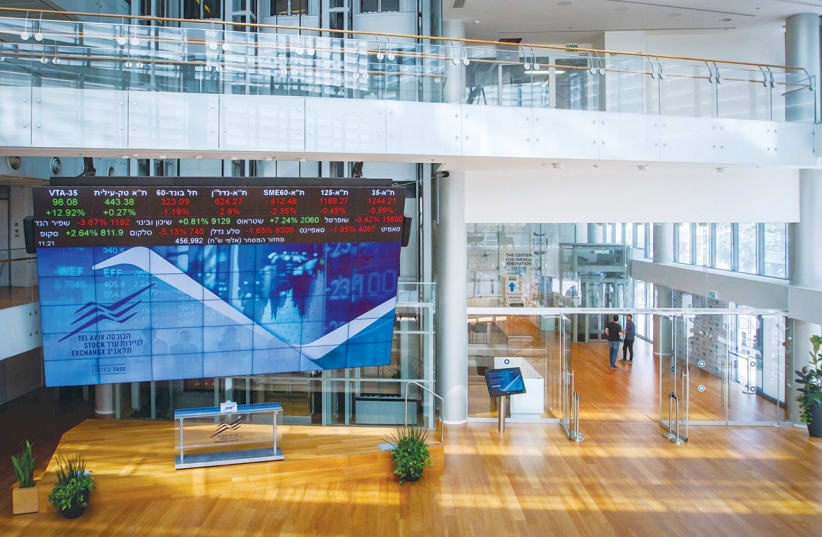
Hebrew Report: After the Explosion of Negotiations.. Significant Decreases at the Start of Trading Week in the Stock Exchange
SadaNews - The Tel Aviv Stock Exchange experienced a negative opening this morning, Monday, for the first time since the negotiations between the United States and Iran began in Pakistan, where the failure of the last round led to a noticeable decline in the main indices, according to Sada's Economy translation of a report published through the Hebrew newspaper "Calcalist."
The TA 35 index fell by 1.41%, the TA 90 index by 1.72%, while the TA 125 index decreased by 1.56%. In the currency market, the US dollar rose by one cent from its lowest level recorded last Friday, currently trading around 3.06 shekels. The euro also increased by one cent to about 3.58 shekels.
Shares of some companies recorded sharp declines, notably Palo Alto, which dropped by 9.47%, followed by Ness with a decrease of 6.23%, El Al by 5.51%, Brashkovsky by 4.22%, and Carso Real Estate by 3.83%. In contrast, the stock of Bazan rose by 4.66%, and Delek by 1.57%, according to Sada's Economy translation.
Observers attributed this decline to the escalation of geopolitical tensions following the collapse of negotiations in Islamabad, with the Strait of Hormuz remaining partially closed, and US President Donald Trump's announcement of the possibility of imposing a naval blockade on Iran. As a result, oil returned to rise sharply, exceeding $100 per barrel, negatively affecting the Israeli financial markets.
Israeli Economic Statements: "A Knockout for the Industry"
As translated by Sada's Economy, Or Burya, Chairman of the Burya Finance Company, stated that trading resumed in an atmosphere of great concern due to the failure of the US-Iranian talks, the ongoing tensions around the Strait of Hormuz, and Trump's threats of a naval blockade.
He added that oil has become the main indicator for markets in recent weeks, leading to declines in stock indices, weakness in the value of the shekel against foreign currencies, and a rise in the dollar against the euro, alongside pressures in the debt market. He expected that geopolitical developments would remain the decisive factor in trading trends over the coming days, noting that the expectation of a quick breakthrough in negotiations is unrealistic at this early stage.
For his part, Abraham Novogrotsky, Chairman of the Israeli Manufacturers' Association, expressed his deep concern over the recent decline of the dollar against the shekel, describing it as "a knockout for the ability of the Israeli industry to compete and for the economy as a whole."
Novogrotsky stated that the war has proven the importance of industrial production as a fundamental pillar of the economy, especially in times of crises, where it ensures continuity of work and supplies for the country. He called on the Minister of Finance and the Governor of the Bank of Israel to recognize that supporting industry is not an expense, but a necessary strategic investment in the strength of the state, according to Sada's Economy translation.
He demanded that the "Bank of Israel" activate its monetary tools immediately, including lowering interest rates, absorbing surplus hedges at financial institutions, and returning to intensive foreign currency purchasing to stop the rise of the shekel. He also called on the Ministry of Finance to develop a comprehensive plan that includes bold tax and fiscal measures to enhance the competitiveness of the industrial sector, such as allowing tax payments to be made in dollars, accelerating consumption, increasing grants and government guarantees, and activating export support programs.
The Israeli Central Bureau of Statistics is expected to release the Consumer Price Index for March the day after tomorrow, which will not yet reflect the impact of rising fuel prices at the beginning of April, nor the approximately 3% decline in the value of the dollar since March. Forecasts indicate an increase in the index ranging between 0.3% and 0.5%.
 Follow the latest Sada News via Google News
Soaring Oil Prices Burn the Pockets of the Palestinian Citizen "The Poor"

Millions of Dollars in Losses.. "SadaNews" Reveals Shocking Figures for Traders from Pales...

The Problem of Shekel Overcrowding Worsens.. Fuel Station Owners Threatened with Closure o...

The Palestinian Economy at a Crossroads: 4 Files Awaiting Resolution

Exchange Rates of Currencies Against the Shekel Today, Wednesday (July 22)..

بنك إسرائيل يخفض توقعات النمو ويحذر من ارتفاع العجز

Exchange Rates of Currencies Against the Shekel on Tuesday (July 21)
