

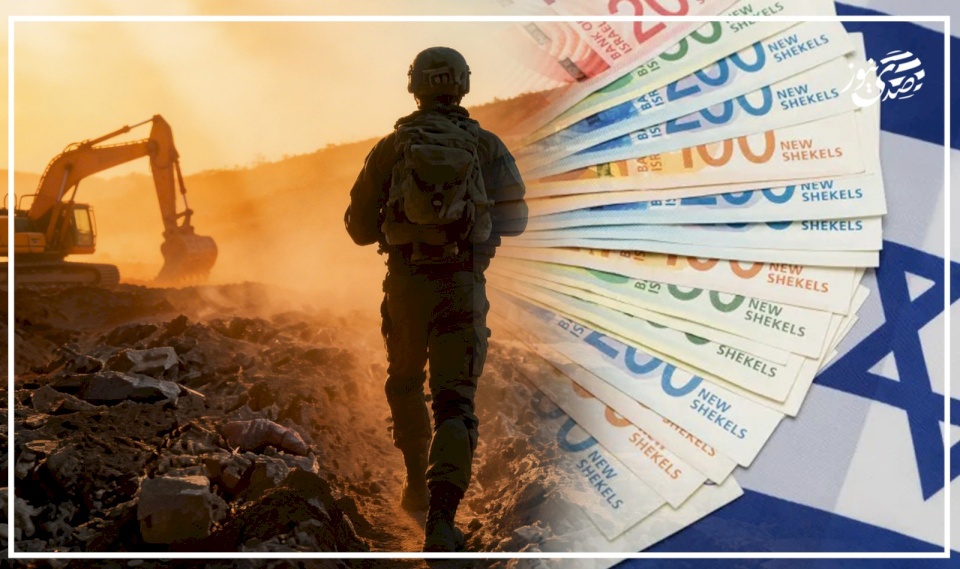
Israel's Budget: Funding for War, Consolidation of Settlement, and Sharing the “Cake” at the Expense of Deepening the Deficit
Exclusive to SadaNews: With a majority of (62) votes, the Israeli budget for 2026 has been approved by the Knesset, controlled by extremist right-wing parties, bringing the budget total to 699 billion shekels (222 billion dollars), with a deficit set at 4.9% of the Gross Domestic Product.
This budget, overall, enshrines Israel's continuation of its war policies towards Iran, Lebanon, and the region, and strengthens its settlement activities in the West Bank, in addition to fully dividing the spoils among the right-wing factions to maintain the governing coalition until the end of this year before elections are held.
In this budget, "Defense and Security" received the largest share, amounting to 143 billion shekels, an increase of nearly 120% compared to 2023 before the Gaza war. Additionally, 6 billion shekels have been earmarked as a reserve for costs associated with the war against Iran or other military needs, raising the increase in the "Defense" budget to no less than 38 billion shekels, or about 2% of GDP. This additional funding is primarily directed towards rebuilding the military's stockpile and funding the salaries of reserve forces.
Economic expert Hani Najm from within the Green Line tells SadaNews that the budget passed is primarily a war budget, as very large sums have been transferred to the Ministry of Defense, raising security allocations, at the expense of deepening the government deficit in 2026.
He points out that after the budget was approved, the Israeli Ministry of Finance published a report confirming that growth expectations have been significantly reduced compared to the period of budget preparation.
Najm confirms that the Israeli government has maintained through this budget the coalition government by distributing extremely large amounts "as coalition amounts" to settlers, religious right-wing public, and "Haredim", with the aim of preserving the coalition and ensuring its continuity.
On the other hand, Najm points out that the budget included cuts in allocations for many different service ministries, in addition to reducing budgets that genuinely contribute to economic development.
He says: "For the Arab community, many of the budgets designated for its development have been cut," noting that the year 2026 will be a burden on Israel, especially if the war continues for a long time, as this budget is expected to lead to an increase in public debt and public debt service.
Najm concludes that the budget is detrimental to the Israeli citizen, and there have been attempts to impose tax deductions for those earning between 15,000-25,000 shekels per month, a segment that does not touch the Arab community, but meets the needs of right-wing groups, indicating that the budget was distributed on electoral and party interest bases.
He says: "This budget aimed to satisfy some segments of the public related to the Finance Minister," pointing out that the total budget is detrimental to the Israeli citizen and may lead to an economic crisis if political solutions are not reached either with the Palestinian people or in Lebanon or Iran, or with Arab countries.
For his part, financial expert and banking consultant Mohamed Salama views that the markets in Israel read the approval of the budget negatively, as Tel Aviv stocks dropped by 1% about a day after its approval, and the shekel depreciated, with the dollar trading at a level of 3.165, surpassing the 3.15 level that had previously impeded the dollar's rise.
Salama explains that the budget approved with (62 votes) in the Knesset met the demands and interests of extremist parties, either through party support allocations or support for their interests, noting that the surprising element was the support for settlement and religious schools for the Haredim, in addition to increasing the Ministry of Defense's allocations by (30) billion shekels, bringing the "Defense" budget to (142) billion shekels at the expense of economic activities, due to the need to cover the war that Israel is waging against Iran.
Salama pointed out that this budget will lead to an increase in the deficit by 5% for the year 2026, noting that the budget did not provide any indication of reducing public debt; rather, it included debt servicing and interest payments without any intention to reduce public debt.
Salama confirms that the budget focused on supporting non-economic priorities such as raising the military and security budget, or supporting Talmudic schools, as these are non-productive activities and that supporting parties and settlements will not lead to any economic benefit, which has increased fears in the markets about the continuation of the war for a longer time than expected.
He adds: "It is clear that it may turn into a war of attrition, and the losses and effects of the war will lead to a decline in expected revenues, and that credit rating agencies may take into account a range of considerations when reviewing Israel's credit rating," noting that the increase in public debt and the budget deficit, the cessation of gas sales, the economy being stalled for a longer period, the ongoing war and its costs, and the renewed rise in strategic risk indicators after the decline in expectations of achieving Israel's interests in this war, all increase the risks of downgrading the rating and raising the cost of financing public debt, which has led and will lead to a decline in stocks and the shekel.
 Follow the latest Sada News via Google News
Soaring Oil Prices Burn the Pockets of the Palestinian Citizen "The Poor"

Millions of Dollars in Losses.. "SadaNews" Reveals Shocking Figures for Traders from Pales...

The Problem of Shekel Overcrowding Worsens.. Fuel Station Owners Threatened with Closure o...

The Palestinian Economy at a Crossroads: 4 Files Awaiting Resolution

Currency Exchange Rates Against the Shekel on Thursday (July 9)

National Economy: Referral of 6 Violators to Prosecution and Seizure of 76 Tons of Violati...

Israel's Foreign Currency Reserves Rise to $238.7 Billion
