

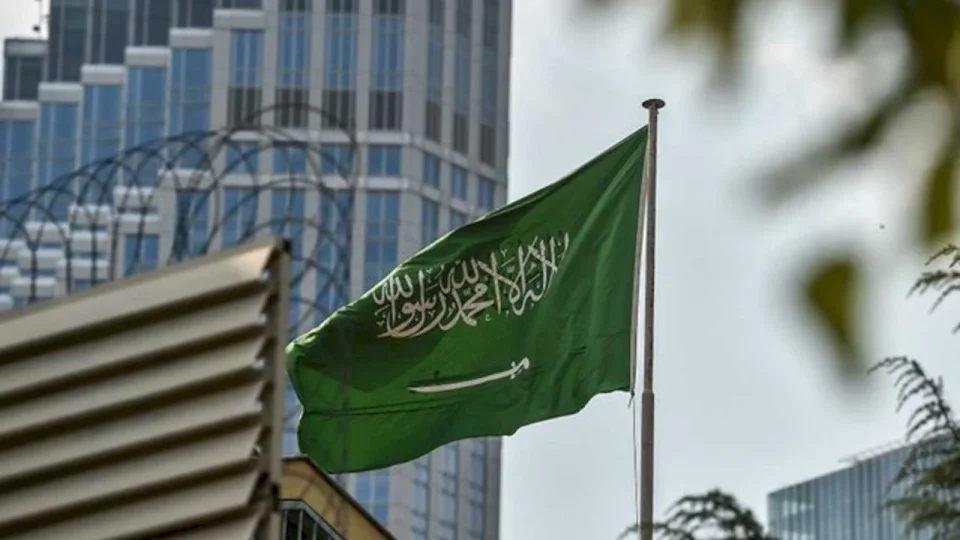
Net Foreign Investment Flows in Saudi Arabia Jump 90% in the Last Quarter of 2025
SadaNews - Net foreign direct investment flows to Saudi Arabia grew by about 90% during the last quarter of 2025, as the Kingdom continues to improve its investment environment and intensify reforms.
Net flows amounted to approximately 48.4 billion riyals during the period from October to December of last year, recording its highest quarterly level since 2023, according to available data published on the General Authority for Statistics website on Tuesday. Flows also increased by 82% quarter-on-quarter, the highest since the first quarter of 2025.
The Kingdom aims to attract about $100 billion in foreign direct investments annually by 2030, supported by a package of legislative and regulatory reforms to enhance market attractiveness. These measures include lifting restrictions on foreign ownership in the financial market, as well as approving a new system for non-Saudis to own real estate.
This momentum contributed to a notable improvement in foreign investment flows last year, with total flows reaching about 133.2 billion riyals, close to the government target of 140 billion riyals, while net flows recorded around 109 billion riyals.
The flows recorded in 2025 are the first annual rate calculated according to a new mechanism announced by the Ministry of Investment in September 2025, in line with the methodology of the International Monetary Fund, which reflected on the revision of 2024 data, indicating that flows amounted to 119 billion riyals, an increase of nearly 37% over previous estimates, nearing the record level recorded in 2021 of approximately 122 billion riyals.
Achieving Investment Targets Opens the Door to a New Phase
This performance comes at a time when the Kingdom is moving towards a new phase of its investment strategy, following an investment rate of about 30% of GDP in 2024, along with foreign direct investment increasing fourfold since the launch of "Vision 2030".
The sector is also witnessing institutional changes, with Fahd bin Abdul Jalil Al Saif appointed as Minister of Investment, succeeding Khalid Al-Falih, who was appointed Minister of State and a member of the Council of Ministers, amid rapid transformations in the investment sector as the second phase of the strategy approaches launch.
Al Saif comes from the Public Investment Fund, where he held leadership positions in global investment financing, investment strategy, and economic studies.
Al-Falih has led the Ministry of Investment since its establishment in 2020 and continued in his position until February 2026, witnessing the achievement of several investment targets under "Vision 2030" ahead of schedule.
The Second Phase Focuses on Investment Quality and Enhancing Competitiveness
The second phase of the national investment strategy, as indicated by former Minister of Investment Khalid Al-Falih, aims to build on what has been achieved, shifting from a focus on the growth of investment volume to enhancing its quality and productivity, directing it towards sectors with the highest economic impact.
Additionally, efforts are being made to improve several competitive factors, including facilitating private sector access to talents, reducing business costs, and developing financial solutions that support growth.
In this context, the Council of Ministers approved the regulatory frameworks for special economic zones, set to begin implementation in April 2026, aiming to support foreign investment flows and enhance the investment environment in the Kingdom.
 Follow the latest Sada News via Google News
London Stock Exchange Enters the Era of 24/7 Trading

Shamaran Petroleum: Suspension of Oil Production in Duhok Fields in the Kurdistan Region o...

Dollar Steadies Near One-Week High Amid War Developments

Trump Imposes Tariffs on Canadian Imports... Ottawa Vows to Respond

Oil Prices Drop After Reports of Mediation Efforts Between the U.S. and Iran

Gold Price Rises Supported by Increased Buying Amid Lower Prices

Due to "Hazardous and Counterfeit Products".. Europe Fines "AliExpress" $627 Million
