

The Struggle with Iran Ignites a Global Race to Secure Vital Fertilizers
SadaNews - Cheet Edinger had already purchased most of the fertilizers needed for his corn and soybean farm last year, but on Monday morning, as war broke out in the Middle East, he rushed to secure a few last trucks of urea for the vast fields he cultivates near Mitchell, South Dakota.
He said over the phone: "We got what we need." But he noted that the price was 22% higher compared to the end of last year - "the highest price I've ever had to pay."
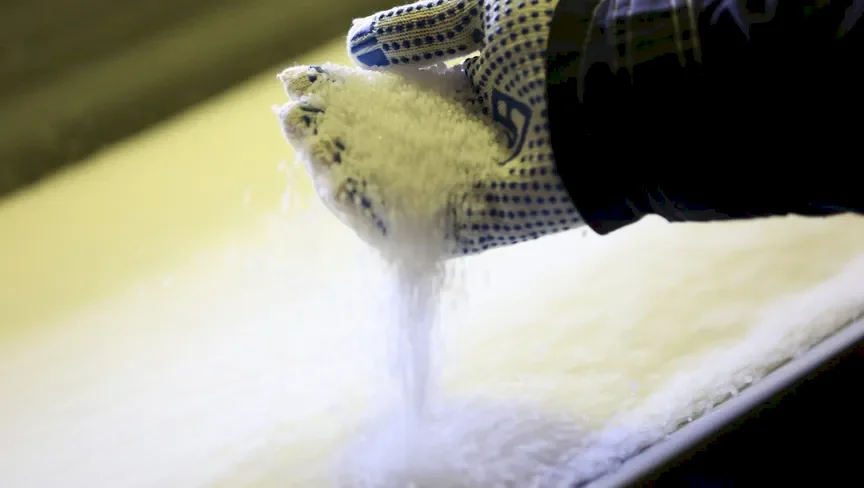
The attacks launched by the United States and Israel on Iran, and Tehran's response across the Middle East, have disrupted fertilizer supplies, prompting farmers around the world to hurry to secure essential fertilizer ingredients. About one-third of the world's fertilizer supplies pass through the Strait of Hormuz, a maritime corridor between the Persian Gulf and the Arabian Sea, which Iran has threatened to close to shipping. Additionally, global natural gas prices are soaring, a key component in fertilizer production.
Rising Fertilizer Prices Frustrate American Farmers
This conflict comes at a sensitive time for global agriculture. Fertilizer costs are already high, as farmers in the Northern Hemisphere prepare to begin fertilizing their fields, while the winter crop planting season approaches in the Southern Hemisphere.
This disruption is a particular source of frustration for farmers in the United States, who have been suffering for years from low crop prices and rising production costs, in addition to trade volatility since President Donald Trump took office.
"I don't want to describe it as catastrophic, but it couldn't come at a worse time," according to Alexis Maxwell, an analyst at Bloomberg Intelligence. She added, "The escalation of attacks in the Middle East creates a global bottleneck for farmers."
Potential Inflationary Pressures by Year-End
If the disruptions continue, they could add new inflationary pressures at a time when the world is still gradually recovering from a long period of high food prices due to the COVID-19 pandemic, the war in Ukraine, and severe weather phenomena.
"Without fertilizers, crop yields decline. And if crop yields decline, the supply of grains or rice or any food in the market decreases," according to Philip Sunderland, a fertilizer trader at Aquifert. He added: "There could be a six- to nine-month delay between planting crops and food reaching your tables. But severe inflation can be expected by Christmas."
Fertilizer Prices in the U.S., Egypt, and Russia Skyrocket Due to War
The market response to the war was quick and strong. Urea prices in the United States - widely used in corn cultivation - rose by about $100 within a week to reach $570 per short ton, the highest level since October 2022, according to Bloomberg Green Markets data. Some U.S. suppliers have also pulled their sale offers, Bloomberg Green Markets reported on Tuesday.
Egyptian granular urea prices jumped by about 20% to $585 per metric ton. Price estimates also surged in Russia, one of the world's largest fertilizer producers.
In many cases, product offers have been withdrawn while buyers are also waiting before committing to purchases, according to Peter Harrison, an analyst at CRU Group. He said: "A large part of the fertilizer market is waiting to gauge the impact of the conflict on supply availability."
Reduced Fertilizer Production in India Due to Qatari Gas Shortage
In India, urea manufacturers have begun reducing production after Qatar suspended liquefied natural gas supplies following an attack, according to sources who requested anonymity. In Pakistan, the fertilizer company Agritech announced on Wednesday that its gas supplies had been suspended.
In Europe, which relies on gas for most of its energy needs, the fertilizer sector has been suffering for years from high costs, production cuts, and competition from low-priced Russian imports. The new spike in gas prices due to the conflict in the Middle East is likely to increase those pressures.
The state-owned Polish fertilizer producer Grupa Azoty - one of the largest fertilizer producers in the European Union - has temporarily stopped accepting orders for its products, citing rising gas prices that have increased production costs.
Global Anxiety Among Farmers
The threat of supply shortages has created anxiety among farmers worldwide.
Rafal Derlokevich, who owns an organic farm in Eastern Poland, said one of his neighbors called him asking for any surplus horse and sheep manure, which he typically uses instead of chemical fertilizers.
He added: "There is a sense of panic here in Lubinka. People cannot buy fertilizers."
In Queensland, northeastern Australia, wheat and barley farmer Richard Golden received a call from his supplier this week urging him to take delivery of the nitrogen fertilizer shipments he had booked in advance - or risk having them taken by other farmers who are feeling increasingly anxious. About two-thirds of Australia’s urea imports come from the Middle East.
Golden said: "We had to realize that if we didn’t consider it important enough to take the shipment, the supplier might sell it to someone else."
Reassessing Farming Plans
In light of the possibility of the conflict continuing for a long time, some farmers have begun to reevaluate their farming plans.
Brad Vickers, a corn and soybean farmer in Iowa, said he was planning to plant two-thirds of his farm with corn, but rising nitrogen costs may push him to reduce the acreage planted with it.
He added: "If nitrogen prices don’t decrease, we may plant more soybeans instead of corn."
But smaller farmers, or those in countries more sensitive to price changes, may not have the ability to store fertilizers or easily switch crop types.
This could affect the production of key crops like palm oil, about 40% of which is produced by smallholder farmers. Palm trees in Southeast Asia require large amounts of nutrients, and any reduction in fertilization could lead to decreased production within a few months.
Ahmad Prowiz Ghulam Qader, the Director General of the Malaysian Palm Oil Board, a government agency that promotes the industry, said: "Rising prices may force small farmers to reduce fertilizer usage or skip fertilization cycles."
Malaysia is the second-largest producer of palm oil in the world.
Global Grain Stocks Mitigate the Impact of the Shock
Currently, global grain stocks remain relatively high, which limits any immediate shock to food prices such as those of bread and meat. However, if the conflict persists and agricultural seasons are disrupted, consumers worldwide are likely to feel the repercussions.
These effects may be more pronounced in developing countries, where farmers are likely to have a lower capacity to absorb rising production costs, and where spikes in food prices can quickly turn into crises.
Tim Benton, a professor at the University of Leeds in the UK and a food security expert, said: "When prices rise, those are excluded from the market." He added, "We already have enough problems in the world without the situation deteriorating further and leading to humanitarian crises."
 Follow the latest Sada News via Google News
The World Bank Warns: "The Worst-Case Scenario" for Global Growth is Approaching

Trump Prepares to Impose New Tariffs on Dozens of Economies

Gold Surpasses $4,100 as Selling Pressure Eases

Oil Rises for the Fourth Day as Supply Risks Escalate

An Additional $8 Billion.. A New Account from the Pentagon on the Cost of the War with Ira...

London Stock Exchange Enters the Era of 24/7 Trading

Shamaran Petroleum: Suspension of Oil Production in Duhok Fields in the Kurdistan Region o...
