

Unified Organizational Strategy Precedes a Unified Media Discourse
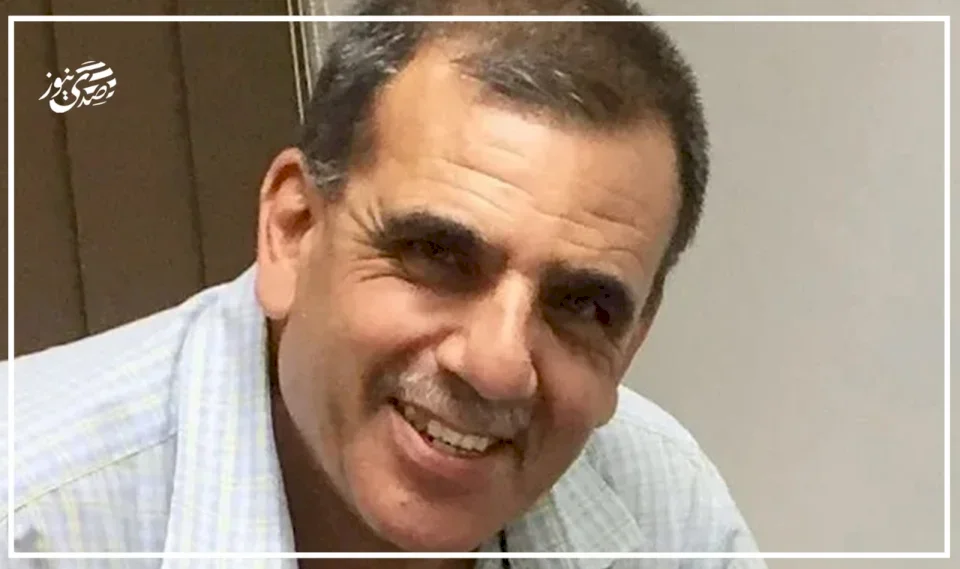
Recently, social media has been buzzing with varying opinions—some supportive, some opposed, and some attacking. Among these voices, many viewed it as an opportunity to undermine brother Bassam Zakarneh, a member of the Revolutionary Council of Fatah Movement, who is known for his patriotism and steadfast revolutionary, union, and resistance stances toward the members of the movement in particular and his people in general. He had called for a unified Fatah discourse, which expresses the stance of the Fatah Movement and does not leave the arena for individual interpretations, while respecting all movement cadres, and being cautious not to distort the Fatah Movement.
I will not delve into the intricacies of the campaign targeting brother Bassam Zakarneh. From my knowledge and relationship with this man, I understand how keen he is on Fatah. I consider him the rock upon which every Fatah member and honorable fighter can rely. However, brother Zakarneh overlooked in his statement, as have the movement's leaders for many years, the necessity of adopting a unified and clear organizational strategy that reflects the stance of the Palestinian National Liberation Movement (Fatah), incorporating clear positions on local, regional, and international developments without compromising national constants.
Since its establishment in 1958 until its launch on January 1, 1965, and up until the Declaration of Principles Agreement (Oslo) in 1993, Fatah has relied on national and pan-Arab principles focused on the independence of the Palestinian national decision. It has considered the liberation of Palestine a national duty and affirmed the independent Palestinian identity. The movement has adopted armed struggle as a strategic pathway to liberation, while committing to diplomatic and political work to achieve the goals of the Palestinian Arab people. Fatah has emphasized that Palestine is part of the Arab homeland, that the Palestinian Arab people have an independent national character, and they possess an inherent right to self-determination. It raised the slogan "Liberating Palestine is the path to Arab unity," emphasizing the centrality of the issue and the need for the Palestinian people to rely on their own resources in their struggle, regarding the liberation of Palestine as a national duty in which the Arab nation participates with all its material and moral capabilities. Its political program affirmed that the struggle of the Palestinian Arab people is part of the struggle of the peoples of the world against colonialism, occupation, and oppression.
The Eighth General Conference of Fatah affirmed its adherence to the Palestinian national constants, foremost among them the right to self-determination, the right of return, and the establishment of an independent Palestinian state based on the 1967 borders, with Jerusalem as its capital. It emphasized the need to end occupation and settlement, stating that resistance in all its forms is a legitimate right guaranteed by international laws and norms, and that the Palestinian people choose the form, means, and methods that serve the goal of liberation and the end of occupation within a unified national vision that achieves the Palestinian national interest. The conference agreed on enhancing popular resistance, political work, and diplomacy, ending the division, and achieving national unity. It rejected the separation of Gaza from the West Bank as well as the refugee camps in the West Bank, defending prisoners and martyrs and ensuring their rights, among other points that are no less important than the previous ones.
The program announced by the eighth conference of the movement is truly national, but there is a significant gap between theory and practice. While Fatah is a national movement that gathers Palestinians from all orientations and classes, and refuses partisan, sectarian, regional, tribal, familial, or clannish intolerance, the current reality of the movement, after nearly six decades since its inception, has changed significantly in both approach and application, even strategy, from what it was at its founding. Its leaders now rely on mobilization, buying loyalties and allegiances, and cliques, closing any future horizons for a true Fatah renaissance that holds on to national constants and gathers all Fatah members under the umbrella of Fatah as we have known it. It is true that there are local, regional, and international developments that require adaptation. However, this should not come at the expense of national constants. Today, it has become incapable of uniting the Palestinian people; perhaps its engagement with the Authority and the negative reflections and obligations of the Authority on it have caused it to pay a heavy price for its dwindling popularity.
The current influential Fatah leaders in decision-making have not taken upon themselves to draw lessons from past experiences that propelled them toward the abyss, from which they are now just two steps away from falling. Their losses in the 2006 legislative elections are a prime example of the lack of a unified organizational strategy for the movement. The existential and structural challenges it faces are very profound and significantly drain it. The internal conflicts and the division within Fatah, coupled with the rejection of many leaders and cadres from the movement's golden revolutionary era to participate in its frameworks, exacerbate its crisis. Adding insult to injury are the outcomes of the last eighth conference, which resulted from inputs that did not respect the correct organizational sequence, and discussions about legitimacy and leadership, which intensified especially after the inclusion of President Mahmoud Abbas's son (Yasser Abbas) in the Central Committee. Many in the Fatah grassroots consider this does not meet the ambitions of the movement nor represent the Fatah cadre, which will create confusion in the Palestinian scene as a whole.
From here comes the necessity for a clear and unified national Fatah organizational strategy, which activates the role of the movement's institutions and frameworks both inside and in the diaspora, restoring the movement's pioneering and leading role, resulting in a unified media discourse. The relationship between strategy and discourse is both complementary and organic. The unified discourse is an expressive tool for the executive and field strategic framework within the movement, but it is not enough by itself. There must be field action and achievements on the ground stemming from a unified organizational strategy adopted by all movement frameworks. It can be said that the unified discourse is the conscience, while the unified organizational strategy is the body. Without adopting a unified organizational strategy, there will be no benefit from a unified media discourse, and the discourse will remain fragmented and fragile, lacking the popularity that the national cadre in the movement aspires to, and perhaps even lacking Fatah's organizational legitimacy.
 Follow the latest Sada News via Google News
When Indicators Fail to Narrate the Palestinian Economy

The Tale of a People Who Refused to Believe the Well

What Does the Supreme National Interest Mean for Palestinians? And How Can It Be Achieved?

The Wronged Ramallah

Between Pragmatism and Survival Management: Where Does Hamas Go After the Election of Khal...

Khalil Al-Hayya as President of Hamas.. Continuation of the Founders' Approach

The Annihilation of Sportsmanship
