

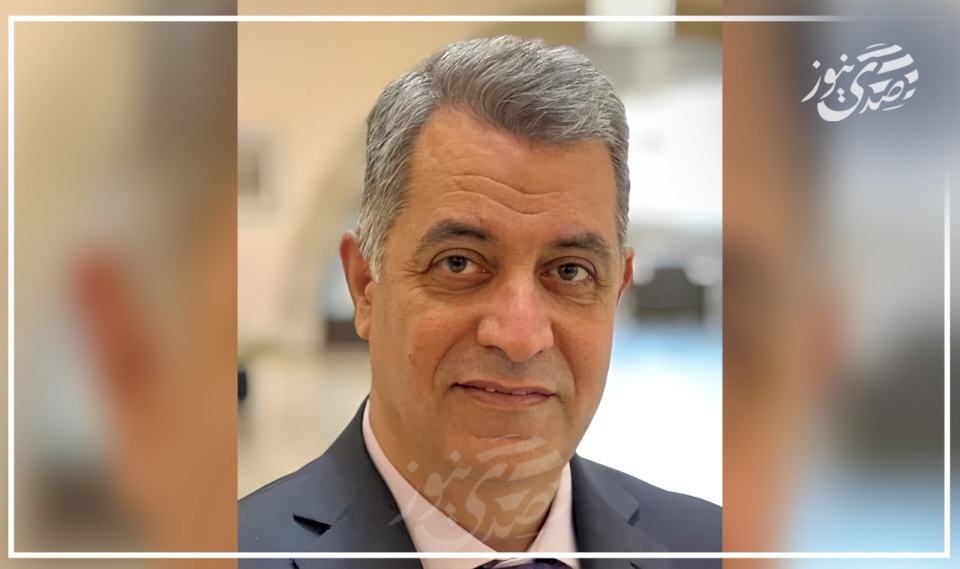
The Eighth Conference... Absolute Control is a Pending Explosion
I did not "intend" to write about the eighth conference of Fatah movement to avoid being interpreted in dark corners here and there as a stance or an intervention in the internal affairs of a political organization on one hand, and because I previously wrote some studies and articles before, during, and after the seventh and sixth conferences like many thinkers, writers, and researchers without Fatah's interest in anything that could improve, develop, or discuss the structure of this movement or be useful from another perspective. I am convinced that the holding of the eighth conference will not address or discuss or review the previous stage or hold accountable those responsible for failures, regressions, and deviations from its intellectual foundations on a third hand, nor will it reconsider or even discuss its political program, the method of its work, and its tools of action to determine the direction for selecting its leadership or leadership frameworks.
At the same time, the preparations and processes within the conference and the results of its work revealed a deep structural defect represented by: (1) the absence of a permanent committee for elections with a work system that enhances conducting free and fair elections at different levels within the Fatah movement, (2) the lack of understanding among the leadership frameworks in the Fatah movement regarding conflict of interest, as the preparatory committee was formed from members of the Central Committee and the Revolutionary Council, who themselves wish to run for leadership positions in the conference for which they determine its members, (3) centralized control of procedures within the conference in choosing the conference president and heads of committees related to elections, which are issues related to determining the nature of the desired outputs from the conference, (4) the weakness of transparency in the electoral process procedures within the conference, which produced protests some of which appeared on media and social networks, and (5) holding the conference over three days with about 2,500 members without preparations related to opening space for discussions and intellectual proposals from its leaders as well as from candidates for leadership frameworks, in a way that allows for understanding the trends, methods, and tools and not only discussions about individuals without any interaction between conference members coming from varied arenas and multiple sectors, with the understanding of the presence of four distant halls in this conference.
On the other hand, in front of the centralized control over the inputs of the conference; which is usually the case of mass parties that set a date for holding the general conference that suits them, and which try to control the inputs of the conference to ensure the reproduction of their legitimacy, the cadres of the Fatah movement are characterized by being purists; (1) they fall into the trap of submission to the previously tightened procedures without changing or escaping them believing in the intellectual reference and the purity of the political organization, (2) they attend the conference without prior coordination among themselves to face the organization’s empires and are submissive to the idea of competition among themselves as individuals, indifferent to the importance of ensuring transparency and fairness of the electoral process overall such as monitoring the counting process with the presence of their agents and neutral observers, (3) the failure to learn from the experiences of the sixth and seventh conferences regarding the inputs and control over the outputs, even though the leaderships experienced both and protested against the same procedures as was evident in the seventh conference, and (4) many cadres of the Fatah movement who attended this conference, especially those who worked during the time of the revolution and sacrifices, did not realize the depth of the changes that happened within the structure of the Fatah movement and the tools of work inside the movement and the transformations brought about by the transition from a revolutionary movement that produced its leadership based on sacrifices to a ruling party that produces most of its leadership from government bureaucracy and its institutions.
In my opinion, the interest concerning the Fatah movement is a community and national interest as it is the largest movement in the history of the Palestinian people, and it is the ruling party; that is, it controls the determination of the leaderships of the political system, leads the Palestinian people, and significantly determines its political program. The concern here relates to a past history, a separate reality, and an uncertain future. Political parties, like nations, as Ibn Khaldun states in his analysis of civilizations, states, and the factors of their dissolution, start weak and become strong in their youth, then grow old and eventually vanish; the factors of their demise begin with their decomposition from within, not only from luxury but because they do not absorb the lessons of history, nor withstand the diversity within them, nor allow the emerging changes within them to take their natural place; absolute control is a pending explosion.
 Follow the latest Sada News via Google News
When Indicators Fail to Narrate the Palestinian Economy

The Tale of a People Who Refused to Believe the Well

What Does the Supreme National Interest Mean for Palestinians? And How Can It Be Achieved?

The Wronged Ramallah

Between Pragmatism and Survival Management: Where Does Hamas Go After the Election of Khal...

Khalil Al-Hayya as President of Hamas.. Continuation of the Founders' Approach

The Annihilation of Sportsmanship
