

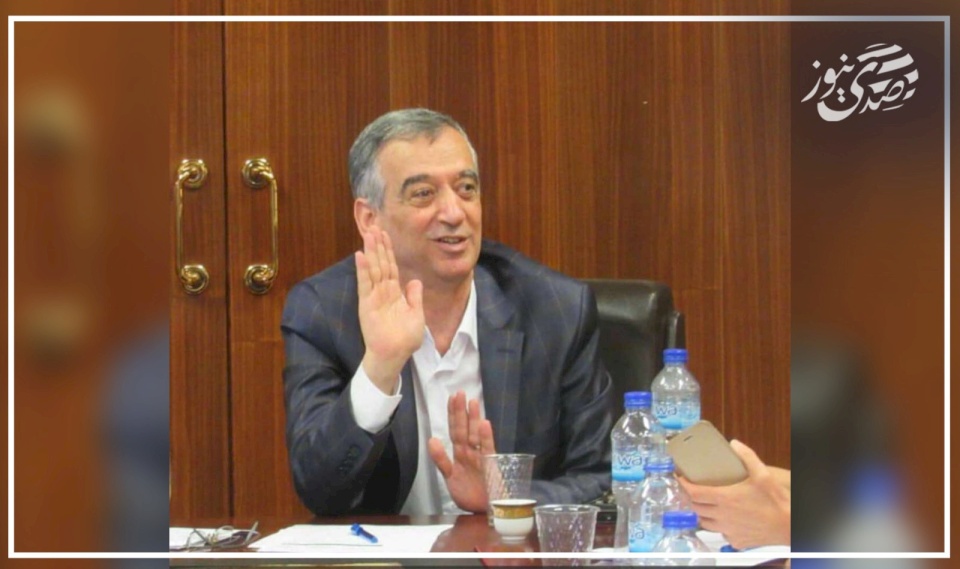
Memoirs of a Failing Candidate in the Revolutionary Council Elections
I entered the eighth conference of Fatah Movement carrying on my shoulders many years of student, labor, and community work, and some remnants of the memories from prisons, the field, and the university. I naively believed that organizational history was still a currency to be traded within a movement that was born from the struggles, dreams, and sacrifices of its people, and that still holds some respect for those who made the beginnings of national, academic, and social struggle, especially in the occupied land, the main battlefield.
I quickly discovered that the market had changed, and that the required commodities today are entirely different. The times when doors opened for those with significant experiences and burdens have significantly receded before maps of influence, alliances, and precise alignments. I felt as if I had entered a modern car exhibition with a pure Arab horse; beautiful and impressive, but no longer suitable for the speed of this time and its new standards.
I found that the conference was not a single conference, but rather several intertwined conferences: a conference for the presidency, a conference for the regions, a conference for retirees, a conference for youth, a conference for women, a conference for prisoners, a conference for ministers, ambassadors, agents, directors, and governors, and a conference for businessmen. I realized that I needed an "organizational visa" to enter most of them.
Generations that do not know each other, with different experiences and closed worlds focused on their own interests and priorities. Ready-made alliances, homogeneous cantons, intertwined geographies, organized alignments, and available sovereign levers.
I pushed these crazy and negative thoughts away and said to myself: this is a conference that will seek out the roots, the founders, those with experience and determination, and the fighters. It will discuss the major issues facing our steadfast people: "mass struggle, the national project, settlement, financial blockade, poverty, unemployment, the end of the peace project, the relationship of Fatah with the authority, salaries of martyrs, the wounded, and prisoners, the conditions in the Gaza Strip that struggles with death, hunger, destruction, displacement, and expulsion, and the West Bank besieged by settlements, settlers, barriers, gates, and bypass roads, along with death, fear, and terror".
Ramallah seemed like a moving electoral stock exchange: notebooks, lists, whispers, long handshakes, and phrases repeated more than the national anthem: "Give me your vote, and I'll give you mine", "Carry this person for me, and I'll carry that one for you", "Who will win among the candidates? What are the chances of so-and-so?", and "To which power center and alliance does this and that person belong?" Many attendees volunteered to provide suggested lists of those who would win in the Fatah elections before they even occurred.
I realized too late that I had nominated myself for membership in the Revolutionary Council of the Fatah Movement in a very primitive way, and I was leading an electoral campaign that had long been outdated! I was visiting people and speaking about thought, education, awareness, organization, and internal reform, the uniqueness of the battleground in the occupied land, the necessity to distinguish between Fatah and the national authority, and the need to dedicate ourselves to organizational work and create commissions for prisoners, settlement, and elections. While others were moving according to more advanced sciences: electoral engineering, alliance intelligence, and precise vote management! Many looked at me with faint smiles and shy expressions, as if I were a man who had just emerged from the archives of 1965.
I discovered that I belonged to the school of romantic Fatahists who will soon become extinct, and to dedicated old-school lovers. I was searching, along with a few others, for "Fatah the Revolution", while many of the attendees were searching for "Fatah the Authority, governance, and organizational platforms", and for "positions of the governance and decision-making team in the coming time frames".
Nevertheless, I do not feel complete regret; for sometimes loss grants you an excellent perspective. Those standing on the platform do not always hear what people below are saying, while those sitting in the seats have plenty of time to reflect, think, and even write.
I left the conference with a simple and painful conviction: the crisis of "Fatah" is not just an individual crisis, but a complete transformation; from a movement resembling the camp, the street, the university, and the prison, to an institution resembling any traditional Arab ruling party, surrounded by tools of protection and rescue.
This election reflected the strength of power dynamics and influence within the Fatah Movement more than it reflected the aspirations of the participating bases and organizational structures. It seemed like a scenario that had been prepared in advance, and then the roles were distributed among the attendees according to their position in the different alliances and geographical and struggle cantons.
The lists of the winners in the Central Committee and the Revolutionary Council appeared as if they were recipes for a delicious dish: two spoons of geography and history, a mix of regions and affiliations, a little from families and lineages, leaderships, relatives, and acquaintances, or their children and grandchildren, with calculated additions of centers of influence, struggle, and problems, as well as companions in current and previous positions. Then all components were mixed well to create a fully homogeneous "electoral dish".
As for the old fighters and those with history and struggle, their presence resembled the presence of classical Arabic in "Facebook", "WhatsApp", "Telegram", and "Instagram" groups: a respected presence in form, but appearing strange and heavy in a space accustomed to speed, brevity, and truncated alphabets.
Better luck to the poor, marginalized, intellectuals, thinkers, and wayfarers, especially those living outside the temporary political capital of Ramallah, who do not possess a "permanent residency" within the maps of influence, relations, and backdoor passages.
Thanks to the masterminds of planning, implementation, and creativity; your mission succeeded. You killed within us the heroism, belonging, principles, and Fatah values, and pushed us towards early organizational retirement. You planted in our hearts frustration, despair, and despondency.
Some say to us: "Everyone who agrees to participate in the game must accept its results." We say: "True, if the participants were granted the same justice, and the same laws were applied to them, and if the winners were not lowered by balloons of influence, geography, exceptions, loyalties, and equations!".
Despite all this, there will remain a very few faithful to Fatah as it once was, knowing the names of the poor before the names of the ministers, opening its doors for the pursued, not for the motorcades, measuring men by their history and not by the number of companions around them, and faithful to the experience of the occupied land with all its details and experiences, from A to Z.
This is not just a memoir of a failing candidate in the Revolutionary Council elections, but the memoir of a man who discovered too late that his movement had changed while he still retains its anthem and old oath completely... the opening, may God have mercy on you and us all.
 Follow the latest Sada News via Google News
When Indicators Fail to Narrate the Palestinian Economy

The Tale of a People Who Refused to Believe the Well

What Does the Supreme National Interest Mean for Palestinians? And How Can It Be Achieved?

The Wronged Ramallah

Between Pragmatism and Survival Management: Where Does Hamas Go After the Election of Khal...

Khalil Al-Hayya as President of Hamas.. Continuation of the Founders' Approach

The Annihilation of Sportsmanship
