

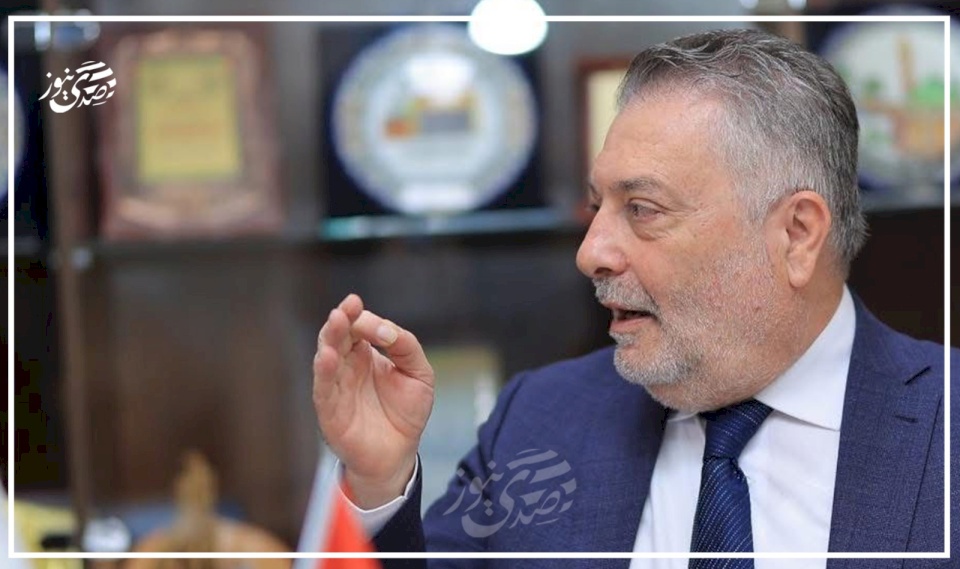
6 Difficult Months.. Do We Have a Real Economic Rescue Plan?
When the Prime Minister said that we are facing "6 difficult months," he was not saying anything new, but he was stating the truth clearly. The reality today is that the Palestinian economy is facing not just a temporary liquidity crisis, but a complex equation involving stalled clearance revenues, a public debt nearing 47 billion shekels, a sharp rise in fuel prices, fluctuations in exchange rates, and government salaries being paid in partial percentages that do not cover the minimum of needs. Above all this, there is a question that occupies citizens more than anything else: Do we have a real plan to overcome this crisis?
The Palestinian economic reality reveals a fragility that has accumulated over many years. The economy has formed around a cycle heavily reliant on clearance revenues, government spending, and local consumption, without building a strong productive base capable of absorbing recurring political and financial shocks. When the clearance stalls, the crisis does not stop at the Ministry of Finance but is transferred directly to the markets, banks, the private sector, and Palestinian families that have come to live in a state of survival management from month to month.
The real danger today is that pressures do not come from one direction.
The price of diesel has exceeded 8 shekels per liter at certain times, driven by regional tensions and rising global oil prices, while the increase in gasoline prices has directly reflected on transportation and production costs and the prices of basic commodities. In an economy that relies heavily on imports, any increase in fuel automatically turns into a wave of inflation felt by citizens in every detail of their daily lives.
At the same time, the dollar and the dinar have shown clear fluctuations against the shekel recently, while commodity prices have remained high in the local market. This means that citizens have lost part of their purchasing power even in periods when the shekel improved relatively, as a result of what is economically known as "price rigidity," where prices rise quickly during crises but do not fall at the same speed when some indicators improve.
In the markets today, you do not need complex economic reports to see the crisis.
Buying activity has weakened, demand for non-essential goods has declined, and citizens have started to rearrange their priorities based on one rule: How do I finish the month with the least possible losses?
The government employee sometimes receives only 40% to 50% of their salary. Families are borrowing to cover the shortfall, merchants are reducing their orders, and banks are monitoring overdue debts as they gradually increase. But the crisis does not only concern about 150,000 government employees; it extends to millions of Palestinians whose lives are directly affected by any decline in liquidity and market movement.
As seasons and holidays approach, the scene becomes more sensitive. Many Palestinian families no longer ask about improving their standard of living but about the ability to secure the minimum basic needs amidst high prices of meat and foodstuffs and an unprecedented decline in purchasing power.
But there is a part of the crisis that is more dangerous than all that has been mentioned.
The concern today does not only relate to the continuation of deductions or delays in transferring clearance funds, but also to the rising political discussions about the possibility of redirecting part of this money or linking it to new administrative and financial arrangements related to the reconstruction of Gaza or to political bodies being discussed in the upcoming phase.
Here lies the real economic fears.
The clearance is not just a financial item for the government; it is the backbone of cash flow in the Palestinian economy. Any change in the distribution or political employment mechanism will directly affect the Palestinian Authority's ability to meet its obligations in the West Bank and will double the pressures on salaries, banks, the private sector, and social stability in general.
So, what is the solution?
The truth is that the current phase requires more than just monthly crisis management. We need a clear national economic rescue plan that involves the government, the private sector, and financial institutions, based on transparency, realism, and a rearrangement of priorities.
The first steps of this plan should be full transparency with citizens, as trust is a fundamental element in the stability of any economy. Additionally, the rearrangement of public spending priorities has become an urgent necessity, directing resources toward the sectors most related to the community's resilience, such as health, education, food security, and energy, while cutting any unnecessary expenses.
At the same time, we cannot continue in an economy that relies solely on consumption, loans, and remittances. The current phase requires urgent stimulation of the productive sectors, especially agriculture, food industries, alternative energy, and small projects capable of creating jobs and moving the market locally.
The digital economy has also become no longer a luxury or a secondary option. In a world led by artificial intelligence and remote work, Palestine can create genuine opportunities for youth in programming, digital services, and freelance work, away from the traditional constraints related to movement and crossings.
As for the public debt issue, it has become in need of bolder and more realistic treatment. Reaching nearly 47 billion shekels means that any delay in reforms will increase the future treatment cost. Therefore, restructuring financial commitments and reducing borrowing costs has become necessary steps, not an economic luxury.
Despite all these pressures, Palestinians still possess an exceptional ability to endure and adapt. However, endurance alone is not sufficient forever. Peoples cannot build their future solely on crisis management; they need a clear economic vision that restores trust, hope, and production.
The next six months will be indeed difficult, and may bring economic and political pressures greater than we expect. But the real danger lies not only in rising oil prices, fluctuations in the dollar, or the clearance crisis, but in the possibility that Palestine enters an economic phase managed through temporary painkillers, while what remains of the economy's capacity to endure, produce, and stabilize gradually erodes.
Today, Palestine does not only need to manage a financial crisis, but needs a comprehensive national economic rescue project that combines transparency and planning, between managing the current crisis and building a stronger and more sustainable economic foundation for the future.
Economies do not collapse only when money runs out... but when vision disappears.
*International economic advisor and member of the International Digital Transformation Board
 Follow the latest Sada News via Google News
When Indicators Fail to Narrate the Palestinian Economy

The Tale of a People Who Refused to Believe the Well

What Does the Supreme National Interest Mean for Palestinians? And How Can It Be Achieved?

The Wronged Ramallah

Between Pragmatism and Survival Management: Where Does Hamas Go After the Election of Khal...

Khalil Al-Hayya as President of Hamas.. Continuation of the Founders' Approach

The Annihilation of Sportsmanship
