

A Salute to Our Palestinian Police
In stable contexts, security is regarded as a traditional function of the state, exercised through known institutions and specific tools. However, in the Palestinian case, security transcends this narrow definition, becoming a complex action that intersects with the economy, society, tourism, politics, and even the concept of national resilience. Therefore, reading the annual statistical report of the Palestinian police for the year 2025 should not be a mere numerical reading, but rather a deep analysis of the role of an institution that operates under exceptional pressure, while simultaneously trying to redefine its function.
The data indicates that more than 36,000 incoming cases were recorded, versus the completion of nearly 32,000 cases, which reflects a high operational efficiency in a complex environment. But more importantly is what these numbers reveal about ongoing structural pressure, as it seems that the volume of cases is not decreasing but in a state of reconfiguration. This raises a fundamental question: are we facing an apparatus that merely responds to reality, or one that contributes to reshaping it?
The qualitative analysis of the data indicates a shift in crime patterns, where some traditional crimes are declining in favor of a rise in crimes linked to the digital space, such as extortion and electronic defamation.
This shift not only reflects a change in the tools of crime but also in the very structure of society, where daily life increasingly intertwines with the digital world. Here, the police's ability to adapt emerges as a decisive indicator, not just through response, but by building proactive capacities based on analysis and technology.
In this context, investing in information systems, data analysis, and artificial intelligence becomes a strategic necessity, not a developmental choice. Modern security is no longer based on reaction but on prediction, understanding patterns, and early intervention. The report, with its indicators, could form a national database for developing comprehensive security and developmental policies.
In the context of institutional integration, the meeting between Minister of Labor Dr. Inas Al-Attar and Major General Alam Al-Saqa gains strategic significance. This meeting cannot be read merely as administrative coordination, but rather as a signal for re-engineering the relationship between institutions. Integrating concepts such as labor inspection, safety, and occupational health into the agenda of joint work reflects an understanding that unsafe working environments, unemployment, and marginalization are factors that generate security fragility. Thus, addressing them falls under the concept of proactive preventive security.
However, the deeper transformation manifests in the humanitarian dimension of police work, specifically in vocational training programs for juveniles within rehabilitation centers. These programs represent a transition from a philosophy of punishment to a philosophy of rehabilitation, from managing deviance to rebuilding the individual. When a juvenile is equipped with a professional skill, we are not just providing them with a job opportunity, but we are redefining their relationship with society and reducing the likelihood of their return to deviant paths. This approach reflects a developmental understanding of security, where social justice becomes part of the security system.
From this perspective, the push towards integrating gender and expanding women's and targeted groups' participation in the labor market can be understood as part of a broader strategy to enhance stability. More inclusive and equitable societies are inherently more secure and less prone to tensions.
On the ground, the geographical disparity in the distribution of cases—as seen in provinces like Hebron, Nablus, and Ramallah—indicates the necessity of adopting tailored local policies that take into account the social and economic particularities of each area. Security cannot be generalized as a single model; it must be designed according to the context.
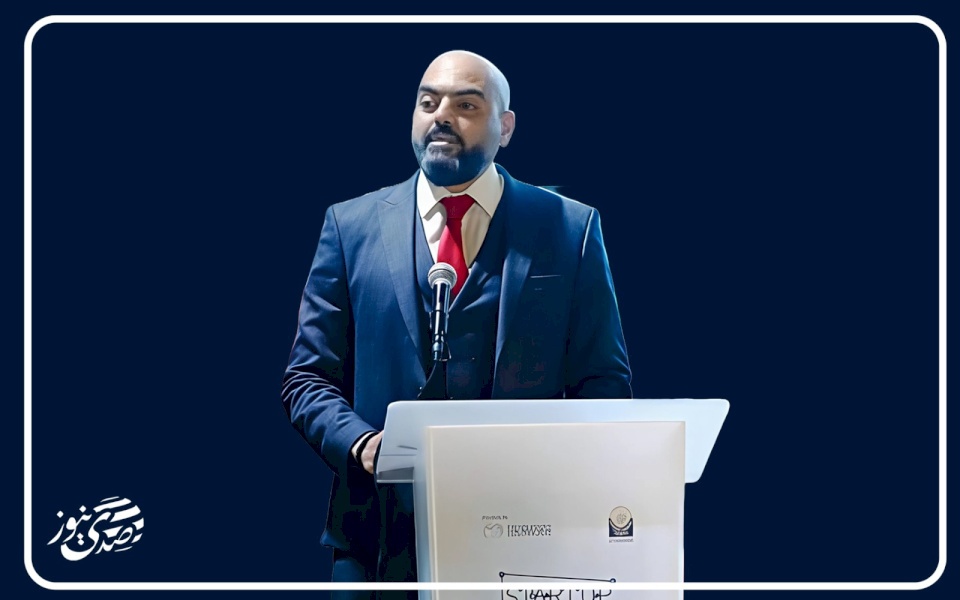
In a personal experience, my meeting, based on the outcomes of the minister's meeting with the major general with a group of Palestinian police leaders, confirmed this transformation in institutional awareness. The discussion was not purely technical but carried a clear developmental tone, as it addressed the role of the police in supporting the local economy, enhancing partnerships with institutions, and developing training and rehabilitation programs. What stood out in this meeting was the leaders' acknowledgment that security is no longer a separate function but a part of a comprehensive developmental system, and their success is measured by their ability to influence the quality of citizens' lives, not just in controlling violations.
This type of thinking reflects a shift from "police of order" to "police of community," from operational performance to strategic impact. It is a transformation that requires political support, investment in human resources, and continuous development of tools.
The Palestinian police is no longer just a traditional security lever; it is witnessing a qualitative transition to become a research-driven applicator that reads reality deeply and reassembles it from a comprehensive developmental perspective. This radical change is manifested in the strength of the numbers, the accuracy of the analysis, and the level of active entanglement with universities and research centers, where work is no longer based solely on response, but on understanding, interpretation, and knowledge building. The language of the report, with its scientific statistical dimension, does not merely present the facts; it transforms them into precise diagnostic tools that lead to practical, applicable, and measurable solutions, capable of addressing reality in all its components and tackling its challenges from their roots, not just from their surface.
In conclusion, the report does not only provide a picture of an institution's performance, but opens a horizon for a new understanding of the police's role in the Palestinian context. It calls for reading numbers as an entry point for planning, transforming data into policies, and building real partnerships that enhance community resilience.
A salute to all members of the Palestinian police…
Not only as a recognition of their efforts, but as an acknowledgment of their role in building a developmental security model, which forms one of the pillars of stability in a homeland that still seeks its balance.
 Follow the latest Sada News via Google News
Between Pragmatism and Survival Management: Where Does Hamas Go After the Election of Khal...

Khalil Al-Hayya as President of Hamas.. Continuation of the Founders' Approach

The Annihilation of Sportsmanship

Until When Will the Palestinian Citizen Pay the Price of an Endless Phase?

7-10 Billion Shekels.. The Bill for the Absent Worker from Brussels

Why Does Marwan Barghouti Remain the Key to Unity and Settlement?

The Joy That Passes Through Barriers
