

The War Decision... and the Cost of the Middle East
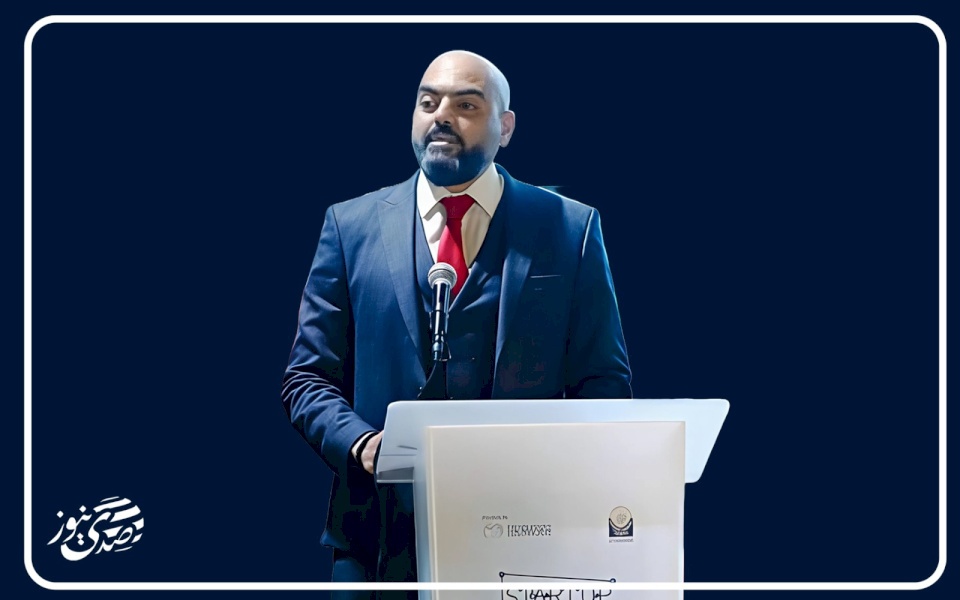
In a moment of extreme regional sensitivity, the message directed by Emirati businessman Khalaf Al-Habtoor to U.S. President Donald Trump sparked a discussion that transcends the boundaries of two individuals or even two countries. The words, articulated in a direct tone, carried a larger strategic question at their core: who holds the right to make the decision for war in a region where hundreds of millions live, and whose stability depends on delicate balances between security, economy, and international politics?
What Al-Habtoor stated is not merely a passing criticism but an expression of growing concern within the region that it might once again become a battlefield for major powers. The Middle East has paid, over the past decades, exorbitant prices due to military decisions made in distant capitals, while its peoples have borne the brunt of their direct consequences: prolonged wars, damaged economies, and societies living on the brink of crises.
The essence of Al-Habtoor's message revolves around a simple yet profound idea: war is not a sovereign decision of one state when its direct effects will impact other countries. When confrontation occurs in the heart of the Gulf region, where the most critical global energy routes pass and investments amounting to hundreds of billions are concentrated, any military decision ceases to be merely an internal American matter but becomes an international decision whose ramifications extend beyond geography and politics.
Today, the Gulf is not merely a geographic spot in international security equations but a global economic center where energy, trade, and investment interests converge. Any large-scale military confrontation between the United States and Iran could quickly escalate into a global crisis, not only due to security tensions but also because of the direct impact on oil markets, global supply chains, and the stability of the international economy.
However, the message does not stop at the borders of the region. It also opens an important discussion within the United States itself. American society, having emerged from two decades of costly wars in the Middle East, has become more sensitive to any new military engagement. Americans paid trillions of dollars during the wars in Iraq and Afghanistan and lost thousands of soldiers, while the political outcomes of those wars remain widely debated within American society.
Today, with each new escalation, the same question resurfaces in Washington: does the United States really need another war in the Middle East? Or should the priority be on domestic economic stability and rebuilding trust between the state and society, as successive American administrations promised their voters?
Studies from American think tanks indicate that the cost of any large-scale military confrontation could reach tens of billions of dollars within just a few weeks, while its economic effects could last for years. In the face of rising inflation and pressure on the American economy, it becomes natural for the American citizen to ask: who truly stands to benefit from this war?
Here arises another matter that cannot be overlooked in interpreting this escalation: the complex relationship between American politics and the political reality in Israel. Some raise serious questions about whether the military escalation with Iran also serves the internal political calculations of Israeli Prime Minister Benjamin Netanyahu, who is himself facing deep political and judicial crises domestically.
Modern political history in the Middle East shows that some leaders resort to external escalation to evade internal crises or to rearrange political power balances. Hence, the question becomes legitimate: could the entire region be threatened by a wide-ranging war simply because some political leaders need extra time to remain in power?
This question does not target any particular country as much as it highlights the dangers of intertwining internal calculations with major military decisions. When wars become an instrument for managing political crises, it is always the innocent who pay the price: the peoples of the region, the global economy, and even the communities that those decisions are supposed to protect.
The message that has emerged from the Gulf reflects, at its core, an important shift in the consciousness of economic and political elites in the region. These elites, who have invested for decades in building stable economies and global financial hubs, have become more aware that wars are no longer mere military confrontations but strategic disasters that simultaneously strike stability and development.
Thus, the message directed at Washington is not a call for confrontation or severance, but a call for wisdom. Global leadership is not measured by the ability of countries to wage wars, but by their ability to prevent them. True power in the contemporary international system lies in managing balances, not igniting conflicts.
The Middle East today stands at a historic crossroads. It may either continue as an open space for international conflicts or transform into a region of stability and economic cooperation that serves the interests of its peoples and the world alike. In this context, Al-Habtoor's message becomes more than just an opinion; it is a political reminder that the era of unilateral decisions that ignite wars without consideration is beginning to face increasing challenges.
In the end, the most important question that must be posed in Washington before any military decision remains: if war is easy at the moment of decision, will it also be easy at the moment of paying its price?
 Follow the latest Sada News via Google News
When Indicators Fail to Narrate the Palestinian Economy

The Tale of a People Who Refused to Believe the Well

What Does the Supreme National Interest Mean for Palestinians? And How Can It Be Achieved?

The Wronged Ramallah

Between Pragmatism and Survival Management: Where Does Hamas Go After the Election of Khal...

Khalil Al-Hayya as President of Hamas.. Continuation of the Founders' Approach

The Annihilation of Sportsmanship
