

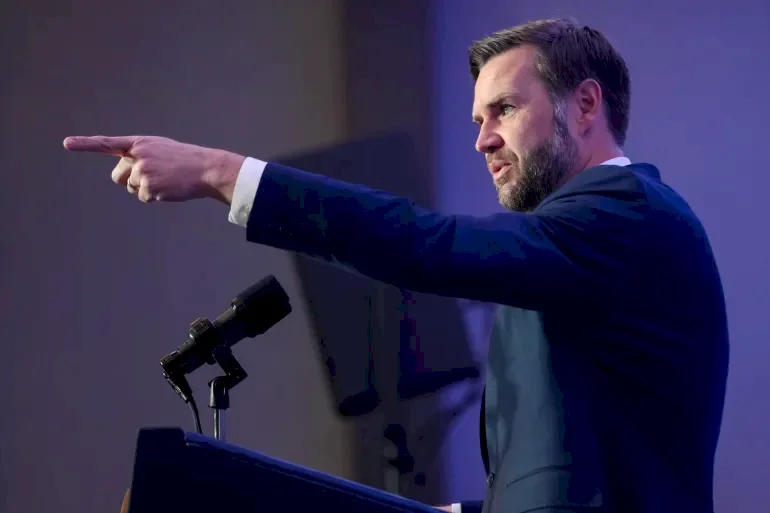
Vance Is Not the Problem.. Israel Faces a Deep Shift in American Politics
SadaNews - The Politico website addressed the escalating tensions in the relations between the United States and Israel, stating that it is not limited to the positions of J.D. Vance, the U.S. Vice President, but reflects a deeper shift in U.S. policy toward Israel under President Donald Trump's administration.
The site explained in a joint article by Felicia Schwartz, Alex Gangitano, and Dasha Burns that the Israeli government believed that Trump's return to the White House would ensure the continuation of absolute American support, and that Israel would remain an exception to the "America First" policy. However, it has begun to realize that this perception is no longer valid, and that American interests are being prioritized even when they conflict with Israel's security and political priorities.
The article noted that this shift became particularly evident after the U.S. and Israeli strikes on Iran last February, as Tel Aviv expected that operation to mark the beginning of a new phase of rapprochement with Washington, but the following months revealed increasing disagreements between the two sides.
J.D. Vance's statements depicted this new reality when he warned Israel that it has lost most of its allies in the world and that it should not take President Trump's support for granted, describing him as the only leader still standing by its side, hinting that this support is not guaranteed forever.
Vance's Position Is Not an Isolated One
According to officials and informed sources, Vance's statements were not an individual stance, but rather reflect a growing view within the U.S. administration that Israel no longer enjoys an exceptional status in U.S. foreign policy.
Facts also indicate a noticeable decline in the level of political communication between the two countries, as Prime Minister Benjamin Netanyahu's visits to Washington have decreased, and direct contacts with the White House have declined compared to last year. Informed sources expect the gap between the two sides to widen in the coming period.
The shift in Vance's rhetoric does not reflect a fleeting disagreement among officials, but rather represents a redefinition of the relationship between Washington and Tel Aviv, which could have far-reaching implications for the policies of both nations in the coming years.
The article linked this shift to the growing influence of Vance within the administration, as he was previously seen as holding hardline views that did not represent the general trend. However, he has insisted for years that U.S. interests do not always align with Israeli interests, and that Washington should not be drawn into a confrontation with Iran on its behalf.
With Vance's engagement in negotiations regarding the Iranian file, it has become apparent that his vision is having a more significant impact on American decision-making, especially as an agreement with Tehran serves the administration's goals of lowering oil prices and securing navigation in the Gulf, while failing to alleviate Israeli concerns related to Iran's missile program and Tehran's regional influence.
The article also highlights a change in President Trump's tone towards Israeli Prime Minister Netanyahu, as he directed sharp criticism at him over Israeli military operations in Lebanon, considering them a threat to U.S. efforts to reach an understanding with Iran.
Reformulating the Relationship
Analysts believe that this position reflects a fundamental difference in priorities. While Washington considers that successfully advancing the diplomatic track with Iran serves its strategic interests, Israel views the threats emanating from Iran and Lebanon as a security priority that cannot be postponed or downplayed.
Nevertheless, the Israeli government continues to try to address the crisis as being linked more to Vance as a person than as a transformation in the U.S. administration's policy, and it persists in betting on the possibility of regaining full support from Trump.
However, those close to the vice president emphasize that his positions align with the president's trends, and that the criticisms Trump has directed at Netanyahu, both publicly and in closed meetings, confirm a consensus between the president and vice president regarding the necessity of reformulating the relationship with Israel in accordance with American interests.
The article concluded by indicating that these transformations come at a time when both the United States and Israel are preparing for significant electoral challenges, making the relationship between the two countries likely to experience further tension, as Netanyahu relies on clear support from Trump before the Israeli elections, while Vance seeks to cement his position within the Republican Party in preparation for upcoming presidential elections.
The article asserts that this shift does not reflect a fleeting disagreement among officials but represents a redefinition of the relationship between Washington and Tel Aviv, which may have far-reaching implications for the policies of both countries in the coming years.
Source: Politico
 Follow the latest Sada News via Google News
Palestine Bank Announces the Winners of the Grand Prize in Its New Campaign to Encourage E...

Reports of Suspension of US-Iranian Talks This Week

Vance Is Not the Problem.. Israel Faces a Deep Shift in American Politics

Leaked Document.. Trump's Council for Gaza Management Seeks Comprehensive Legal Immunity a...

Report: Netanyahu Considers Delaying Elections to Finalize Agreements with Haredim

Martyr and Injuries Due to Shelling from an Israeli Drone West of Khan Younis

Israel Provokes Turkey and Acknowledges the 'Genocide of the Armenians'
