

Report: Lebanon Agreement Allows Israel to Enter "Experimental Areas" Under the Pretext of Verification
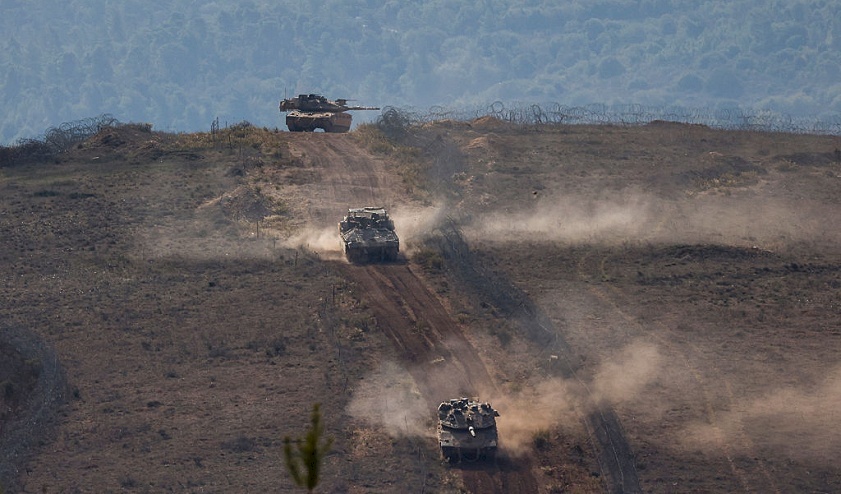
SadaNews - Israel is treating the "experimental areas" clause in the framework agreement with Lebanon as a mechanism that enables it direct field oversight over the implementation of security arrangements, and not merely a pathway for a gradual withdrawal. The Israeli army intends to enter these areas under the pretext of "verification" of Hezbollah's military infrastructure dismantling before moving on to any additional phases.
According to Israeli channel i24NEWS (Channel 15), the security annex of the Israeli-Lebanese agreement does not only obligate Israel to authorize the locations of the "experimental areas", but according to the report, grants the Israeli army a field role in verifying that the Lebanese army has indeed dismantled Hezbollah's structures in those areas.
According to the report, this clause was included against the backdrop of what Israeli media described as "previous experiences" during the prior agreement, where the Israeli army requested the evacuation of a "facility" belonging to Hezbollah in preparation for targeting it. However, the Lebanese army sent Israel a report it claimed was "false", alleging that the infrastructure had been evacuated, while the operation was "never executed", according to the Israeli narrative.
This clause reveals, according to the Israeli reading of the agreement, that Tel Aviv seeks to keep its military hand within the enforcement process, even after the Lebanese army enters the areas that will be classified as "experimental". Thus, the Israeli withdrawal from these areas will not be final or automatic but conditional on a field verification mechanism that Israel considers a test of the Lebanese army's ability to prevent Hezbollah's return to them or restore its military capabilities there.
Israeli Prime Minister Benjamin Netanyahu welcomed the framework agreement signed in Washington between Israel and Lebanon on Saturday evening, presenting it as a "great victory" and a "major blow to Hezbollah and Iran", considering that the Israeli army's presence in what Tel Aviv calls the "security zone" in southern Lebanon is evidence that Israel was not forced to withdraw under pressure.
Netanyahu spoke of establishing two areas to test the mechanism for disarming Hezbollah, pointing out that the United States and Lebanon had agreed, according to him, on the Israeli army's continued presence in the "security zone" in southern Lebanon. He also stated that Israel would begin withdrawing from the "experimental areas" in the western Zawtar and Frun, while maintaining control over the Shuqif area.
In contrast, there remains ambiguity surrounding the executive schedule of the agreement, especially regarding the timing of the Lebanese army and U.S. forces entering the designated areas for testing, and the verification mechanism that will accompany that. The Israeli reading confirms that the pace of withdrawal from areas occupied by the army will remain contingent on what Israel considers "results on the ground", not just the timeline alone.
Israeli reports quoted sources in Tel Aviv indicating that the agreement shifts the weight of responsibility onto the Lebanese state, and that Israeli army's approval of it obliges the Lebanese army and government to assume security responsibility. According to an Israeli source, if Lebanon fails to meet its commitments in the two experimental areas, "we will not proceed" to additional areas.
This point is central to the Israeli position; the agreement, according to its text, speaks of a reciprocal and gradual path in which the Lebanese Armed Forces assume effective state authority over Lebanese territory after verifying the disarmament of non-state armed groups and dismantling their infrastructure, enabling the Israeli forces to gradually redeploy out of Lebanese territory.
The agreement also stipulates that the Lebanese army will gradually assume complete and effective security responsibility in the experimental areas, which constitute the practical mechanism for the phased and verified redeployment of Israeli forces, parallel to the deployment of Lebanese forces. Subsequently, upon verifying the success in disarming armed groups and dismantling their infrastructure in these areas, the return of civilians and reconstruction efforts will start with international support.
However, Israel insists, according to its officials' statements, on what it claims to be its "right" to continue military operations in Lebanon if it sees that the agreement is not implemented in the manner it desires. Netanyahu stressed that Tel Aviv "will respond to any breach against it", and that it will remain in the "yellow line", referring to the villages and towns occupied by the Israeli army since last March.
Regarding the "security zone", Israeli estimates indicate the army's readiness for a prolonged stay there. Israeli reports have quoted a security source saying: "We have set red lines and we will adhere to them", threatening that "any armed individual approaching the army will be targeted and killed". The army is also preparing, according to these estimates, for the possibility that Hezbollah may challenge the agreement by carrying out operations against it.
Zamir Approves Operational Plans: Prepared for Rapid Return to Combat in Lebanon and Iran
In related news, Israeli Chief of Staff Eyal Zamir stated that the agreement signed with the Lebanese government is "historic and important", claiming that the "operational strength and military achievements" accomplished by the Israeli army in recent months are what "created the conditions" for reaching it, claiming that the army will respect the agreement and work to succeed it, but "the test now is the test of action by both parties, and the near period will dictate what comes next".
Zamir's statements came on Sunday during a tour of the Northern Command and the 36th Division, with the participation of the Northern Command's leader, Rafi Milo, the commander of the 36th Division, Yiftach Nurkin, Chief of Operations Barak Hiram, and other commanders. Zamir, according to an Israeli army statement, assessed the situation in light of the "changing reality", approved plans for the next phase, and held a meeting with division commanders.
Zamir considered that the northern front currently represents the "center of gravity" for the Israeli army, and said that the army is prepared for a "rapid return to combat in Lebanon and Iran if necessary". He added that the security of Israeli forces has "high importance", pointing out that the 36th Division forces and commando units control the Shuqif mountain area, and are equipped "with all tools and means to overcome the enemy".
Zamir claimed that Hezbollah is "hit and injured", and that its elements are "trapped underground", adding that the Israeli army maintains "operational control" in the area and "a high degree of alertness" to implement "quick and lethal strikes" in case of a violation of the ceasefire. He also expressed appreciation for the leadership of the Northern Command, the division, and the brigades, considering that the operations they led contributed to reaching the agreement.
 Follow the latest Sada News via Google News
Report: Netanyahu Considers Delaying Elections to Finalize Agreements with Haredim

Martyr and Injuries Due to Shelling from an Israeli Drone West of Khan Younis

Israel Provokes Turkey and Acknowledges the 'Genocide of the Armenians'

Report: Lebanon Agreement Allows Israel to Enter "Experimental Areas" Under the Pretext of...

Iran responds to U.S. strikes and warns: "Violations in Hormuz will escalate regional tens...

Israeli Army Announces Killing of Militants in Southern Syria

Israeli Occupation Army: Officer Killed and Soldier Injured in Battles South of Lebanon
