

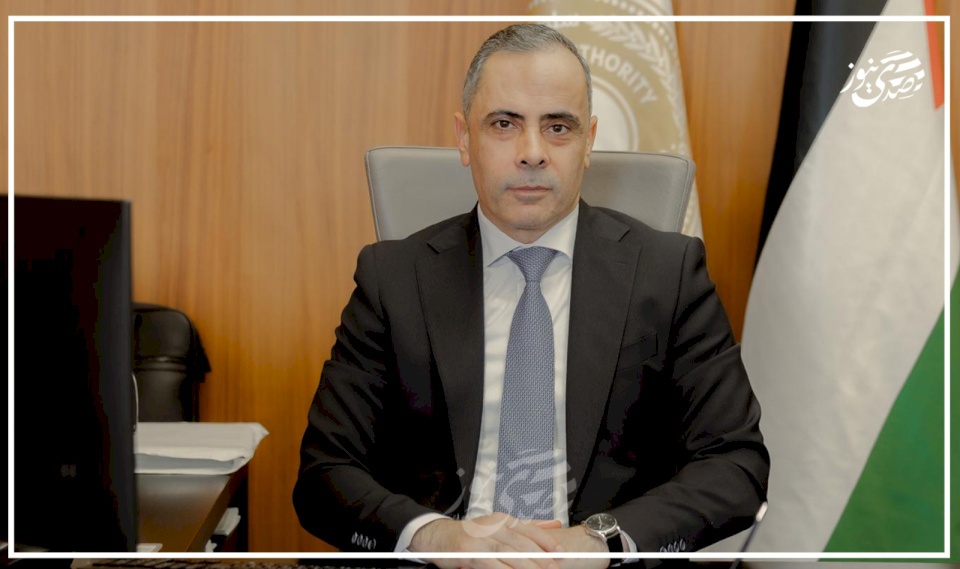
Deputy Governor of the Monetary Authority: Israeli measures are behind the accumulation crisis of the shekel and we are working on several tracks to address it
SadaNews - Deputy Governor of the Monetary Authority Muhammad Mansara confirmed that the crisis of shekel accumulation and the repercussions of the Israeli restrictions imposed on the transfer of currency surplus are mainly linked to Israeli measures. He pointed out that the Monetary Authority is working on multiple tracks to address it while also developing the electronic payment system.
In a special interview with the official agency "Wafa", Mansara explained that the law aimed at reducing cash usage is not meant to restrict citizens, but rather to build an economy that relies more on electronic payment methods, which are more efficient and secure. He indicated that the comprehensive and effective implementation of the law requires first providing an integrated infrastructure for electronic payments and ensuring access to services in various regions and sectors.
He added that the Monetary Authority has held a series of meetings with representatives of the private sector, chambers of commerce, and various unions, and a plan has been developed for a phased implementation of the law over two years, taking into account the specificity of each economic sector. He emphasized that addressing the shekel accumulation crisis must coincide with the implementation of the law and the issuance of necessary executive instructions to begin implementation.
He noted that due to the Israeli restrictions on cash transfers, it is no longer possible to continue relying solely on paper currency, making the expansion of electronic payments an urgent economic necessity.
Banks refusing to accept the shekel: Israeli restrictions deepen the cash surplus crisis
Regarding some banks' refusal to accept the shekel from the public, Mansara confirmed that the Monetary Authority monitors this issue daily and is fully aware of the suffering of citizens and traders, explaining that the problem does not stem from the banks' desires but rather from the restrictions imposed by the other party on the transfer of shekel surplus.
He explained that the annual transfer ceiling, set at about 18 billion shekels, no longer matches the trading volume in the Palestinian market, pointing out that the Monetary Authority is making direct efforts with the Bank of Israel and partner international institutions to increase the transfer ceiling or implement additional shipments.
He clarified that this file was previously managed between the Monetary Authority and the Bank of Israel, but since October 2023, it has been in the hands of the occupying government. He stressed the need for banks to continue accepting the shekel, prioritizing deposits from vital economic sectors to ensure the continuation of payments, trade financing, and the provision of essential goods.
Shekel surplus transfers: Efforts to mitigate the crisis's repercussions
Mansara confirmed that the Monetary Authority and banks are working through five parallel tracks that include efforts to increase the quantities of shekels allowed for transfer, developing the electronic payment system to reduce reliance on cash, coordinating with international institutions to find more sustainable solutions, in addition to conducting Swap operations worth 3.5 billion dollars aimed at providing electronic shekels and financing foreign trade with the Israeli side, along with providing liquidity to banks to ensure their ability to finance foreign trade.
He explained that the Swap operations have led, in return, to freezing assets of banks estimated at about 9.5 billion dollars, including the accumulated cash at banks, stressing that the Palestinian trader bears the burdens of a crisis not of their making, and that the Monetary Authority is working to mitigate its effects with all available tools.
Accepting the shekel in banks: A priority for vital economic sectors
Regarding citizens who may face difficulties in depositing shekels, Mansara said that this issue represents a major source of concern, urging citizens not to resort to unofficial channels that may cause financial losses, increases in exchange rates, and exploitation.
He emphasized that banks are obligated to accept deposits according to the instructions issued by the Monetary Authority, especially when the nature, source, and amount of funds are consistent with the account holder's activity, urging any citizen who faces an unjustified refusal to file a direct complaint to the Monetary Authority to be dealt with according to regulatory procedures.
Issuing checkbooks: Balancing risk reduction and supporting economic activity
Regarding some banks tightening procedures for issuing checkbooks, Mansara explained that the issue is under direct monitoring by the Monetary Authority, indicating that some banks have taken more cautious measures due to the misuse of checks by a limited number of clients. However, this should not lead to depriving traders and compliant customers of a basic service needed for economic activity.
He confirmed that the Monetary Authority is working to issue clearer guidelines that achieve a balance between managing risks and ensuring the ongoing provision of banking services to those entitled to them.
Multiple scenarios to deal with the crisis developments
Regarding the Monetary Authority's plans in case the crisis escalates, Mansara confirmed the existence of emergency plans and preparations for various scenarios, with the priority being to protect financial stability, preserve depositors' funds, and ensure the continued operation of the banking system and the financing of economic activity.
He warned that severing banking correspondence relations by the other side would have wide-ranging repercussions on supply chains and external payments, which could affect the import of essential goods and services such as electricity, fuel, and water, emphasizing the continuous work with all local and international partners to avoid this scenario and maintain the stability of the Palestinian economy.
 Follow the latest Sada News via Google News
Soaring Oil Prices Burn the Pockets of the Palestinian Citizen "The Poor"

Millions of Dollars in Losses.. "SadaNews" Reveals Shocking Figures for Traders from Pales...

The Problem of Shekel Overcrowding Worsens.. Fuel Station Owners Threatened with Closure o...

The Palestinian Economy at a Crossroads: 4 Files Awaiting Resolution

Deputy Governor of the Monetary Authority: Israeli measures are behind the accumulation cr...

Fuel prices in Israel decrease starting from July 1st

Currency Exchange Rates Against the Shekel on Sunday (June 28)
