

Report: Israel Sets 3 Conditions for Withdrawal from Southern Lebanon
SadaNews - Israel insists on conditions it considers essential for any potential withdrawal of its forces from Lebanon, at a time when ongoing U.S.-Iranian negotiations in Switzerland are intertwined with discussions about the future of Israel's military presence and ceasefire arrangements in Lebanon.
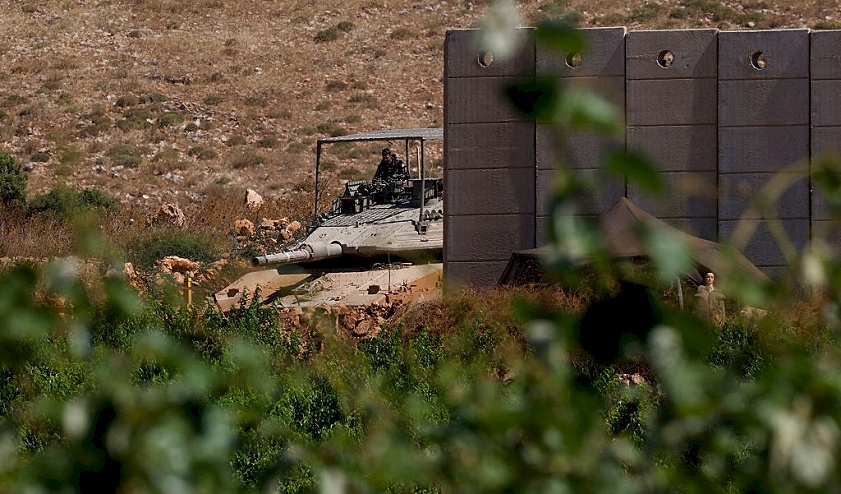
The newspaper "Israel Hayom" reported today, Sunday, that Israel has set three conditions it described as "minimum" for any potential withdrawal of its forces from southern Lebanon, amidst ongoing discussions concerning the future of Israel's military presence in the region.
According to the report, the Israeli conditions include the withdrawal of all Hezbollah elements to north of the Litani River, dismantling the party's infrastructure south of the Litani, in addition to ensuring what it termed "complete Israeli operational freedom" to eliminate any threats it perceives as existing.
This comes at a time when Israel continues to insist on keeping its forces within what it calls the "security area" in southern Lebanon, alongside discussions it is holding with the United States regarding the future of its military presence there, in the context of the U.S.-Iran Memorandum of Understanding.
According to the report, the Israeli army has completely halted its combat operations since the end of last week, following instructions issued by the political echelon, currently preventing it from targeting what it describes as Hezbollah’s infrastructure in the Ali al-Taher area using direct combat means.
The report noted that the Israeli army continues to encircle an underground complex in the Ali al-Taher area near the Chaqif Castle, claiming that dozens of Hezbollah elements are still inside, while the forces are preventing them from exiting the site.
The report added that the Israeli army might recommend to the political echelon, after completing the operation in the Ali al-Taher area and destroying the existing infrastructure there, to reposition its forces and improve their defensive positions along what it calls the "yellow line."
According to the report, Israeli political and security circles believe that any potential withdrawal or redeployment must be part of the ongoing talks between Israel and Lebanon under U.S. sponsorship in Washington.
The report also indicated that Israel expresses readiness to discuss transferring specific areas currently under Israeli army control to the Lebanese army within what it describes as "experimental areas," aimed at testing the Lebanese army's ability to enforce its authority and prevent Hezbollah's return to them.
For his part, U.S. President Donald Trump threatened Iran with new strikes if it does not act to stop what he referred to as "its agents' activities" in Lebanon.
Trump stated in a post on the "Truth Social" platform that Iran should "immediately stop its highly-paid agents in Lebanon from causing problems."
He added, "If they do not do this, we will strike Iran very hard again, just as we did last week, but even more severely."
Following the confirmation by an Israeli military official that orders were received from the political leadership to stop fighting, Defense Minister Israel Katz confirmed on Sunday that his forces have orders for constant movement against any "threat" they face in Lebanon, emphasizing that they will remain in the "security area."
In a statement, he said, "There have never been, nor are there currently, any restrictions on Israeli army soldiers within Lebanon that prevent them from working to eliminate threats... As Prime Minister Benjamin Netanyahu and I have clarified, Israel will not withdraw from the security area in Lebanon."
Tehran reiterated on Sunday its insistence that the cessation of the war between Israel and Hezbollah in Lebanon, which is one of the clauses of the Memorandum of Understanding, is a prerequisite for moving forward in negotiations, amid relative calm since Saturday afternoon, following two days of escalation.
Iranian Foreign Ministry spokesman Ismail Baqai stated, "Without implementing these clauses, especially the first clause (ending the war on all fronts, including Lebanon), it is not possible to enter the negotiation phase to reach a final agreement."
He confirmed that this issue "will be the main topic in today's discussions," in addition to "releasing Iran's frozen or restricted assets, and discussions related to issuing necessary licenses for selling Iranian oil."
Baqai clarified that the start of negotiations related to the final agreement is linked to the implementation of five clauses from the Memorandum of Understanding. He added, "According to Article 13 of the Memorandum of Understanding, the start of negotiations regarding the final agreement is linked to the United States fulfilling its obligations contained in clauses 1, 4, 5, 10, and 11."
He continued, "In particular, negotiations cannot begin unless the first clause, concerning ending the war on all fronts including Lebanon, is implemented." Baqai indicated that his country is seriously following up on the implementation of the obligations outlined in the Memorandum of Understanding.
He pointed out that the focus of discussions in Switzerland revolves around ending the war on all fronts including Lebanon, releasing frozen Iranian assets, and making the necessary arrangements to enable Iran to export oil.
 Follow the latest Sada News via Google News
Huckabee Launches Scathing Criticism of Trump and Affirms America's Commitment to Israel

Israeli Chief of Staff from South Lebanon: We Continue to Fight

Report: Israel Sets 3 Conditions for Withdrawal from Southern Lebanon

Trump Threatens to Bomb Iran "If It Doesn't Stop Its Agents in Lebanon"

Exclusive sources for SadaNews: Intensive Palestinian-Jordanian efforts to address the cri...

أزمة تقترب من المليار.. اتحاد المقاولين يُطالب بـ930 مليون شيكل ويُعلن التصعيد الشامل ضد ا...

Weekly Government Report: Political and Diplomatic Movements and Millions of Dollars in De...
