

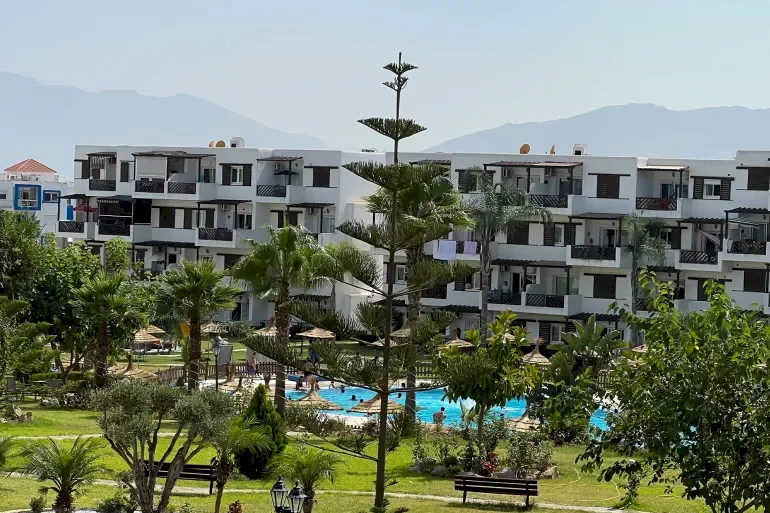
Know the Costs of Eid and Summer Vacations in 7 Arab Countries
SadaNews - As Eid al-Adha approaches and the summer holiday season begins, Arab families are facing a different tourist season this year, as the cost of travel and accommodation has turned into an additional burden on family budgets, amidst regional tensions, rising fuel prices, insurance costs, and global air travel disruptions.
From Qatar to Morocco, passing through Kuwait, Syria, Lebanon, Jordan, and Algeria, the complaints about rising ticket prices, reduced direct flights, and increased accommodation costs at tourist destinations are similar, while tourism companies and hotels are trying to adapt to a season described as "exceptional" due to the war in the region and global economic fluctuations.
Decline in Eid Travel
Regional tensions have changed travelers' behavior in Qatar during Eid al-Adha this year, as many families prefer to stay within the country or travel by land to nearby Gulf countries, rather than long-haul flights.
Qatari citizen Jassim Al-Emadi said that many families have reconsidered their travel plans due to concerns about any sudden developments that could affect air travel, noting that the experience of airport closures and flight disruptions during the war in Iran, which broke out last February, is still fresh in people's minds.
Al-Emadi added that summer travel is still viable for many families, but it is linked to the stability of the situation in the region in the coming weeks.
On the other hand, Qatari citizen Jaber Al-Shawi noted that many families now prefer to spend Eid holiday within Qatar, given the availability of diverse tourist and entertainment options, or travel by land to Gulf countries as it is considered "lower risk".
Summer Bookings Recovery
Despite weak Eid al-Adha bookings, Mahmoud Mokhtar, CEO of Galaxy Travel and Tourism in Qatar, clarified that summer bookings have started to show a clear recovery, with increased interest in destinations such as Turkey, Dubai, London, and Cairo.
Mokhtar pointed out that the short duration of the Eid holiday and families being preoccupied with school exams also contributed to the decline in travel during this period.
Mahmoud Salah, director of Advisor Travel Office, explained that ticket prices have risen by about 10% due to increased fuel prices, modifying flight paths, and relying on long transit flights instead of direct ones.
Gradual Recovery of Air Travel
In Kuwait, Nasser Al-Obaid, CEO of Government Affairs at Jazeera Airways, stated that the global aviation sector has been affected recently by several variables related to travel movement and operational costs, explaining in a statement to Al Jazeera Net that the rising costs of insurance and fuel have reflected on flight prices in many countries worldwide.
Al-Obaid noted that the return of stability and the operation of airports contributed to the improvement of air travel and the decrease of some costs associated with travel, pointing out that aviation authorities in the region are working to resume full operations of flights and return air traffic to its normal levels.
He added that some global variables have also affected the duration and prices of flights during the past period, expressing hope that stability continues to support the recovery of the aviation and travel sector in the coming period.
Local Tourism Saves Hotels
In the accommodation sector in Kuwait, Wisam Anjbar, executive director of planning and development at Safir Hotels and Resorts, stated that recent events have affected hotels worldwide, explaining that some hotels in Kuwait resorted during the crisis to distribute bookings between the beginning and end of the week based on demand levels, where occupancy rates between Sunday and Wednesday reached about 30%, before rising to between 70% and 80% during the weekend.
Anjbar added that hotels relied during the period of declining outbound travel on promoting domestic tourism by offering special packages for Kuwaitis to benefit from marine destinations and recreational activities, confirming that these deals positively reflected on occupancy rates and provided services.
The hotel official pointed out that the hotel sector was also forced to rationalize expenses during the crisis, noting that wars and crises inherently affect the hotel sector globally, and that a return to pre-war levels will take time, while local tourism proved to be a successful alternative to support the sector during difficult times.
Higher Fuel and Insurance Costs
Ali Arnaout, owner of Fly Sama travel agency in the Lebanese capital Beirut, stated that ticket prices have risen significantly over the past months, not only due to the repercussions of war and security tensions but also due to the global rise in oil prices.
Arnaout clarified that the limited competition during previous periods when Middle East Airlines was one of the few companies operating at Beirut Airport also contributed to the significant price increases.
The spokesperson added that the return of several airlines, including Turkish Airlines, Emirates, and Fly Dubai, has restored some balance to the market and helped reduce prices relatively compared to last month, although they remain above normal levels.
Despite this relative decline, Ali Arnaout asserts that the demand for travel bookings is still below expectations due to many travelers' fears of any sudden security developments that could lead to flight disruptions or loss of prepaid funds.
Long Transit Doubles the Cost
Travel costs are not limited to ticket prices alone, according to Lebanese citizen Ahmad Al-Khalil, who points out that long journeys and mandatory transit and additional expenses associated with flight delays and transitory accommodations have made travel more complicated for families.
In Jordan, the situation appears similar, as Bilal Rubin, the media spokesperson for the Association of Travel and Tourism Offices, confirms that flight prices have seen a clear increase due to the rise in global jet fuel prices and the increase in flight insurance premiums due to regional tensions.
Rubin added that several airlines have had to adjust their flight paths or avoid certain airspaces, increasing travel duration and raising operating costs, especially with the seasonal demand during the Eid and summer period and the limited seats available on some travel destinations.
The president of the Jordanian Association of Travel and Tourism Agents, Suhail Halsa, stated that the Jordanian tourism sector is experiencing exceptional circumstances, noting that Royal Jordanian Airlines is almost the only company continuing to operate regular flights to several destinations, while many airlines remain hesitant to resume full operations to Jordan.
Halsa added that the rise in ticket and hotel prices has led to a clear decrease in demand for outbound tourism programs, describing the expected tourism movement during the summer as "almost non-existent".
Sharp Increases in Algeria and Syria
In Algeria, tourism expert and travel agency owner Selim Ayash confirms that prices for outbound tourism during the Eid and summer periods have increased significantly due to rising demand for tourist destinations and limited seats available from some airlines.
Ayash explained that regional tensions directly cast shadows on the air transport sector, leading to ticket prices rising by about 30% compared to normal periods.
He added that the Algerian market still lacks "tourism products" dedicated to holiday periods, despite the potential to develop offers that respond to the increasing seasonal demand.
In Syria, the impact of war has been more evident on travel and aviation movement. Hamza Wanli, an employee in one of the travel agencies in Damascus, stated that the prices of some flights have increased unprecedentedly during the war.
Wanli pointed out that air travel from Syria to Kuwait was directly affected after part of its airport sustained damage, leading to a reduction in the number of companies operating on the route and flights being limited almost exclusively to Jazeera Airways, which created a monopoly that reflected on ticket prices.
The same spokesperson explained that the price of a ticket rose from about $200 to nearly $1000 for a single traveler, before prices began to gradually decline as the situation calmed, but they still remain elevated compared to pre-war levels.
Between Promotions and Seasonal Pressure
In contrast to the rising travel prices, accommodation prices have shown clear variation between one Arab country and another.
In Lebanon, Ali Arnaout points out that several hotels and tourist apartments have lowered their prices this year due to declining demand and delayed early bookings.
He explained that five-star hotels in Dubai, which previously exceeded $400 per night in previous seasons, are now offering prices close to just $150 in an attempt to attract customers.
Lebanese citizen Suad Al-Ahmad stated that families have been accurately comparing the costs of tickets and accommodation before making travel decisions, causing some to reduce the duration of their vacations or opt for less expensive destinations.
In Algeria, Selim Ayash confirms that hotel and apartment prices rise significantly during the summer due to seasonal pressure and an imbalance between supply and demand, especially in coastal areas suffering from inadequate infrastructure.
Hossam, an Algerian family head, states that the cost of hotels leads him to prefer tourist apartments and houses, as the cost of one night can reach 10,000 Dinars (about $74) or more, but he sees them as a more economical and suitable option for families.
In Jordan, the spokesperson for the hotel association, Mohammed Al-Qassem, states that accommodation prices remain "within moderate levels", pointing out that there are multiple options starting from 40 to 50 Dinars (around $56 to $70) for hotel apartments, and reaching up to 200 Dinars (around $282) depending on service levels.
However, Jordanian citizen Muthana Al-Zyoud finds that accommodation in Aqaba and the Dead Sea hotels remains high relative to families' income, prompting many to rent farms or private apartments instead of hotels.
Cautious Optimism for the Tourist Season
In Syria, hotel room prices range between $70 and $450 per night, depending on classification, location, and the nationality of the customer, as confirmed by Luna Al-Qaseer, an employee at the "Via Recta" Hotel in Damascus.
In Morocco, Hassan Zalmout, president of the National Federation of Hotel Industry, states that hotels and tourist accommodations are preparing to receive Moroccan families during Eid with offers that include traditional rituals specific to the occasion.
Zalmout clarified that overnight prices range between 79 and 10,000 Dirhams per night (between $8 and $1000) depending on the level of the hotel and services, while prices for tourist accommodations start from about 300 Dirhams (around $30).
The same spokesperson noted that prices have not changed much compared to last year, despite rising energy prices and tensions in the Middle East, warning that any additional increases may drive customers to refrain from traveling.
Conversely, Mohamed Al-Samlali anticipates that air ticket prices will rise in the coming months by about 20 to 25%, especially after some low-cost airlines reduced their flights to Europe.
With rising fuel and insurance prices, altered flight paths, and increased seasonal demand for accommodation, it seems that traveling during Eid al-Adha and this summer has become more costly for many Arab families, who find themselves compelled to shorten their vacations, change destinations, or even postpone travel until more stable conditions arise.
Source: Al Jazeera
 Follow the latest Sada News via Google News
After Deschamps' Departure... Zinedine Zidane Tops the Candidates to Lead France

Mbappe Surpasses Messi and Becomes the All-Time Top Scorer in the World Cup

England Defeats France and Achieves Largest World Cup Achievement Since 1966

Messi Refused to Play for Spain and Missed 3 World Cups

Publishers Sue Google for Allegedly Using Books to Train Artificial Intelligence

Google Expands Capabilities of Google Search Console to Support Social Media Accounts

The Mediterranean Table... An Ancient Diet Revealing Its New Secrets for Health and Longev...
