

"Smell but Don’t Taste"... Study Reveals Amazing Impact of Chocolate Scent on Athletic Performance
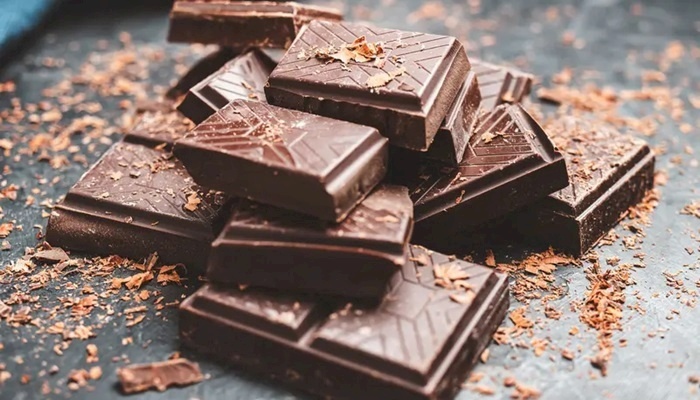
SadaNews - Your secret to improving your performance in the gym might be closer than you think, and it may not require any supplements or even a bite of chocolate. A recent study indicated that simply inhaling the scent of dark chocolate before and during exercise could help in performing more repetitions during strength training exercises.
The study, published in the journal Frontiers in Physiology and covered by Healthline, adds new evidence to research exploring the impact of scents on athletic performance.
What did the study find?
Researchers discovered that healthy men who inhaled the scent of 90% cocoa dark chocolate were able to perform more repetitions in the leg extension exercise compared to those who inhaled the scent of water, which was used as a control in the experiment.
Participants also reported feeling fuller and having a reduced sensation of hunger.
The scent of milk chocolate also improved performance, albeit to a lesser extent, and was associated with a different psychological response.
The researchers believe that the results bolster the growing evidence that scents may influence physical performance through complex interactions between the brain, appetite, and perception.
Marie-Eve Matthieu, a researcher at the University of Montreal who did not participate in the study, stated that the findings align with previous research suggesting that lower appetite and feelings of fullness may be related to improved athletic performance.
She added that other studies have previously explored the effects of scents such as peppermint, ammonia, lavender, and citrus on physical performance.
However, she emphasized the need to interpret the results with caution, given the study's limitations.
How was the study conducted?
The study included 23 healthy men who regularly engaged in resistance training.
Each participant underwent three separate sessions in which they inhaled one of the following scents:
- A scent of dark chocolate containing 90% cocoa.
- A scent of milk chocolate containing 60% cocoa.
- A scent of water as a control group.
There were at least four days between each session, and all tests were conducted after an overnight fast of more than 10 hours.
Before starting exercise, participants inhaled their assigned scent for 30 seconds at several intervals, while assessing:
- Hunger level.
- Feelings of fullness.
- Desire to eat.
- Their liking of the scent.
After that, they performed consecutive sets of leg extension exercises until muscle fatigue, inhaling the same scent before each new set.
Dark chocolate outperforms
The results showed clear differences among the three scents.
Participants who inhaled the scent of dark chocolate were able to perform:
- An average of 18 additional repetitions compared to the control group.
- One additional complete set compared to the milk chocolate and water groups.
The milk chocolate scent increased performance by about 9 additional repetitions compared to water.
Different effects on appetite and fatigue sensation
Differences were not limited to athletic performance alone.
The study showed that the scent of dark chocolate:
- Reduced feelings of hunger.
- Decreased desire to eat.
- Increased feelings of fullness.
Conversely, the milk chocolate scent did not have the same effect on appetite but was the most liked by participants in terms of scent.
Matthieu explained that these results suggest that dark chocolate may influence performance by increasing the feeling of fullness and reducing appetite, whereas milk chocolate likely works by enhancing the pleasure sensation.
Why might scent affect performance?
Researchers are still trying to understand the precise mechanism behind this phenomenon.
They suspect that it may relate to what is known as the cephalic phase response, a series of physiological changes that occur upon seeing, smelling, or tasting food, even before consumption.
This response may lead to changes in the body that could reflect on athletic performance.
What are the study's limitations?
Despite the encouraging results, researchers pointed out several limitations that hinder the generalization of their findings, notably:
- The limited number of participants.
- The study's focus on young men engaged in resistance training.
- Evaluation of only one type of exercise.
- Conducting tests after an overnight fast, which could impact the response.
Therefore, experts believe that larger studies are needed to include women, older adults, and individuals with varying weights and fitness levels.
What do studies say about other scents?
The findings of this study align with previous research on the effects of scents on athletic performance, including:
- Peppermint: Associated with improved running, sprinting, number of push-ups, and reduced sensation of fatigue.
- Ammonia: Could increase alertness and focus, which is why it is sometimes used in weightlifting gyms.
- Lavender: Studied for its potential role in reducing anxiety and improving recovery.
- Citrus: May enhance feelings of energy and well-being during exercise.
 Follow the latest Sada News via Google News
Messi Refused to Play for Spain and Missed 3 World Cups

Publishers Sue Google for Allegedly Using Books to Train Artificial Intelligence

Google Expands Capabilities of Google Search Console to Support Social Media Accounts

The Mediterranean Table... An Ancient Diet Revealing Its New Secrets for Health and Longev...

"Smell but Don’t Taste"... Study Reveals Amazing Impact of Chocolate Scent on Athletic Per...

A New Study Reveals an Unexpected Benefit of Cranberry Juice

Does Vitamin C Protect Your Heart?... Health Benefits You May Not Know About
