

Why Was Trump Forbidden from Using His Mobile Phone During His Visit to China?
SadaNews - In a world where smartphones have become an integral part of daily life, even for world leaders, the idea of giving them up may seem unusual and even complicated. However, the requirements of cybersecurity sometimes impose exceptional measures, especially during sensitive official visits. This is what U.S. President Donald Trump faced during his participation in a summit held in China, where he had to stay away from his mobile phone, a step that reflects the extent of the security and technical challenges associated with such visits.
According to the "New York Post," Trump was not allowed to use his personal phone while in China, which posed one of the major logistical challenges he faced alongside the White House team on the ground in Beijing. The president was asked, as many travelers to China, to refrain from using his personal devices to protect his data from the risks of hacking or electronic espionage.
This measure represents a particular challenge for Trump, known for his frequent use of his mobile phone, whether to communicate with friends, respond to journalists' calls, or post his comments and mocking images across his digital platforms. A White House official confirmed that the president would not use his personal phone throughout his stay in China.
During the summit, restrictions were imposed on posting through Trump's account on the "Truth Social" platform, as it is likely that some posts were published from Washington, D.C., since several White House staff members work on Beijing time to provide logistical support remotely.
This "digital isolation" was not limited to the president alone; it also included his team members, as administration staff used temporary phones and email addresses throughout the summit. This was part of strict measures aimed at protecting information and ensuring the visit proceeded smoothly.
These temporary devices serve as "clean" devices, stripped of most applications and essential functions, designed to contain the least amount of data possible in anticipation of any potential hacking attempts.
In this context, the U.S. State Department warns American citizens traveling to China that privacy on communication networks there is not guaranteed, noting that many travelers prefer to carry electronic devices free of any personal information.
As for White House staff, their personal devices were secured on board Air Force One inside special bags known as "Faraday" bags, which are designed to block all signals, including GPS, Wi-Fi networks, Bluetooth, and RFID technology, providing an additional layer of protection for sensitive data against any remote breach.
Trump and his team are able to regain the use of their devices once they return to the presidential aircraft, which is legally and security-wise considered American ground wherever it may be. Additionally, Air Force One has advanced capabilities for protecting information, functioning as a Sensitive Compartmented Information Facility (SCIF) in flight, equipped with multiple systems to secure communications and data.
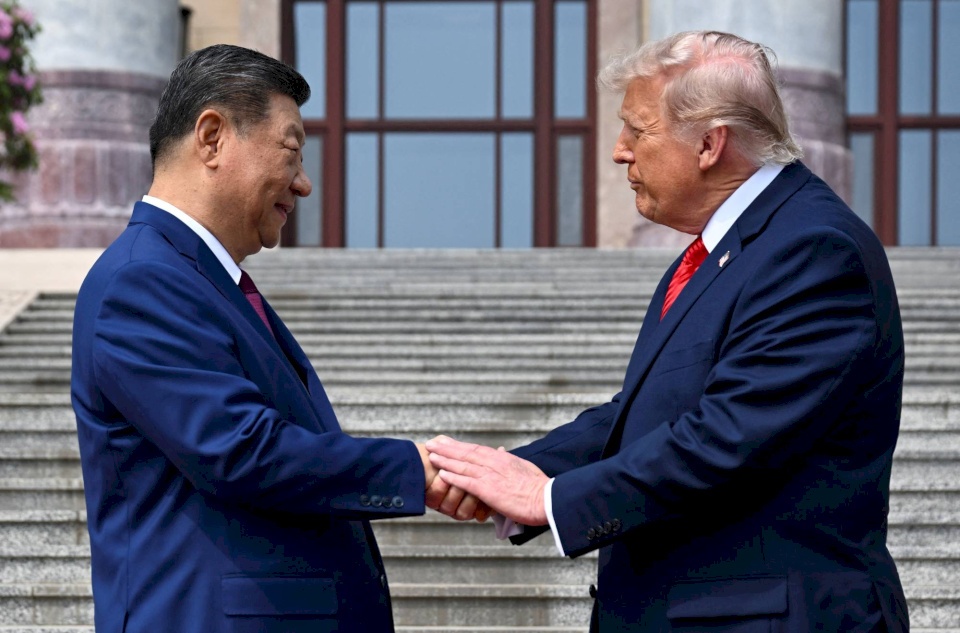
During this visit, Trump discussed several complex issues with Chinese President Xi Jinping over two days of meetings, including the Iranian war, the Taiwan issue, as well as trade and technology matters, in an atmosphere requiring the highest levels of security and organizational caution.
 Follow the latest Sada News via Google News
The General Secretariat of the Organization of Islamic Cooperation Affirms the Role of UNR...

Paul's Initiative in Libya: A Real Settlement or a New Division of Influence and Resources...

The Ghost of El Fasher Haunts El Obeid.. A Funding Gap Threatens the Lives of 20 Million H...

Dozens Dead and Injured in Russian Missile and Drone Attack on Kyiv

8 Dead and Injured.. Russia Launches Deadly Attacks on Kyiv

Aoun calls on those opposed to the "framework agreement" to present an alternative

The Organization of Islamic Cooperation Welcomes the UN Report on Occupation Against Child...
