

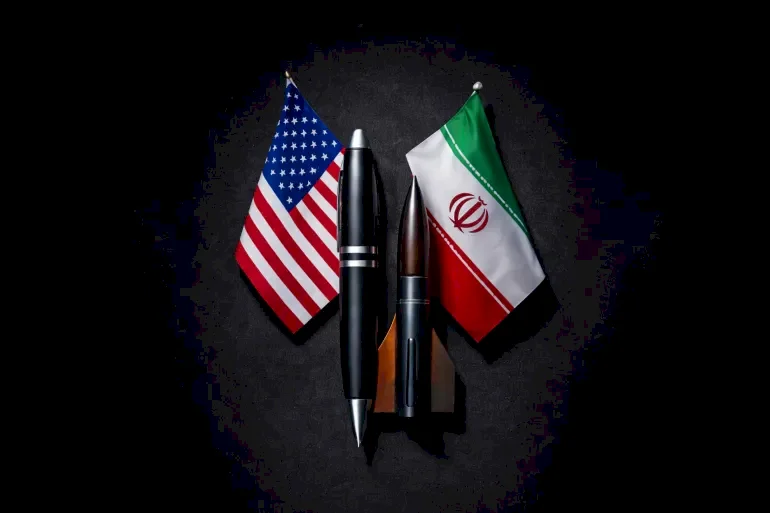
After Negotiations Stall.. 3 Scenarios Determine the Future of the Washington-Tehran Conflict
SadaNews - The direct negotiations between the United States and Iran in the Pakistani capital Islamabad ended without an agreement, after more than 20 hours of intense discussions, opening the door to a murky phase of either escalation or fragile calm, amidst what Western reports described as "strategic stalemate".
Coverage from The New York Times, The Washington Post, and The Telegraph agreed that the failure of this round was not surprising, but rather a result of a deep gap in the positions of both parties, especially regarding the Iranian nuclear program and the future of security arrangements in the region.
The negotiations were led by U.S. Vice President J.D. Vance, who confirmed after the talks that his country was unable to achieve any breakthroughs, stating: "We were not able to reach a point where Iran is willing to accept our terms... We were quite flexible, but we made no progress.".
The main points of contention include Washington's insistence, backed by President Donald Trump, on a complete end to the Iranian nuclear program versus Tehran's insistence on its right to enrich uranium and its refusal to give up its strategic capabilities.
The disagreements also included other files, such as control of the Strait of Hormuz, lifting economic sanctions imposed on Iran, the release of frozen Iranian assets, and war-related compensations, not to mention the request for a ceasefire in Lebanon.
In this context, the newspaper reported that the United States presented a "take it or leave it" offer, which Iran chose to reject, reflecting a mutual hardening of positions, stating that the failure of the talks raises a pressing question: what comes next?
The newspaper believes that the Trump administration now faces "unpalatable" options ranging from entering into long and complicated negotiations to returning to war, or attempting to manage the crisis without a radical solution.
The newspaper warns that resuming fighting could exacerbate the global energy crisis, especially as the conflict is linked to the Strait of Hormuz, which is a vital artery for oil supplies.
In contrast, The Washington Post noted that this round represented the highest level of direct communication between the two countries in decades, but ended without any tangible progress, while theoretically leaving the door open for resuming talks.
Meanwhile, the British newspaper iPaper pointed out that the ceasefire remains fragile amidst ongoing field tensions, which could undermine any chance of success in the diplomatic path.
In light of this situation, The Telegraph outlined 3 main scenarios for what might happen next:
First: Resuming Negotiations Under Pressure
The withdrawal of the U.S. delegation could be a tactical step to push Iran to offer subsequent concessions, but the newspaper warns that this path may prolong the crisis and reproduce the current stalemate.
Second: Returning to Military Escalation
This scenario includes resuming widespread war or conducting limited operations, particularly in the Strait of Hormuz, with the risks that this could disrupt global energy markets and increase inflation rates, not to mention increasing political pressures domestically on the U.S. administration.
Third: Ending War Without an Agreement
The U.S. president may choose to end military operations without reaching a formal agreement, according to the newspaper, but this option could be interpreted as an American retreat that leaves core issues unresolved, primarily the nuclear file.
Through these reports, it is clear that the results of this round have stemmed from a complex reality: the United States does not want a long and costly war, while Iran refuses to make significant concessions, and between this and that, the scene remains open to 3 possibilities: long negotiations, serious escalation, or a fragile settlement, at a time when the region and the world remain hostage to the developments of this file, according to The Telegraph.
 Follow the latest Sada News via Google News
Public Petroleum Authority: Fuel supply continues daily and we urge citizens not to rush t...

8 Martyrs and 20 Injured in a Series of Airstrikes on Gaza

Report: Trump Considers Escalating War and Iran Looks to Expand It to Include Israel

Trump Responds to Mamdani: Netanyahu Will Not Be Arrested in the United States

Israeli Estimates: Mojtaba Khamenei is in Iran and continues to issue instructions

Report: Proposal for a 10-Day Ceasefire Between Washington and Tehran

Hussein Al-Sheikh Congratulates Khalil Al-Hayya on His Election as Head of Hamas's Politic...
