

What Happened in the Final Hours Behind the Scenes Before the Ceasefire Announcement?
SadaNews - The American site "Axios" reported, citing officials and informed sources, on some of the events in the final hours before the ceasefire announcement between the United States and Iran, as tension reached unprecedented levels following Washington's threats of attacks that could "destroy an entire civilization", coupled with the mobilization of American military forces in the region and fears of stronger Iranian retaliations.
The site mentioned that chaotic negotiations took place last Monday, during which the American envoy, Steve Witkoff, described the Iranian proposal as a "disaster", prompting the mediators to present new drafts between Iranian Foreign Minister Abbas Araghchi and American envoy Steve Witkoff through Pakistan and several other regional parties in an effort to reach understandings before the deadline set by Trump.
Later that evening, the mediators obtained American approval for a two-week ceasefire proposal, followed by the approval of Iran's Supreme Leader, Muqtada Khamenei, whose approval sources described as a decisive breakthrough, especially after convincing the leaders of the Revolutionary Guards to accept the deal.
Tuesday morning was marked by Trump continuing to escalate his threats, leading some reports to indicate the possibility of Iran withdrawing from the negotiations, a claim denied by sources involved in the diplomatic efforts to resolve the conflict, asserting a high likelihood of reaching an agreement. This occurred while U.S. Vice President J.D. Vance was in contact with the mediators, while Israeli Prime Minister Benjamin Netanyahu intensified his communications with Washington amid Israeli concerns about losing influence over the negotiation process.
By midday Tuesday, a general belief emerged about the possibility of reaching a ceasefire when Pakistani Prime Minister Shehbaz Sharif published details of the ceasefire agreement, urging both parties to accept it.
In those moments, Trump faced pressure from hardline allies to reject it, amid confusion even within his inner circle regarding his final position, according to "Axios".
However, President Trump made his decision in a short time after direct communications with Netanyahu to secure his commitment to the ceasefire and with the Pakistani leadership to finalize arrangements, before the approval announcement was issued. Just about 15 minutes later, American forces received orders to halt military preparations.
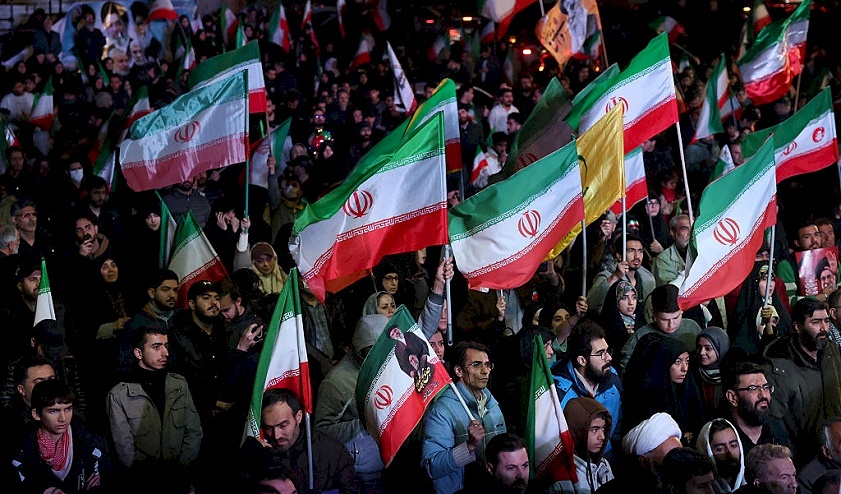
Tehran then announced its commitment to the agreement and the opening of the Strait of Hormuz to navigation in coordination with its forces, thereby overcoming one of the most tense moments in the course of the crisis.
Regarding the Lebanese front and Pakistan's statements that the agreement includes all fronts, the "Wall Street Journal" reported that Netanyahu agreed to announce a ceasefire in a call with Trump, but refused to include that for the Lebanese front, disregarding Pakistan's statements.
"Axios" quoted a senior Israeli official as saying that the United States assured Netanyahu that it would insist on Iran abandoning enriched uranium and eliminating the threat of ballistic missiles.
The American site suggested that Vice President Vance would lead the U.S. delegation in talks scheduled in Islamabad on Friday, noting that there are still significant gaps between the United States and Iran concerning the complete cessation of the war, making its resumption a possible scenario.
 Follow the latest Sada News via Google News
High-level sources reveal to SadaNews: Washington seeks to hold a Gaza Reconstruction Conf...

Iraqji Reveals Details of the Attack on the Iranian Supreme Leader's Headquarters

صراع على إرث خامنئي وسط غياب مجتبى.. والمتشددون يتهمون قادة إيران بـ«الانقلاب»

The European Union Reiterates Its Call for Israel to Refrain from Expanding Settlements in...

"Mamdani Berlin".. The German Left Bets on a Politician of Turkish Descent to Lead the Cap...

Hebrew Channel: Kushner Pushing to Enhance Communication Between the United States and the...

SadaNews Report: Israeli Elections with a Settlement Flavor!
