

Ship Owners Await Details of Agreement to Open Hormuz for 800 Stranded Vessels
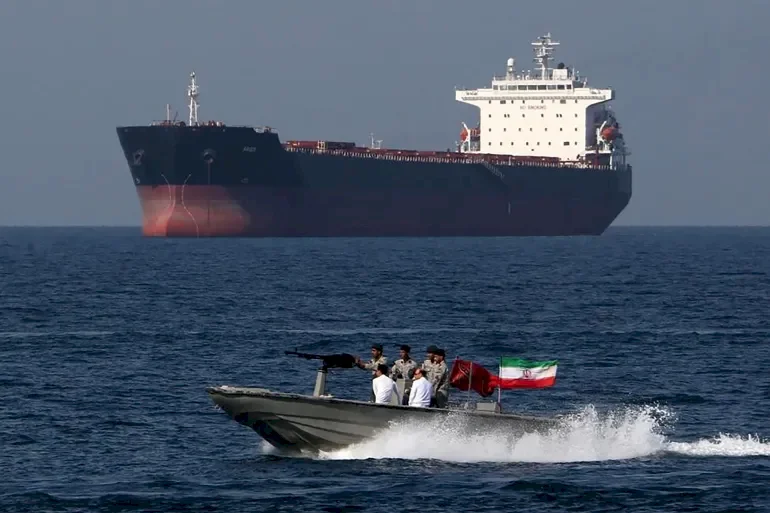
SadaNews - Ship owners have rushed to understand the details of a ceasefire agreement that may temporarily open the Strait of Hormuz, hoping to take advantage of a potential window to free more than 800 vessels stranded in the waters of the Arabian Gulf.
The near-total closure of this vital waterway for weeks has created an unprecedented crisis in global energy supplies after Iran took control of the strait following a war that started with U.S. and Israeli strikes.
With no ability to ensure the safety of thousands of sailors and their cargo after multiple attacks, ships remained anchored on either side of the strait, and traffic slowed significantly.
Hours before the deadline set by U.S. President Donald Trump, both sides agreed on Tuesday to a ceasefire in exchange for the reopening of the strait.
However, the details remain unclear, as Iran states it agreed to two weeks of safe passage in coordination with its armed forces and under "technical constraints," while Trump announced a "full, immediate, and safe opening." It is unclear whether the two sides have reached an agreement on the fees imposed by Tehran.
Cautious Optimism Among Ship Owners
Nevertheless, the news has been enough to push ship owners towards a degree of cautious optimism. The "Japanese Shipowners Association," a major industrial group, was among those who said they would verify the details of the agreement between the United States and Iran before relaying information.
However, most have warned that more clarity is needed before ships can move, and even in the best-case scenarios, the resumption of flows will take time. In peacetime, about 135 ships cross the strait daily, a number that has sharply declined.
Jennifer Parker, an assistant professor at the Defense and Security Institute at the "University of Western Australia," stated: "You cannot restart global shipping flows within 24 hours." She added: "Ship owners, insurance companies, and crews must be convinced that the risks have actually decreased, not just paused."
Hundreds of Stranded Ships in Gulf Waters
According to "Kpler" data, oil tankers constitute a large part of the fleet stranded within Gulf waters.
There are currently 426 crude oil and clean fuel tankers, in addition to 34 liquefied petroleum gas carriers and 19 liquefied natural gas ships. Other vessels transport dry goods such as agricultural or mineral products and containers.
According to a count by the International Maritime Organization at the end of March, there are about 20,000 civilian sailors stranded on board these ships and other support/service vessels.
These crews have faced shortages of supplies, fatigue, and psychological pressures, as warned by a United Nations agency.
 Follow the latest Sada News via Google News
The World Bank Warns: "The Worst-Case Scenario" for Global Growth is Approaching

Trump Prepares to Impose New Tariffs on Dozens of Economies

Gold Surpasses $4,100 as Selling Pressure Eases

Oil Rises for the Fourth Day as Supply Risks Escalate

An Additional $8 Billion.. A New Account from the Pentagon on the Cost of the War with Ira...

London Stock Exchange Enters the Era of 24/7 Trading

Shamaran Petroleum: Suspension of Oil Production in Duhok Fields in the Kurdistan Region o...
