

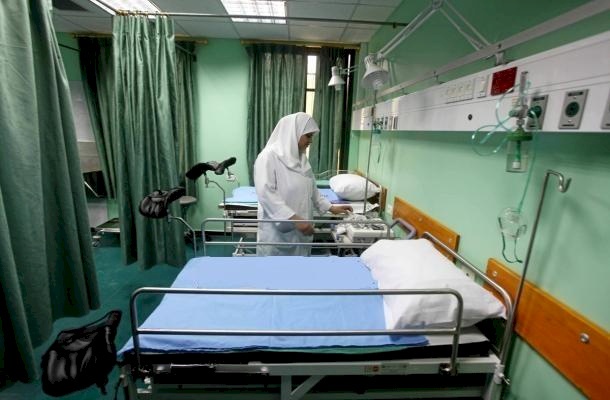
On World Health Day.. 94% of Hospitals Devastated and 51% of Essential Medicines Depleted
SadaNews - On the occasion of World Health Day 2026, this year's theme is "Together for Health: Stand with Science". The Palestinian Central Bureau of Statistics presented an overview of the health system in Palestine under unprecedented exceptional conditions and a painful health reality imposed on Palestine, especially in the Gaza Strip. While the world witnesses rapid advancements in the fields of medicine and healthcare, and the international community celebrates scientific and medical achievements, the Palestinian health sector faces escalating and overwhelming challenges. The gap between humanitarian health standards and the living reality has deepened due to the ongoing aggression and systematic Israeli blockade.
Complete paralysis in Gaza's health system: 94% of hospitals devastated and 51% of essential medicines depleted
Updated data until March 2026 indicate that the health system in the Gaza Strip has reached a state of acute collapse, with 94% of hospitals damaged, leading to all 36 hospitals being out of full operational capacity, while only 18 hospitals are functioning partially. Primary healthcare services have recorded a catastrophic decline, dropping to less than half of their operational capacity, with only 1.5% of them operating at full capacity. The crisis worsens with 51% of essential medicines having reached 'zero stock' in warehouses, putting thousands of patients, particularly those with chronic diseases, in urgent need of regular treatment, and rendering the health system in a state of near-total paralysis that endangers the lives of the population.
This deterioration is not limited to the Gaza Strip; it also extends to the West Bank, where movement restrictions increasingly affect access to healthcare services. The World Health Organization has documented hundreds of incidents targeting medical staff and ambulances, leading to the disruption of many services, including mobile clinics. Estimates indicate that one in five families reported that their children could not access healthcare or obtain necessary medications due to repeated closures.
37,000 pregnant and lactating women and 31,000 children face a slow death and malnutrition
According to the Integrated Food Security Phase Classification (IPC) report for the period from October 2025 to April 2026, the Gaza Strip witnessed acute food insecurity levels between October 16 and November 30, 2025, with around 1.6 million people (77% of the population analyzed) facing high levels of acute food insecurity. Despite limited relative improvement after the ceasefire, 96% of agricultural land is destroyed, unemployment has risen to 80%, and 47% of the population lacks basic health facilities, making this improvement extremely fragile; thus, the risk of famine persists if aid stops or hostilities resume.
Children and women in the Gaza Strip face alarming nutritional situations; as of mid-October 2026, the IPC report indicates a severe malnutrition crisis threatening the lives of 101,000 children (aged 6 months to 59 months), of whom 31,000 will suffer from acute severe malnutrition that places their lives at risk. In this context, about 37,000 pregnant and lactating women are expected to suffer from acute malnutrition, while tens of thousands of other women remain at high risk for health and nutritional issues. This reality has disastrously reflected on newborn health, with a noticeable rise in preterm births, as one in five newborns requires intensive care, alongside a sharp increase in abortion cases and complications related to the lack of essential nutritional requirements.
Diseases ravage displacement centers amid acute shortages in health services
Based on the Unified Disease Monitoring Dashboard of the Early Warning and Response System (EWARS), which compiles weekly data from health facilities, the burden of infectious diseases in the Gaza Strip shows unprecedentedly high numbers of respiratory and dermatological cases as well as parasitic diseases. The health situation in the Gaza Strip has reached an unprecedented critical level, as infectious diseases constituted nearly a quarter of total medical consultations (23.3%) from the beginning of 2026 until the end of February, amid a real collapse and shortfall in the health system's capacity to respond.
Acute respiratory infections recorded the highest percentage among diagnosed infectious diseases, accounting for 68% during the first two months of 2026, with over 1.9 million cumulative cases. Although a relative decrease in the number of cases has been recently noted, the registration of 17 deaths in January 2026 reflects the aggravation of the situation and the severity of illness due to severe cold amid the acute overcrowding within displacement centers that exceeded their capacity by more than four times, alongside a lack of heating, ventilation, and difficulty accessing health services.
Acute watery diarrhea constituted the second most reported disease at 16%; approximately 81,000 cases were registered during January and February 2026, of which more than 36,000 occurred among children under five. Over 496,000 cases of acute watery diarrhea were recorded in 2025, with 47% among children under five. This steep rise – some 20 times that of the pre-war period – is attributed to deteriorating water quality and the collapse of sanitation systems, with estimates indicating that 97% of water in the sector is unfit for consumption. Meanwhile, skin diseases such as scabies and lice spread by 15%, affecting around 75,000 people, amid a near-complete absence of personal hygiene facilities.
The suffering of patients with chronic diseases has also intensified due to the disruption of diagnostic and therapeutic services, with 70% of essential medicines depleting; the number of kidney failure patients in the Gaza Strip is estimated at around 1,100, while only about 600–700 patients receive treatment amid extensive destruction of healthcare infrastructure and the shutdown of most dialysis centers, placing patients' lives at severe risk. Cancer patients, estimated to number between 10,000 and 12,000 patients, suffer from a near-total collapse in treatment systems, with a critical shortage of chemotherapy drugs and disruption of advanced diagnostic services, including CT scans, alongside severe restrictions on medical referrals outside the sector, making it extremely difficult to obtain comprehensive treatment protocols. This deterioration extends to hundreds of thousands of those with chronic diseases, as a large percentage of essential medicines have been exhausted, increasing the risk of complications and deaths related to diseases that could have been managed under normal circumstances.
The crisis is not limited to physical health; it extends to mental health, with more than a million children in Gaza suffering from severe psychological effects, including anxiety and post-traumatic stress disorders, amid a near-total absence of specialized psychological support services.
Health indicators and human devastation: An urgent call to address the humanitarian catastrophe in the sector
In a tragic monitoring of the scale of extermination and ongoing human bleeding, data indicates that the ongoing aggression since October 2023 has resulted, as of March 2026, in over 72,280 martyrs, in addition to more than 172,000 injured, estimated that about a quarter of them suffer from permanent injuries requiring long-term rehabilitation services. UNICEF estimates indicate that more than 21,000 children are among the victims, in addition to over 11,000 children suffering from permanent disabilities and injuries that have changed their lives, and they are in urgent need of long-term rehabilitation programs that are unavailable under the current circumstances.
The scale of escalating humanitarian needs requires immediate and effective international action and lifting the restrictions on the entry of sensitive medical equipment and supplies, ensuring the continuity of life-saving health services. Data indicate that over 18,500 patients need immediate medical evacuation, including 3,800 children who require advanced therapeutic interventions outside Palestine.
A pressured health system in the West Bank: Service efficiency amidst restrictions and challenges
The healthcare system in the West Bank relies on a wide network of services. In 2024, primary care was provided through 608 health centers, in addition to 60 hospitals providing nearly 13.4 beds per 10,000 population, which is lower than the global average of about 30 beds. The density of health personnel is 21.9 general practitioners and 43.6 nurses per 10,000 population, reflecting the availability of human resources, while there remains a need to improve their distribution and efficiency to meet the increasing demand for healthcare services.
Despite this progress, the health situation cannot be separated from the imposed restrictions, as Israeli measures directly affect the efficiency and continuity of healthcare services in the West Bank; barriers and movement restrictions impede patients, especially emergency cases, from reaching hospitals in a timely manner, while limiting the mobility of health personnel and affecting the supply of medicines and medical supplies. These challenges negatively reflect on the quality and continuity of healthcare, putting additional pressure on the health system and threatening the achieved gains.
Declining maternal and child mortality in the West Bank … a health achievement reflecting ongoing progress despite challenges
Health indicators in the West Bank reflect a gradual progress in reducing maternal and child mortality; the maternal mortality rate reached 22.2 per 100,000 live births, significantly lower than the ceiling set by the World Health Organization under sustainable development goals (less than 70 cases). The infant mortality rate is recorded at 8.5 per 1,000 live births, and under-five mortality at 10.1 per 1,000 in 2024, levels that are within targeted global ranges.
When compared to the results of the 2020 Multiple Indicator Cluster Survey, a clear improvement trend is evident; the infant mortality rate was approximately 14 per 1,000, and under-five mortality was around 26 per 1,000 live births. This decline reflects an improvement in the effectiveness of primary healthcare services and preventive interventions. Near-complete access to institutional births, at a rate of 99.9%, is among the prominent successes in the health system, as it plays a crucial role in mitigating health risks to mothers and newborns.
Burden of diseases in the West Bank: Dominance of non-communicable diseases and stability of communicable diseases
Data from the Ministry of Health in the West Bank for 2024 indicates a clear variation in disease patterns, as non-communicable diseases represent the most significant challenge to public health; they dominate causes of death significantly. Ischemic heart diseases (heart diseases due to artery blockage) lead the list of causes at 24.7% of total deaths, followed by cancerous tumors at 18.2%, and complications of diabetes at 14.5%. The cancer incidence rate is about 130.8 cases per 100,000 population, which is lower than the global average, but considered relatively high compared to many low- and middle-income countries and falls within the upper limits of regional recorded rates, reflecting an increasing health burden that requires enhanced prevention and early detection programs, alongside improving diagnostic and treatment services.
In contrast, communicable diseases remain relatively controlled, with low incidence rates; the incidence rate of hepatitis A is about 5.23 per 100,000 of the population, while pulmonary tuberculosis recorded a very low rate of 0.23 per 100,000. The absence of cases of polio and measles in the West Bank during 2024 is a positive indicator reflecting the effectiveness of vaccination programs and epidemic monitoring systems, despite the ongoing health challenges.
Direct household spending on health: An additional financial burden
Total current spending on health in Palestine in 2024 reached about 1,793.9 million USD, representing about 11.2% of the gross domestic product, with an average per capita share of 351.7 USD annually. The health system relies heavily on government funding (41.7%), while households form the second largest source of health financing in Palestine, contributing 44.9% of total current health spending in 2024. This reflects a significant direct financial burden on families, which may limit their ability to meet other basic needs and increase the risk of facing economic pressures.
 Follow the latest Sada News via Google News
Washington Investigates Possible Russian Role in Iranian Attacks on Its Sites

Mossad Chief Visited Washington to Discuss Iran and Its Nuclear Program

Report: Washington Informed Israel It Is Preparing to Intensify Attacks on Iran and Use St...

Organization of Islamic Cooperation Condemns Nauru's Decision to Open an Embassy in Occupi...

Video:: Nablus: Settlers Evict Tubasi Family from Their Home in Jaloud and Take Over It

Netanyahu: I Intend to Form a Broad National Unity Government

Syrian Foreign Minister Meets with Yasser Abbas in Damascus
