

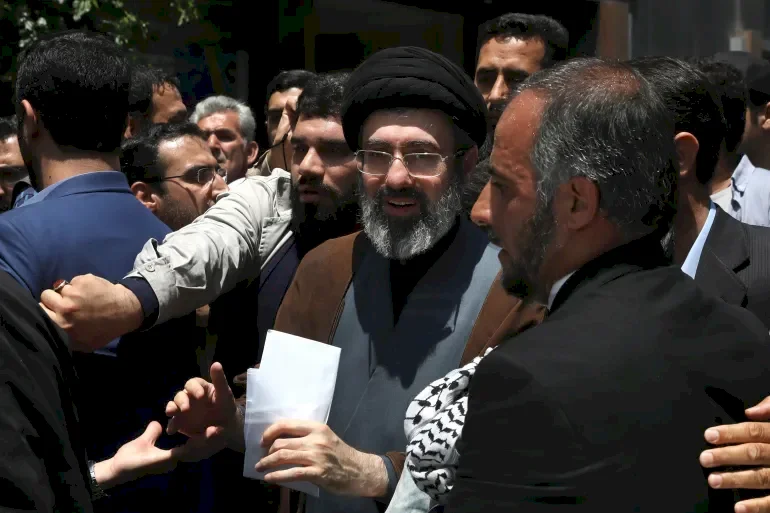
Maariv: Israel refrains from targeting Mojtaba and likens him to Arafat
SadaNews - The newspaper Maariv reported that Israel does not intend to target the Iranian Supreme Leader Ayatollah Mojtaba Khamenei, in compliance with a U.S. decision to maintain a prominent Iranian figure, paving the way for him to gain internal legitimacy before the power centers in Iran, should a ceasefire agreement be reached.
According to the Israeli newspaper, the United States has sent a clear message not to touch several prominent Iranian figures at this time, including Mojtaba Khamenei, in addition to Iranian Foreign Minister Abbas Araghchi and Parliament Speaker Mohammad Baqer Qalibaf.
U.S. President Donald Trump mentioned to the New York Post last Monday that the people who were running the Iranian regime "have been completely eliminated," adding that Washington is currently dealing with "different individuals," also noting that he is considering whether Qalibaf would like to work with the Americans or not, as he put it.
According to Israeli estimates, the United States sees a need for one figure in Iran to "sign on behalf of the regime" and commit to any potential agreement before the Iranian public, the political establishment, and the Revolutionary Guard.
Speculations and Clarifications
According to sources in Israel, Maariv reported that Mojtaba Khamenei's absence from the public eye is intentional, as it is likely his health has deteriorated, and he has suffered facial deformity. Therefore, the newspaper continues, the Supreme Leader is kept hidden from the Iranian public to maintain the morale of the regime, yet he is still performing his duties, and his official status and personal symbolic significance may come into play when necessary, according to the newspaper.
The IRNA news agency quoted Iranian Foreign Ministry spokesman Ismail Baghaei on Wednesday stating that Leader Mojtaba Khamenei is in full health, indicating that the delay in his public appearance is due to wartime circumstances.
A Lookalike of Yasser Arafat
According to the Israeli newspaper, Israel estimates that the Iranian leader may find himself in a situation similar to the late leader Yasser Arafat after his political retreat, and prior to the signing of the Oslo Accords, indicating that he was, according to Maariv's description, "a wounded, defeated, and weak leader,” yet he remained the only figure capable of giving the agreement a binding signature.
Maariv reported that Israel paints a grim picture of the Iranian regime, believing it comprises a divided and isolated leadership, struggling to formulate a unified position.
Israeli estimates indicate that the main disagreement in Tehran lies between the political camp, represented by the president, foreign minister, and political leaders, and the Revolutionary Guard, which rejects any compromise, considering it a real struggle for the leadership of the regime.
According to Maariv, Israel sees that the Iranian Revolutionary Guard seeks to send two main messages, the first being that Iran is capable of enduring, and it can inflict damage on the global economy, and survive until U.S. President Donald Trump is politically weakened.
The second message is that Trump is not seeking a genuine agreement, but is playing a game aimed solely at preventing oil prices from rising and creating an appearance of negotiations.
Increasing Pressures
Meanwhile, Tel Aviv estimates that pressure on the pragmatic camp in Iran is increasing as days go by, as the damage inflicted on the weapons industry, particularly the steel industry, is seen in Tehran as a serious blow that far exceeds just a specific military attack, according to the Israeli newspaper.
In a post on his Truth Social platform, the U.S. President celebrated the targeting of Iran's largest bridge, warning that what is to come is greater, urging Tehran to "make a deal before it's too late, and before there is nothing left of this country that still has the elements of greatness."
The war began on February 28 with an attack launched by the United States and Israel on Iran, leading to a surge in oil prices and turmoil in global markets, amid increasing fears of the conflict expanding in the region, marking the largest U.S. military intervention since the invasion of Iraq in 2003.
 Follow the latest Sada News via Google News
Morocco Hosts Formative Exercise for International Stabilization Force in Gaza

Sheikh Holds Meeting with Security Leaders to Follow Up on Current Developments

Hebrew Channels: The Likelihood of Israel's Participation in the Attack on Iran is Increas...

Netherlands Sets September Deadline for Ban on Settlement Products

12 Martyrs in Gaza Strip since Dawn Today

A Series of Important Decisions Taken.. The Cabinet Discusses Developments in the Deterior...

Organizations of the Temple Prepare for the Largest Raid on Al-Aqsa on What is Called the...
