

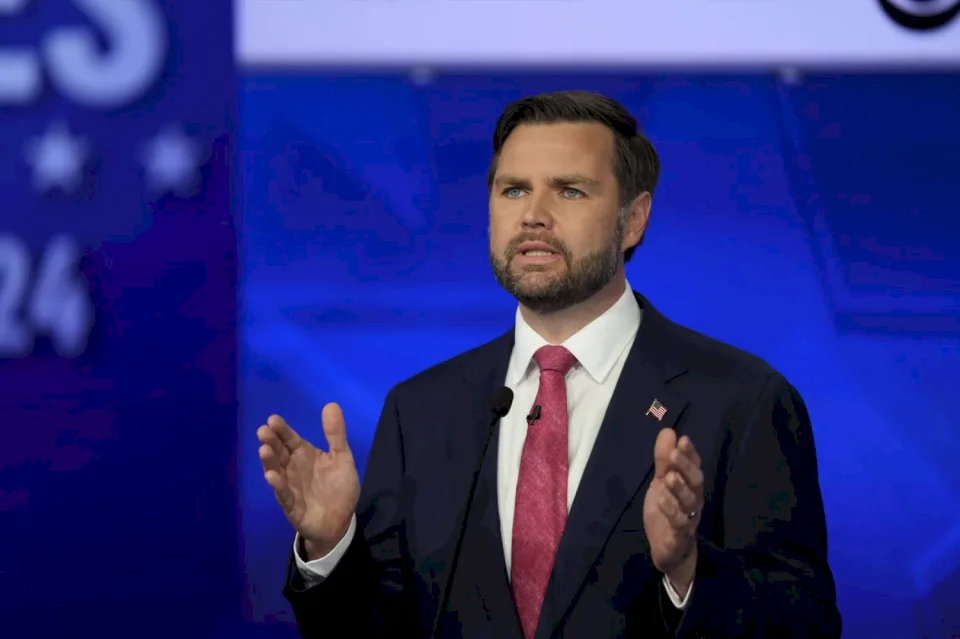
JD Vance.. Why does Iran prefer him as a negotiator in ending the war?
SadaNews - As the devastating American-Israeli war against Iran intensifies and expands to include several countries in the region, recent statements by U.S. President Donald Trump have emerged as an indication of a "lifeline" that may pull the region out of the cycle of killing and destruction it has woken up and slept to for over three weeks.
Trump announced the postponement of military strikes he had threatened to launch against Iranian energy facilities if Tehran did not open the Strait of Hormuz, stating that Washington is engaged in "good and constructive" talks with Iran.
However, Tehran's response to Trump's announcement was notable; it ranged between denial, reservation, and conditions, despite the painful strikes it has been facing since the beginning of the war against it on February 28 last. Meanwhile, news reports confirmed that Tehran conditioned that U.S. Vice President JD Vance lead any negotiations it conducts with Washington, what could be the reasons for this choice over others?
A Crisis of Trust
News reports indicate that the Iranians no longer trust President Trump's envoys, Steve Witkoff and Jared Kushner, the duo often relied upon for negotiations concerning the Middle East during Trump's era.
According to Axios, Iranian officials refused to sit again at the negotiating table with the aforementioned envoys, whom Tehran accuses of "betraying" them during previous rounds of negotiations.
Reports indicate that Tehran views Witkoff and Kushner as the "deceptive face" of the Trump administration; they participated in engineering the "Abraham Accords", and managed previous rounds of negotiations, the latest of which was in Geneva last June, which ended with the United States and Israel launching a surprise war on Iran instead of achieving peace.
Outside the Hawkish Circle
Another factor that makes the U.S. Vice President a preferred choice for Iran is that he is outside the "hawks" of the White House seeking to incite wars; he initially opposed the war behind the scenes, and he is known for his absolute objection to American adventures "overseas," rejecting America playing the role of "world police," and his insistence on prioritizing U.S. interests over other considerations, as noted in an article by journalist James Paul in The New World.
Analysts say Vance believes that America playing the role of "world police" is an outdated notion, and this conviction grants him greater flexibility in making concessions primarily aimed at military withdrawal and securing the direct national interests of the United States, a language that Tehran understands well and sees as an opportunity to reach an agreement not based on Washington's desire for "regime change" in Iran, but on securing its interests in the region.
A "Pragmatic Isolationist"
According to James Paul's previously mentioned article titled "The World Needs JD Vance Now," one of Vance's strengths qualifying him to negotiate the issue of ending the Iranian war is his strict commitment to the principle of "American isolationism," which advocates non-interference in foreign conflicts; he represents the wing that believes that involvement in Middle Eastern conflicts represents a pointless drain on U.S. resources.
Analysts also believe that Vance's engagement in negotiations with Iran reflects a functional shift in his role, as he is not known for playing a traditional diplomatic role nor is he famous for building bridges; rather, he is a pragmatic tool that emerged at a moment when everyone was unable to open a gap in the wall of crisis, "making him the only character capable of moving in a space that requires a blend of loyalty to Trump and political realism," according to the aforementioned article.
Political Ambition at Stake
James Paul believes that Vance's strongest motive is not just to achieve peace but to protect his political future; the U.S. Vice President understands that his ambition to run in the 2028 presidential election is at stake due to the war.
The popular base of the "Make America Great Again" (MAGA) movement loathes dragging the United States into foreign conflicts and wars, and American voters nearly universally share a distaste for economic crises that lead to increased living costs.
No matter how much Vance opposes the war behind the scenes, he remains part of the Trump administration that ignited the war, and unless the implications of this war turn into just a "forgotten stumble" by the time the primary election season begins next year, Vance's hopes of becoming president will evaporate.
Paul concludes his article by stating that "Vance needs to end this war out of pure self-interest," indicating that he would not be entering the negotiation track now unless he believed he had a real chance to end the war.
 Follow the latest Sada News via Google News
Macron: France Requested EU Assistance to Deal with Fires

Ukrainian Drones Target St. Petersburg Area in Russia

Man Stabs Two People in New York While Shouting 'Allahu Akbar'

Tehran Responds: Trump Threatens to Use Iranian Funds to Compensate Damaged Ships

American Escalation Using B-1 Bomber Against Targets of the Iranian Revolutionary Guard

Iranian Revolutionary Guard Targets Al-Adairi Camp and Ali Al-Salem Air Base in Kuwait

Massive Fire in Spain Forces Residents of 34 Villages to Evacuate
