
Among Arab Countries.. List of Countries That May Be Subject to Anticipated U.S. Tariffs
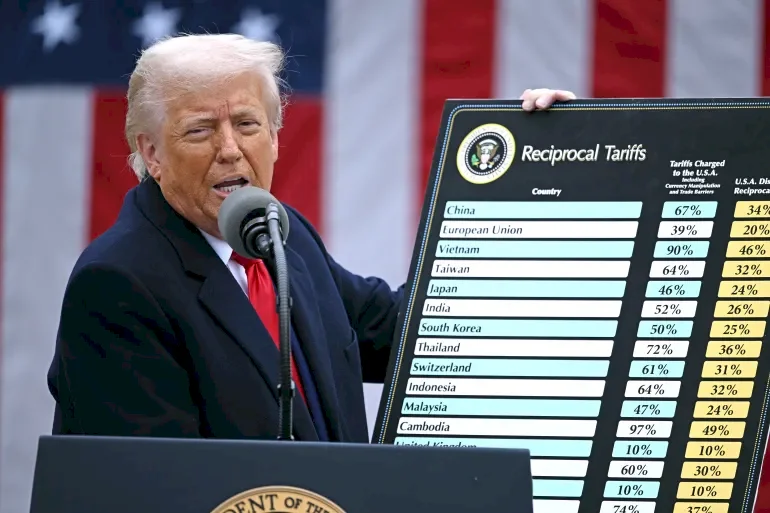
SadaNews - The U.S. Trade Representative's Office has published a list of economies that are included in the proposal for new tariffs ranging from 10% to 12.5%, as part of measures that Washington says are related to combating the entry of goods produced with forced labor into U.S. markets.
According to a report by the American magazine Newsweek, the list includes major economies such as China, the European Union, Japan, the United Kingdom, India, Brazil, Australia, and Russia, along with dozens of other countries across Asia, Africa, the Middle East, and Latin America.
According to Newsweek, the list includes Algeria, Angola, Argentina, the Bahamas, Bahrain, Bangladesh, Cambodia, Chile, Colombia, Costa Rica, the Dominican Republic, Egypt, El Salvador, Guatemala, Guyana, Honduras, Iraq, Israel, Jordan, Kazakhstan, Kuwait, Libya, and Malaysia.
This includes Morocco, New Zealand, Nicaragua, Nigeria, Norway, Oman, Peru, the Philippines, Qatar, Saudi Arabia, Singapore, South Africa, South Korea, Sri Lanka, Switzerland, Taiwan, Thailand, Trinidad and Tobago, Turkey, the United Arab Emirates, Uruguay, Venezuela, Vietnam, Canada, Ecuador, Indonesia, Mexico, and Pakistan.
Consultative Procedures
The proposed tariffs are still in a consultative phase and have not yet come into effect, with the possibility of modifying their scope or introducing exceptions before final adoption of the decision.
The United States had announced the imposition of a broad package of new tariffs on imports from about 60 economies worldwide, in a step that could lead to significant changes in international trade and affect the prices of consumer goods in U.S. markets.
The U.S. administration bases its stance on the argument that several key trading partners are not adequately enforcing restrictions on the import of products manufactured using forced labor, which gives some foreign producers a competitive advantage that lowers production costs and affects American companies.
Newsweek: Economists believe that the tariffs, while officially targeting foreign suppliers and governments, often reflect back on the end consumer, as importers absorb the costs when goods enter, which are then gradually passed along supply chains to retailers and consumers.
Largest Local Victims
Economists see that the tariffs, although officially targeting foreign suppliers and governments, usually impact the end consumer, as importers bear the costs when goods enter, which are gradually transferred through supply chains to retailers and consumers.
Notably affected sectors include electronics, clothing and textiles, household goods, and auto parts. The extent of the impact will also depend on how broad the scope of implementation is and the ability of companies to relocate production or seek alternative supply sources.
Source: Newsweek
 Follow the latest Sada News via Google News
London Stock Exchange Enters the Era of 24/7 Trading

Shamaran Petroleum: Suspension of Oil Production in Duhok Fields in the Kurdistan Region o...

Dollar Steadies Near One-Week High Amid War Developments

Trump Imposes Tariffs on Canadian Imports... Ottawa Vows to Respond

Oil Prices Drop After Reports of Mediation Efforts Between the U.S. and Iran

Gold Price Rises Supported by Increased Buying Amid Lower Prices

Due to "Hazardous and Counterfeit Products".. Europe Fines "AliExpress" $627 Million
