

Mediators, Terms, and the Future of the Conflict: What Do We Know About the Negotiations to End the War on Iran?
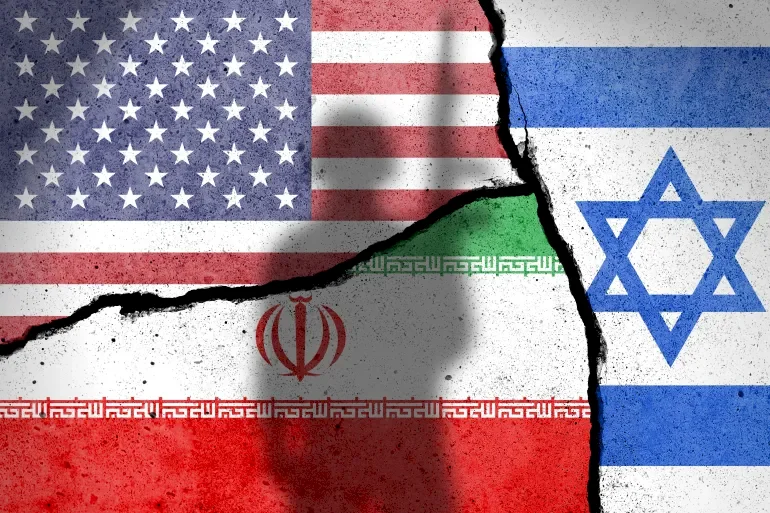
SadaNews - The military confrontation between Washington and Tehran has taken a decisive turn, with signs of what can be described as a "strategic exit" emerging. After U.S. President Donald Trump set a 48-hour deadline on Saturday night to open the Strait of Hormuz under the threat of "wiping out" the energy infrastructure, his announcement yesterday morning about extending the deadline for five days is seen as a tactical move aimed at absorbing global economic shocks.
This shift reflects a U.S. desire to achieve political gains amidst a 40% rise in oil prices, which has put significant internal pressure on the Trump administration to end the war.
While strikes against military and ballistic targets continue, the language of "constructive talks" emerges as a tool for crisis management, amidst a struggle of wills blending existential threats with the search for a settlement that ensures face-saving for all parties involved.
Negotiation Behind the Lines of Fire
The Trump administration relies on a methodology of "parallel tracks", as reports from The New York Times and The Wall Street Journal revealed that diplomatic channels have not completely ceased, but have evolved from exchanging messages to direct phone calls.
Notably, the American side is represented by Jared Kushner, Trump’s son-in-law and advisor, and Steve Mnuchin, Trump’s special envoy to the Middle East, who were involved in discussions with the Iranian side even before the outbreak of war, which gives their current movements continuity beyond the moment of military confrontation.
Iraqi and Mnuchin Phone Call
A "preparatory" phone call took place between special envoy Steve Mnuchin and Iranian Foreign Minister Abbas Araqchi, to explore avenues for de-escalation.
According to The New York Times, quoting U.S. and Iranian officials, Araqchi and Mnuchin’s phone discussions were described as preliminary talks.
The newspaper reported that Iranian officials stated Araqchi informed Mnuchin that Iran does not wish for a temporary ceasefire, but seeks a sustainable peace agreement that includes guarantees from the United States and Israel not to attack it again, and that the Iranians demanded a specific lifting of economic sanctions from the United States.
Meanwhile, Semafor reported an American official stating that U.S. strikes against Iran will continue during discussions with Iranian leaders, and that the pause in attacks for five days is limited to energy sites only and does not include military and naval sites, ballistic missiles, and the defensive industrial base.
The site added that Israel is not currently a direct party in the talks with Iran, although it is being updated that any agreement reached will also be in Israel's interest.
Semafor indicated that Trump, Mnuchin, and Kushner are currently the only ones authorized to negotiate with Iran, although J.D. Vance, the Vice President, may be brought in when necessary.
Indirect Channels
In recent days, there has been a flurry of activity by mediators from Egypt, Turkey, Pakistan, Oman, Qatar, in addition to France and Britain, to pass technical proposals regarding the protection of energy facilities.
The core of the exchanged messages focuses in Washington on the "maximum demands" for opening the Strait of Hormuz, while Tehran insists on "sovereign guarantees" and rejects the temporary technical ceasefire.
The Wall Street Journal reported that the Iranian Revolutionary Guard has demanded a new system for the strait to allow Iran to collect fees from ships, similar to what Egypt does with the Suez Canal.
However, the Israeli newspaper Israel Hayom reported from sources that a message has reached from Iran accepting at least some American conditions after Trump’s threat, and that discussions included the complete closure of the nuclear project, including the delivery of all enriched uranium, opening the Strait of Hormuz, and a commitment to cease operations against Iran’s neighbors, including Israel.
It emphasized that if the agreement means Trump’s withdrawal from the war, through an agreement on the Strait of Hormuz and partial achievement of other goals, Israel and Gulf States would oppose it, and it cannot be ruled out that Israel might continue its attacks on Iran, according to the newspaper.
Filling the "Vacuum" Left by Larijani
Mediation efforts faced a strategic dilemma following the assassination of the Secretary-General of Iran's National Security Council, Ali Larijani, who was viewed as a pragmatic interlocutor capable of understanding the West.
This vacuum prompted regional mediators, particularly Egypt and Pakistan, to search for alternative channels within the Iranian power structure.
According to reports, Egyptian intelligence succeeded in opening a direct channel with the Revolutionary Guard and proposed a "five-day ceasefire" to build trust, adding that these discussions paved the way for Trump’s shift towards diplomacy.
Meanwhile, a Pakistani role emerged after Trump’s call to army chief Asim Munir, as Islamabad is being pitched as a venue to host a summit involving U.S. and Iranian officials.
Reuters reported from a Pakistani official that U.S. Vice President J.D. Vance, Mnuchin, and Kushner are expected to meet with Iranian officials in Islamabad, and that talks to end the war could be held in Pakistan as early as this week.
Turkey has proposed holding high-level meetings, such as a meeting between the U.S. Vice President and Iranian Parliament Speaker Mohammad Baqer Qalibaf.
Negotiation Terms
Currently, the debate revolves around the "15 points" that Trump announced unilaterally as a framework for a possible agreement, prompting Iranian Parliament Speaker Mohammad Baqer Qalibaf to rush to label them as "fake news" aimed at manipulating markets.
The ceiling of ambitions between the two parties remains a topic of discussion. The U.S. calls for the complete dismantling of the nuclear program, with a potential "Russian" proposal to mediate in receiving and transferring enriched uranium outside Iran.
The U.S. and Israel also demand the cessation of the ballistic missile program and stop supporting Iran's regional proxies, along with reopening navigation in the Strait of Hormuz without preconditions.
Conversely, Iranian conditions include the need for peace to be sustainable, rejecting the temporary ceasefire, and demanding a "comprehensive and permanent" agreement that ensures the repetition of an attack on them does not occur.
Iran also demands U.S. recognition of "aggression" and payment of financial compensation for the structural damages inflicted on the country, with a specified and immediate lifting of severe economic sanctions on Tehran.
The Strait of Hormuz Dilemma
The Strait of Hormuz represents the major knot, as Trump seeks to impose shared international control, stating in his characteristic personal style: "I will control it, me and the ayatollah... whoever the next ayatollah may be."
For Trump, the prospect of negotiation provides more time to attempt to reopen the Strait of Hormuz and exit the impasse, as Hormuz typically sees 20% of global oil exports passing through it.
The consequences of the war have led to a sharp rise in oil and gas prices by up to 40% since late February, a crisis that has become worse than the oil price shocks of 1973 and 1979 combined, according to the International Energy Agency.
In contrast, the Revolutionary Guard proposed a "sovereign" plan to collect transit fees from ships, akin to the Suez Canal, which faced a firm refusal from Washington and Gulf countries, according to the Wall Street Journal.
On this front, an Iranian official told Al-Jazeera that "the issue of closing the Strait of Hormuz and planting mines remains on the table in anticipation of any reckless American action."
The Iranian Revolutionary Guard announced new attacks on American targets, asserting that "the contradictory actions of the American president will not affect the course of the battle," and that "the psychological war he utilizes is no longer effective."
The Israeli Position
The gap in "goal management" between Washington and Tel Aviv is evident. While Trump wishes to "capitalize on military achievements" to reach an agreement that ends American involvement, Israeli Prime Minister Benjamin Netanyahu sees the necessity to "exploit momentum" to continue crushing Iranian capabilities.
Netanyahu explicitly affirmed: "We are destroying the nuclear and missile program, and we will continue to do so even during negotiations," referring to the recent assassination of two Iranian nuclear scientists as evidence of Israel's lack of commitment to the American de-escalation path. He added, "We continue to attack Iran and Lebanon, and we will maintain our vital interests under all circumstances."
This contradiction places any potential agreement at risk, especially if it is a "partial" agreement that does not ensure the full dismantling of the nuclear stockpile, which Israel categorically rejects.
Agreement or a New Round of Conflict
The current scene stands on a fragile ground amid the absence of mutual trust, as Tehran denies the existence of substantive negotiations, viewing the American deadline as a "retreat resulting from fear of an Iranian response," while Washington considers it a "last chance" before moving to the phase of destroying energy facilities nationwide.
Are the ongoing discussions merely a "technical truce" to catch one's breath, or will the efforts of mediators from Islamabad, Cairo, Istanbul, and Oman succeed in crafting an agreement that ends a war that has plagued the region and impacted the global scene altogether? Or will next Friday’s deadline merely be the starting whistle for a more destructive round of conflict? The question remains whether diplomacy can tame a conflict that has crossed all traditional red lines.
 Follow the latest Sada News via Google News
Trump: We will make great progress with Beirut.. Aoun: It is time for Lebanon to be stable

The Lebanese Army Deploys in the South and Comes Under Gunfire; Israel Clarifies

Bezhkian: Directives from the Leader to End the State of No War, No Peace

Saudi Arabia condemns the Houthi threats to navigation and pledges to protect its ships

Global Warning to Americans Due to Rising Tensions in the Middle East

Houthi Movement Announces Ban on Maritime Navigation Against Saudi Arabia

Earthquake of 5.5 Magnitude Hits Western Iran
