

Report: US Intelligence Rules Out Collapse of Iranian Regime
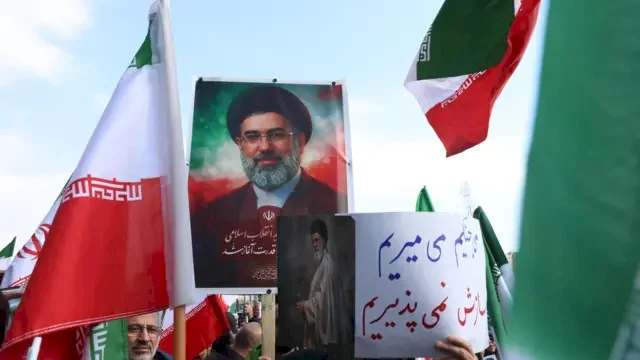
SadaNews - Three knowledgeable sources told Reuters that US intelligence has concluded that Iranian leadership remains largely intact and is not at risk of collapse anytime soon, approximately two weeks after US-Israeli bombings began.
One of the sources, all of whom requested anonymity to discuss US intelligence findings, stated that a "large number" of intelligence reports provide "consistent analyses indicating that the regime is not at risk" of collapse and that it "still holds control over Iranian public opinion."
The source added that the latest report was completed in the past few days.
With increasing political pressures due to the sharp rise in oil prices, US President Donald Trump hinted that he would end "soon" the largest US military operation since 2003. However, finding an acceptable exit strategy for the war may be difficult if leaders in Iran remain in their positions.
The intelligence reports underscore the cohesion of the ruling establishment in Iran despite the death of Supreme Leader Ali Khamenei on February 28, the first day of US and Israeli strikes.
A senior Israeli official told Reuters that Israeli officials acknowledged in closed discussions that it cannot be definitively stated that the war will lead to the collapse of the religious elite's rule.
The sources affirmed that the situation on the ground is changing and that conditions within Iran may evolve.
The Office of the Director of National Intelligence and the CIA declined to comment, and the White House did not respond to a request for comment.
Since the outbreak of the war, the United States and Israel have conducted airstrikes on a wide range of Iranian targets, including air defenses, nuclear sites, and members of the senior leadership.
The Trump administration has provided varying justifications for the war. When announcing the start of the US operation, Trump urged Iranians to "take charge of your government," but his senior aides later denied that the goal was to overthrow Iranian leadership.
Along with Khamenei, the strikes resulted in the deaths of dozens of senior officials and some top commanders of the Iranian Revolutionary Guard.
However, US intelligence reports indicate that the Revolutionary Guard and the interim leaders who took power after Khamenei's death still control the country.
Earlier this week, the Assembly of Experts announced the selection of Mojtaba, Khamenei's son, as the new leader of the country.
A fourth source knowledgeable on the subject said that Israel intends not to allow any part of the previous government to remain.
It remains unclear how the current US-Israeli military campaign will lead to the overthrow of the government.
The source clarified that this would likely require a ground attack that allows Iranians to safely protest in the streets. The Trump administration has not ruled out sending US troops to Iran.
Reuters reported last week that Iranian Kurdish factions based in Iraq were consulting with the United States on how to attack Iranian security forces in the western part of the country and whether to proceed with such actions at all.
Such an incursion could pressure Iranian security apparatuses there, potentially allowing Iranians to mobilize against the government, according to estimates published by the agency.
Abdullah Mohammadi, leader of the "Komala Party of Iranian Kurdistan," which is part of a coalition of six Iranian Kurdish parties, said in an interview on Wednesday that these parties are well-organized within Iran, explaining that "tens of thousands of youth are ready to take up arms" against the government if they receive US support.
Mohammadi added that he had received reports from the Kurdish regions of Iran indicating that units of the Revolutionary Guard and other security forces had evacuated bases and barracks out of fear of US-Israeli strikes.
He said, "We see tangible signs of weakness in the Kurdish regions."
However, recent US intelligence reports have questioned the ability of Iranian Kurdish groups to continue fighting against Iranian security forces, according to two sources familiar with these assessments.
The sources pointed out that intelligence indicates these groups lack sufficient firepower and numbers.
Another person familiar with the matter reported that Iranian Kurdish groups had asked senior US officials and members of Congress in recent days to provide them with weapons and armored vehicles.
However, Trump said on Saturday that he had ruled out allowing Iranian Kurdish groups into Iran.
 Follow the latest Sada News via Google News
Friedman: 3 Leaders Driven by Hubris into Wars with No Exit

Occupation Forces Begin Demolition of Two Houses in Nahalin and Za'tara in Bethlehem

Mamdani Acknowledges: New York Does Not Have Authority to Arrest Netanyahu (Video)

Uranium on Saudi Soil: Details of the Nuclear Agreement Between Trump and Riyadh

US Army Announces Completion of the 11th Night of Strikes on Iran

Weather: Hot conditions with a slight increase in temperatures

Morocco Hosts Formative Exercise for International Stabilization Force in Gaza
