

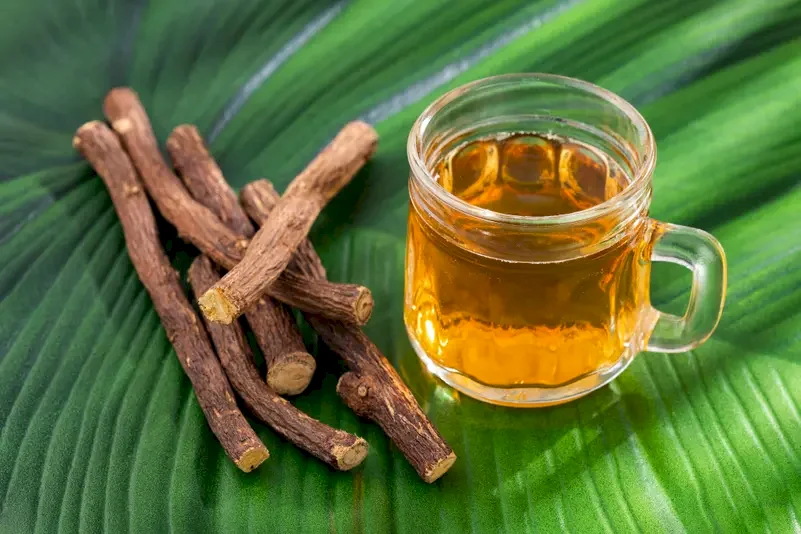
Licorice and Subia: Discover the History of Prominent Ramadan Drinks in Egypt
SadaNews - Ramadan drinks add a distinctive touch to iftar tables in Egypt, among which are Qamar al-Din and Khushaaf, in addition to Licorice, Tamarind and Subia.
Many wonder about the history of these drinks and their association with the month of Ramadan.
What is the origin of the story and the history of these drinks?
Qamar al-Din
Qamar al-Din is considered one of the most prominent Ramadan drinks in Egypt, with various stories surrounding its name.
Some accounts state that the name dates back to 1400, when the Umayyad Caliph Al-Walid bin Abdul Malik ordered the distribution of apricot juice immediately after the sighting of the Ramadan crescent moon, hence the name "Qamar al-Din."
Other stories attribute the name to one of its most famous makers, who was named Qamar al-Din.
Syria is one of the leading producers of Qamar al-Din, which is made from dried apricot slices.
The Levant became familiar with the Qamar al-Din drink during the 9th Hijri century, from where it moved to Egypt and the Maghreb countries.
It is believed that its origin was a Syrian village that carried the same name, and then it developed into "Qamar al-Din."
As for the drink Khushaaf, most accounts refer to its Turkish or Persian origins. Khushaaf represents a blend of geographically close civilizations; the term "Khushaaf" in Turkish means soaked dates, while in Persian, it refers to sweet drinks or juices.
The term "Yamish" is of Egyptian origin and dates back to the Fatimid era, meaning dried fruit.
Subia
Subia is one of the well-known drinks in the Arab world, with variations in its manufacturing methods and origins.
Egyptian Subia is characterized by its ingredients of water, milk, coconut, and vanilla.
Subia first appeared during the Mamluk era, about 800 years ago, where difficult economic conditions contributed to the spread of this drink, which was made by mixing flour, sugar, water, and pieces of coconut.
Since then, it has become an integral part of the Egyptian Ramadan table. The drink Subia has been associated with Egypt since the Mamluk era, especially during times of severe poverty when food rations were distributed to individuals.
People used these ingredients to create a drink rich in nutrients, making it a popular beverage.
Other accounts suggest that the origins of Subia date back to the ancient Egyptians' attempts to utilize leftover bread, to which they added yeast and sugar to create a refreshing drink.
Tamarind
Tamarind is considered one of the drinks most associated with Ramadan, and is an essential part of iftar tables.
Its origins trace back to India and East Tropical Africa, gaining popularity in Egypt since the Mamluk era, where it was used as an alternative to alcohol.
Dr. Mohamed Abdel Halim, a history professor at Ain Shams University, previously explained to "Al Arabiya.net" and "Al Hadath.net" that the history of tamarind drink dates back hundreds of years, and its original homeland is India and East Africa.
According to Dr. Hamza Al-Jabali's book "Secrets of Healing with Medicinal Plants, Nuts and Spices", the origin of the drink is the tamarind from India and East Tropical Africa, and it is cultivated in Southeast Asia.
Arabs imported the tamarind to their lands and referred to it as "Tamarind."
In the Mamluk era, this drink became associated with Ramadan for its ability to quench thirst, remaining a staple in Egypt up to now.
Licorice
Licorice is considered a beloved Ramadan drink for many, and it is one of the essential juices on the iftar table, enjoying numerous health benefits.
It was recommended by the Arab physician Ibn al-Baitar, who mentioned it as a remedy for liver and throat diseases, treating stomach inflammation and chest ailments, and reducing feelings of thirst.
Accounts indicate that the history of licorice in Egypt dates back to the Pharaonic era, where its seeds were found in the tomb of King Tutankhamun.
Doctors used it to add a sweet flavor to bitter medicines, making them easier to take for patients.
 Follow the latest Sada News via Google News
After Deschamps' Departure... Zinedine Zidane Tops the Candidates to Lead France

Mbappe Surpasses Messi and Becomes the All-Time Top Scorer in the World Cup

England Defeats France and Achieves Largest World Cup Achievement Since 1966

Messi Refused to Play for Spain and Missed 3 World Cups

Publishers Sue Google for Allegedly Using Books to Train Artificial Intelligence

Google Expands Capabilities of Google Search Console to Support Social Media Accounts

The Mediterranean Table... An Ancient Diet Revealing Its New Secrets for Health and Longev...
