

Amid 'Supply Shock'.. Oil and Gas Halt European Recovery
SadaNews -Europe faces a dual test with the widening war against Iran, a shock to energy that raises production and living costs, and shipping and insurance disruptions that double the "uncertainty tax" on trade and investment.
The International Monetary Fund confirmed today, Tuesday, that it is "closely monitoring" developments, pointing to disruptions in trade and economic activity, spikes in energy prices, and fluctuations in financial markets.
Oil and Gas Pressuring Recovery
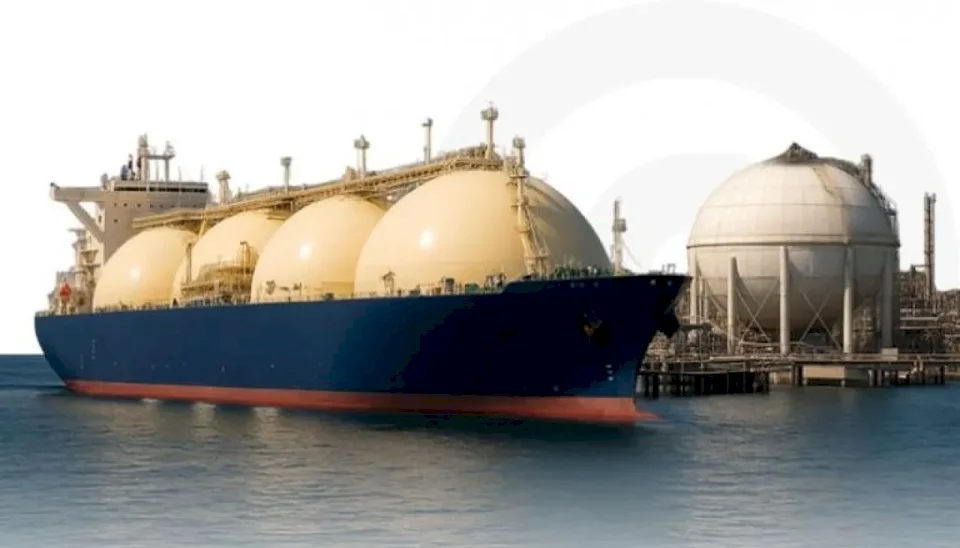
European concerns about the energy market are beginning to mount, and the British newspaper Financial Times reported that markets quickly shifted from the assumption of a "volatility shock" to fears of a "supply shock," as oil and gas prices in Europe have risen amid disruptions in liquefied natural gas production in Qatar and navigation risks in the Strait of Hormuz.
The European gas index (TTF) rose to about €55.04 (about $59) per megawatt/hour on March 3, 2026, with a sharp daily jump compared to the previous session.
Why Does Europe Seem Most Vulnerable to Energy Shock?
Europe's vulnerability stems from a structural dependence on energy imports. According to European statistical agency Eurostat, the EU's energy import dependence rate was 58.4% in 2023, which explains the rapid transmission of any geopolitical shock to prices within the continent.
Since the shock of 2022 with the outbreak of the Russian-Ukrainian war, Europe has rapidly shifted to liquefied natural gas instead of Russian pipeline gas.
The European Commission explains that structural changes in the gas market include declining demand, increasing liquefied natural gas imports, and progress in diversifying supplies away from Russia, noting that the share of liquefied natural gas in European gas supplies reached 46% in 2025.
In the same vein, a report from the Agency for the Cooperation of Energy Regulators in the EU indicates that the share of liquefied natural gas in the European gas supply mix nearly doubled compared to 2020, reaching about 40% in 2024.
Hormuz Repricing Risks
The greatest danger lies in the maritime choke point, and according to the International Energy Agency, an average of 20 million barrels per day of crude oil and its products passed through the strait in 2025, representing about 25% of global seaborne oil trade, with limited options for circumventing it.
The U.S. Energy Information Administration confirms that flows through Hormuz in 2024 and the first quarter of 2025 exceeded a quarter of global maritime oil trade, and about 20% of global liquefied natural gas trade in 2024 passed through it, most of which is from Qatar.
On this basis, the cessation of QatarEnergy's liquefied natural gas production and its derivatives has turned into an immediate pricing factor.
In a report on "Gas Market Disruptions," the Financial Times noted that the disruption of Qatari production and navigation restrictions in Hormuz have intensified global competition for liquefied natural gas shipments, while Europe is already facing a sensitive situation with low inventories after a cold winter.
Shipping and Insurance and the "Uncertainty Tax"
The shock does not stop at energy prices; the shipping pathway to Europe by sea and the cost of protection are highlighted. In the past two days, Iran has escalated pressure on navigation in the Strait of Hormuz through direct threats to ships and attacks that have damaged several tankers, resulting in at least one death among sailors, prompting major shipping companies to suspend and avoid transits and raise navigational warnings in the region.
The British newspaper The Guardian reported from shipping operations in the UK that two ships were attacked in the Strait of Hormuz, while maritime tracking sites showed a buildup of tankers on both sides due to targeting fears or insurance difficulties.
The newspaper added that the International Maritime Organization has advised ships to avoid the strait and urged shipping companies to "exercise utmost caution," while Maersk announced the suspension of traffic through the Strait of Hormuz and the Suez Canal for safety reasons.
In this context, major marine insurance companies, including Gard, Skuld, and North Standard, have canceled war risk coverage for operations in the Gulf and its vicinity effective March 5, with expectations of significant rises in premiums.
This aspect adds a direct European dimension, as any increase in insurance premiums and shipping fees means higher costs for goods imported into Europe, from energy to raw materials and intermediate products.
According to Reuters, the Greek Ministry of Shipping advised ships flying the Greek flag to exercise utmost caution and avoid the Arabian Gulf, Gulf of Oman, and Strait of Hormuz following the strikes on Iran.
Monetary Policy
Recent developments have placed the European Central Bank in a tough equation, and the Financial Times quoted the Chief Economist at the ECB, Philip Lane, warning that a prolonged conflict could cause a "huge jump" in inflation and a "sharp downturn" in output if oil and gas supplies are disrupted.
He referred to a scenario previously established by the bank's experts indicating that if a third of oil and gas flows through the Strait of Hormuz were to be disrupted, oil could rise to $130 a barrel, eurozone growth could decline by 0.6%, and inflation could increase by 0.8%.
At the same time, the Financial Times reported that eurozone inflation rose in February to 1.9% (with core inflation rising to 2.4%) in an environment where markets are increasingly sensitive to any new energy shocks, which has been reflected in traders pricing in the likelihood of tightening monetary policy later.
Europe After the Russian-Ukrainian War
After the Ukraine war, Europe has come a long way in reducing reliance on Russian energy, but the "type" of dependence has changed more than it has disappeared. The European Commission ratified a political agreement on December 2, 2025, for steps aimed at gradually ending dependence on Russian gas imports.
However, the shift to liquefied natural gas ties European energy security to long maritime supply chains and choke points like Hormuz, which reintroduces risks in a new form, including greater competition with Asia for shipments, and higher sensitivities to shipping, insurance, and maritime security.
Moreover, the continent is entering the pre-replenishing summer stock phase in a less comfortable position than usual, and the Financial Times reported last month that European gas inventories fell to their lowest seasonal level since 2022, with fill levels reaching about 43% by late January 2026, indicating that Europe will require larger shipments before next winter.
Despite this, Europe has resilience elements that were not as strong years ago, as a summary of data from the independent energy research organization Ember regarding EU electricity for 2024 indicates that the share of renewable energy reached 47% of the electricity mix, while the share of fossil fuels fell to a "historical low" of 29%.
However, these gains are concentrated in the electricity sector, while transport, heating, and heavy industry remain more sensitive to oil and gas prices, which brings us back to the reality of dependence on imports and their exposure to geopolitical shocks.
Source: AFP + Bloomberg
 Follow the latest Sada News via Google News
London Stock Exchange Enters the Era of 24/7 Trading

Shamaran Petroleum: Suspension of Oil Production in Duhok Fields in the Kurdistan Region o...

Dollar Steadies Near One-Week High Amid War Developments

Trump Imposes Tariffs on Canadian Imports... Ottawa Vows to Respond

Oil Prices Drop After Reports of Mediation Efforts Between the U.S. and Iran

Gold Price Rises Supported by Increased Buying Amid Lower Prices

Due to "Hazardous and Counterfeit Products".. Europe Fines "AliExpress" $627 Million
