

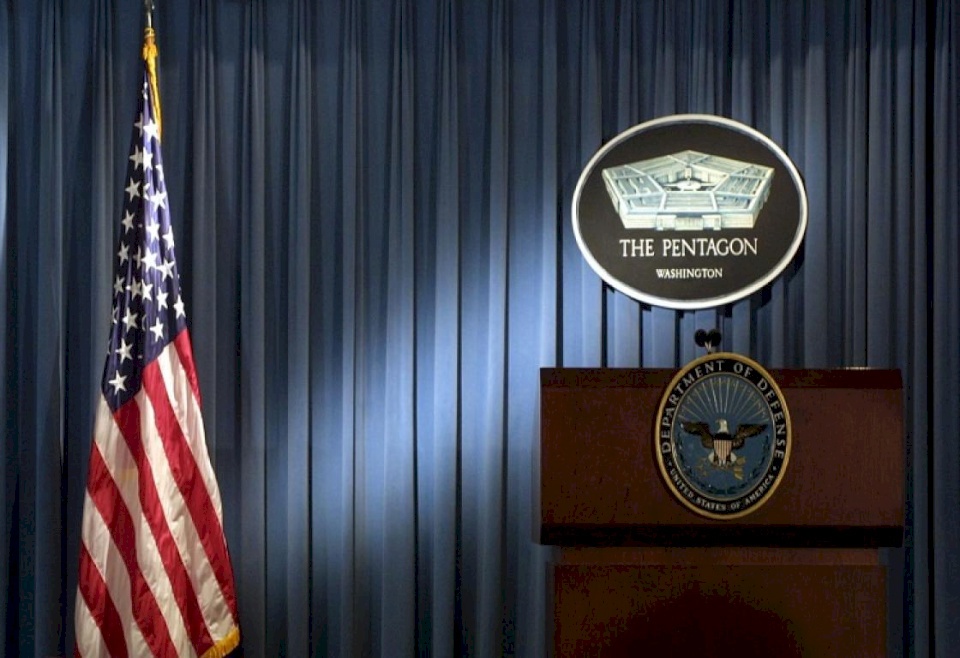
Washington Post: Pentagon Concerned About Depleting Ammunition and Loss of Control in Confrontation with Iran
SadaNews - Amid what Washington has termed "Epic Fury" operations, and following unprecedented escalation after the assassination of Iranian leader Ali Khamenei through Iranian attacks on American facilities and interests in several countries, deep fears are unfolding within the corridors of American decision-making regarding the slide of the conflict into a prolonged war.
These concerns extend beyond immediate human casualties, touching on the nerve of American military capabilities represented by air defense stockpiles, amidst an atmosphere described as "charged with suspicion" in Washington.
Nightmare of Depleting Stockpiles
The ammunition dilemma emerges as one of the biggest challenges troubling the American military leadership. The Washington Post reported, citing informed sources, that there is an increasing concern among senior military leaders regarding the continuation of fighting for weeks, which would increase pressure on already "limited" American air defense stockpiles.
An informed source summarized the size of the crisis for the newspaper by saying: "There is concern that this situation will last more than a few days.. I don’t think people have fully grasped yet what has happened to the stockpiles," referring to a costly tactical reality that "often requires two or three interceptors to stop a single incoming missile."
This concern was echoed by prominent Democratic Congressman Adam Smith, who warned that this operation will force the United States to consume ammunition supplies that are already under pressure.
He added: "At this point, it has already begun. We cannot say: wait a minute Iran, our missile defense systems are out now so we will pause for a moment, is that acceptable?.. This will drain our ability to defend everything we need to defend."
This aligns with previous warnings issued by General Dan Keen, Chairman of the Joint Chiefs of Staff, to the White House, indicating that the shortage of ammunition and lack of broad military support from allies will add significant risks to any operation in Iran, and to the exposed American personnel.
On the other side of the scene, the pace of the Iranian response appears troubling to Washington, as military officials in American operations centers reported "dozens of missiles and offensive drones launched by Iran throughout the Sunday night", according to an informed source who told the Washington Post confirming that "Iran is responding with full force".
What complicates the scene further is the "huge number of retaliatory strikes and the diversity of targeted locations" - including non-military sites in Arab countries - which raises grave concern after the deaths of numerous senior Iranian regime leaders.
This leadership vacuum has prompted American military officials to express their concerns about "who is leading these weapons and who controls them now".
This unexpected escalation has led informed figures to describe the atmosphere inside the Pentagon and among some members of President Donald Trump's administration as reflecting "growing concern that the conflict with Iran is spiraling out of control", as one source confirmed to the American newspaper that "the atmosphere here is tense and filled with doubts".
Race to Destroy Capabilities
In an attempt to preempt this danger, American forces are racing against time to strip Tehran of its claws.
The U.S. Central Command announced the destruction of more than a thousand targets, including ships, submarines, missile sites, and command centers, in less than two days. A number that reflects, according to an American official, "a highly aggressive effort to destroy as much of Iran's missile and drone launch capabilities as quickly as possible".
Despite American firepower superiority with 9 destroyers capable of intercepting missiles, forces face a significant challenge represented by "Shahed" drones, which fly slowly and at low altitude, making them "imperfect" targets for American air defenses, which explains why some attacks have breached defenses, including attacks targeting an American naval base in Bahrain.
This complex scene has resulted in the first announced American casualties in the campaign, with 3 American soldiers killed and 5 others seriously injured, in addition to minor injuries from shrapnel and concussions.
In a departure from traditional notification procedures, the Department of Defense kept the location of their deaths confidential, before two officials revealed to the Washington Post that they occurred in Kuwait, in secrecy reflecting - according to the newspaper - "the gravity of the situation for the troops deployed in the Middle East".
While President Trump acknowledges that casualties are "common in wars" and speaks of a campaign that may extend for four weeks, questions remain hanging in Washington: Can American interceptor missile stockpiles withstand consecutive Iranian attacks? Or has the wheel of sliding into the unknown already begun to turn?
Source: Washington Post
 Follow the latest Sada News via Google News
Saudi Arabia condemns the Houthi threats to navigation and pledges to protect its ships

Global Warning to Americans Due to Rising Tensions in the Middle East

Houthi Movement Announces Ban on Maritime Navigation Against Saudi Arabia

Earthquake of 5.5 Magnitude Hits Western Iran

To Enhance His Support for "Increasing Children"... Vance Announces the Birth of His Fourt...

Death of a Mosque Imam in Armed Attack in Southeastern Iran

Rubio Reveals Circumstances Surrounding the Death of an American Soldier in Iraq
