

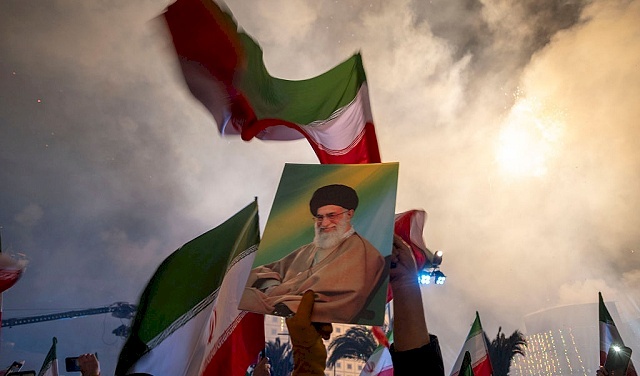
Report: New intelligence information determined the timing of Khamenei's assassination and modified attack plans
SadaNews - Israel and the United States determined the timing of the attack on Iran based on new intelligence information received by the U.S. Central Intelligence Agency (CIA) regarding the location of Iranian leader Ali Khamenei, aimed at targeting him, according to a report by the "New York Times" citing informed officials.
According to the report, the agency learned shortly before the attack that a meeting of several senior Iranian officials, including Khamenei, was scheduled for Saturday in Tehran. The sources added that the information was relayed to Israel, and the attack plans were modified accordingly.
The report stated that the CIA tracked Khamenei's movements and gathered intelligence for months prior to the strike, while Israel allocated a similar timeframe to prepare for the operation. The newspaper noted that the meeting was to be held at a compound that includes the Iranian presidency offices, Khamenei's office, and the Supreme National Security Council.
Sources indicated that Israeli estimates suggested participation from several senior officials in the meeting, including the commander of the Revolutionary Guard, the Minister of Defense, the head of the military council, the commander of the air force, and the deputy minister of intelligence. It was mentioned that these senior officials were in one building at the moment of the attack, while Khamenei was in an adjacent building at around 9:40 a.m. local time.
Two Iranian sources told Reuters that Khamenei was, shortly before his headquarters was targeted, holding a meeting at a fortified location with his senior advisors Ali Larijani, Ali Shamkhani, and other officials.
An American source indicated that the meeting was supposed to take place in the evening in Tehran, but intelligence detected that it was held on Saturday morning, leading to the timing of the attack being moved up.
For its part, the "Wall Street Journal" reported that Israeli and American intelligence waited "a long time" for what was termed a "rare opportunity," where many senior political and military leaders were gathered in one location.
The newspaper added, citing Israeli sources, that intelligence monitored three simultaneous meetings of senior officials on Saturday morning, including the meeting with Khamenei, and the decision was made to execute the attack in broad daylight.
According to the report, Israeli aircraft dropped around 30 bombs on Khamenei's residential compound, resulting in extensive destruction on site. In related news, the "CBS" network reported that around 40 Iranian officials were killed in the U.S. and Israeli strikes.
Reports indicated that previous estimates within the CIA suggested that Khamenei might be replaced by more hardline figures from within the Revolutionary Guard.
The "New York Times" stated that part of the information regarding the meeting location and Khamenei's whereabouts was obtained through close intelligence cooperation between Israel and the United States, and this coordination contributed to determining the timing of the operation's initiation.
On Sunday morning, Iran announced Khamenei's death, confirming that he was killed in his office, while the authorities declared a 40-day official mourning period. State media also reported that Khamenei's daughter, grandson, and two relatives were killed in the U.S.-Israeli attacks.
Before the official announcement in Tehran, U.S. President Donald Trump announced Khamenei's death. He wrote on his platform "Truth Social" that Khamenei "could not hide from the evolving intelligence systems that worked in close coordination with Israel," adding that what happened "is a good opportunity for the Iranian people to regain their state."
Trump stated that strikes on Iran would continue throughout the week "until we achieve peace in the Middle East and the whole world," calling on the Revolutionary Guard elements and security forces to "work with the patriotic Iranians."
For his part, a Trump administration official claimed to Reuters yesterday that the United States had indications that Iran was planning to launch a preemptive strike. He added that waiting "would have led to greater losses," indicating that Tehran refused to discuss its ballistic missile program and the activities of its allies in the region during negotiations.
The official stated that intelligence had reached the administration indicating that Iran had started to rebuild the sites that were destroyed in the war that took place last June. The validity of this information could not be independently verified.
 Follow the latest Sada News via Google News
Bezhkian: Directives from the Leader to End the State of No War, No Peace

Saudi Arabia condemns the Houthi threats to navigation and pledges to protect its ships

Global Warning to Americans Due to Rising Tensions in the Middle East

Houthi Movement Announces Ban on Maritime Navigation Against Saudi Arabia

Earthquake of 5.5 Magnitude Hits Western Iran

To Enhance His Support for "Increasing Children"... Vance Announces the Birth of His Fourt...

Death of a Mosque Imam in Armed Attack in Southeastern Iran
