

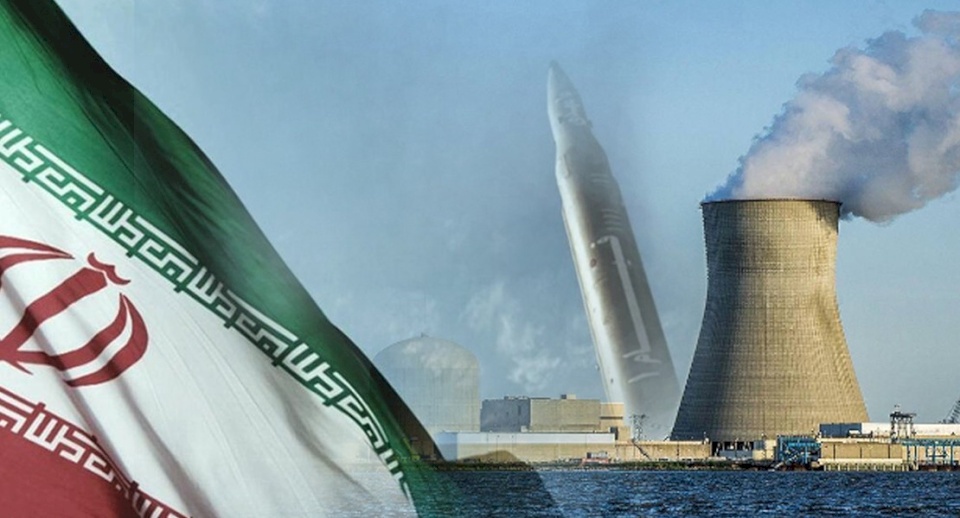
Geneva Round: Nuclear Negotiation Between the Logic of "Decisiveness" and "Zero Enrichment"
SadaNews - Ahead of the second round of U.S.-Iranian talks scheduled in Geneva on Tuesday, there are no clear signs of a fundamental change in the positions of either party, which lowers expectations for a possible breakthrough that could dispel fears of a new war in the Middle East that could escalate into a wider regional conflict.
The round comes under Omani sponsorship, following a previous session held in early February in Muscat, amidst the absence of any official announcement regarding the nature of the concessions demanded by Washington concerning the Iranian nuclear program, in exchange for Tehran's insistence on adhering to what it describes as its rights, while warning of a "painful" response if it faces a new attack.
In contrast, U.S. President Donald Trump continues to send contradictory messages. He sometimes announces that reaching an agreement is possible, then hours later dismisses the possibility of concluding an agreement, blaming Tehran, and threatening dire consequences if the talks reach an impasse.
In response to a question about regime change in Iran, Trump stated that it could be "the best thing that could happen," a remark widely interpreted as an indication of a broader goal sought by Washington, but at the lowest possible cost.
Despite the increasing U.S. military buildup in the region, including the deployment of a second aircraft carrier group, the U.S. administration claims that it prefers a diplomatic solution, yet at the same time intensifies pressure ahead of the Geneva round, amid Trump's desire not to negotiate indefinitely.
Iran's Readiness for Agreement... Conditioned on Lifting Sanctions
For his part, Iranian Deputy Foreign Minister Majid Takht Ravanchi, in an interview with the BBC, stated that Iran is ready to consider making concessions if the United States shows willingness to discuss lifting the sanctions.
He confirmed that the ball is now "in America's court to prove its desire to strike a deal," adding, "If they are sincere, I am sure we will be on the right path toward an agreement."
He clarified that the second round in Geneva "is largely moving in a positive direction, but it is too early to judge it," noting that Iran will head to the talks "hoping to reach an agreement," emphasizing: "We will make our effort, but the other side must also prove its sincerity."
He revealed that Tehran's offer to reduce uranium enrichment to 60% is evidence of its readiness to compromise, stating: "We are ready to discuss this matter and other issues related to our program if they are prepared to discuss the sanctions," without confirming whether this includes lifting all or part of the sanctions.
Regarding the possibility of transferring high-enriched uranium stockpiles out of the country as was done in the 2015 agreement, he said: "It is too early to speculate on what will happen during the negotiations."
He emphasized that Iran insists on limiting the negotiations to the nuclear file, adding: "We understand that they have come to the conclusion that if you want to reach an agreement, you must focus on the nuclear issue."
He considered that the demand for "zero enrichment" represents a "red line," affirming that "the issue of zero enrichment is no longer on the table, and for Iran, it is not negotiable," in contrast to Trump's statement that "we don’t want any enrichment."
He reiterated his country's refusal to discuss the ballistic missile program, stating: "When we were attacked by the Israelis and Americans, our missiles saved us, so how can we accept depriving ourselves of our defensive capabilities?"
He expressed concern about the conflicting U.S. messages, saying: "We hear that they are interested in negotiations. They have stated this publicly, and in private talks through Oman, they expressed their desire to resolve these issues peacefully," but he noted that Trump's recent statements regarding regime change raise suspicions.
Regarding the U.S. military buildup, he warned that any new war would be "painful, and everyone will suffer, especially those who initiated this aggression," adding: "If we feel this is an existential threat, we will respond accordingly." He continued: "It is not wise even to consider such a dangerously intense scenario, as the whole region would plunge into chaos."
In turn, a U.S. official stated that envoy Steve Biegun spoke last week to Omani Foreign Minister Badr al-Busaidi and conveyed messages regarding the nuclear talks to be delivered to the Iranians.
Axios reported that the Omani minister prepared a document based on his conversation with Biegun and handed it to the Secretary of Iran's Supreme National Security Council, Ali Larijani, during his visit to Muscat last Tuesday, which Larijani confirmed in an interview with Iranian state television.
In this context, the report indicated that Trump and Israeli Prime Minister Benjamin Netanyahu agreed during their meeting in the White House to increase economic pressure on Iran, especially regarding oil sales to China, which imports more than 80% of Iranian oil exports, in a move believed to push Tehran to make further concessions.
Reports suggest that the "maximum pressure" campaign will be implemented alongside the nuclear talks and the ongoing military buildup in anticipation of a possible diplomatic failure.
"The Biggest Obstacle... Crisis of Trust"
In light of this complex equation, analysts view the trust crisis between the two sides as the biggest obstacle to making actual progress, while Israel's desire to close the negotiation window and carry out extensive military action against Iran is clear.
Questions also arise about Tel Aviv's position if Washington and Tehran reach an agreement limited to the nuclear file without addressing the ballistic missile program, and whether the United States and Israel will adopt a new narrative to justify any potential escalation in that case.
Amid rising military pressure, contradictory statements, and conditional Iranian readiness, the Geneva negotiations enter a sensitive phase where the path of diplomacy intersects with deterrent calculations, and the prospects for agreement or confrontation remain open on both sides.
 Follow the latest Sada News via Google News
Jordanian Army Intercepts 4 Iranian Missiles and 4 Drones

Death of a Moroccan Man During His Arrest in Italy Sparks Calls for Investigation

Due to Trump's Sanctions.. Canada Cancels Joint Ceremony with the US for Bridge Opening

Trump: We will make great progress with Beirut.. Aoun: It is time for Lebanon to be stable

The Lebanese Army Deploys in the South and Comes Under Gunfire; Israel Clarifies

Bezhkian: Directives from the Leader to End the State of No War, No Peace

Meeting Between Aoun and Trump Expected Alongside 'Experimental Areas'
