

Secrets of Clouds, Tongue Print, and Honey... Scientific Facts That Will Astonish You
SadaNews - There are some scientific facts that astonish us simply by reading about them or diving into their details, starting from the clouds in the sky to the bee colonies on earth, and even certain matters related to the bodies of humans, such as the tongue which has a print, perhaps we have never heard of before.
Data about clouds collected by NASA provides scientists with essential information to understand how they work, their contribution to changing weather, and their impact on the Earth's climate.
Clouds are extremely important, and it is surprising that a cumulonimbus cloud can weigh over 500 tons, yet airplanes fly through them without being affected.
Clouds are made up of water or ice and come in more than twelve types, ranging in height from ground level up to 280,000 feet in the Earth's atmosphere. They water the lands, form part of hurricane strength, and contribute to warming and cooling our planet, and at times hinder monitoring operations or difficult missions.
Cloud research is a vital part of Earth sciences at NASA, where many past, current, and future missions are dedicated to understanding how they form and function, and their role in the health of Earth's climate. NASA collects cloud data using ground, aerial, and space-based instruments to analyze their dynamics, properties, and lifecycle.
Tongue Print... and Identity
As for the human tongue, scientists have revealed that it holds more distinctive secrets than one might think, as the surface of the tongue is covered with small bumps called papillae. Some of these papillae, like the fungiform papillae, house taste buds, which are essential for flavor perception.
Others, like the filiform papillae, are more related to texture and friction, helping to control food and liquids, even affecting the feeling of fullness.
There are also minute details and individual prints engraved on this oral canvas, which have largely remained a mystery. In this context, a new and exciting research comes into play, employing the power of machine learning and an advanced mathematical tool known as topological data analysis.
Scientists captured 3D images of thousands of these papillae - over 2000 papillae in this study. Instead of merely viewing the bumps, scientists began analyzing their shapes, curvatures, and complex geometric properties. It is akin to looking at a fingerprint, but for the tongue.
Even more astonishing, is that tongue papillae have unique characteristics for each individual. Research indicates that from just one papilla, a person can be identified with an accuracy of up to 48% within a group of 15 participants.
The Kingdom of Bees
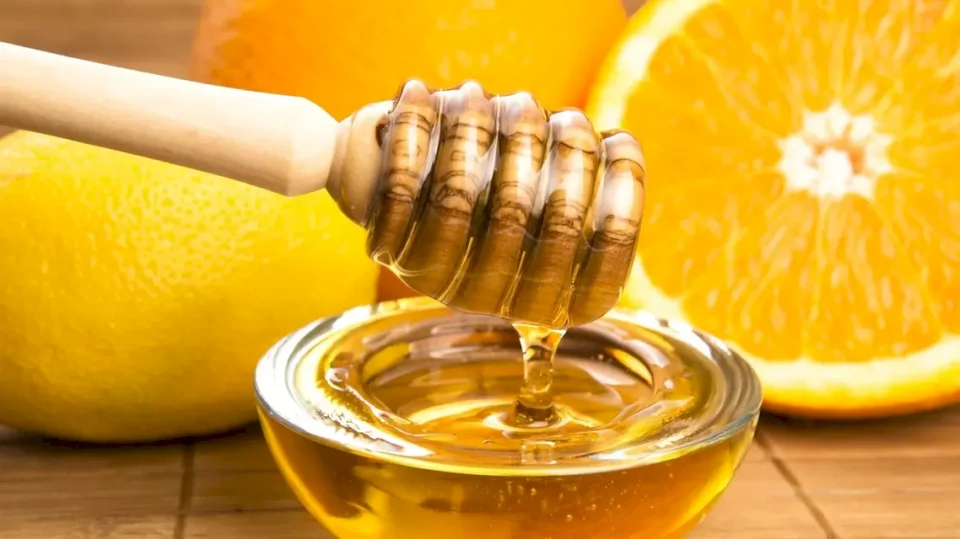
From the taste papillae on the human tongue to the kingdom of bees, where a worker bee produces on average the equivalent of 1/12 of a teaspoon of honey throughout her life, which usually lasts only a few weeks in the summer.
To produce just 450 grams of honey, bees must collect nectar from approximately two million flowers and travel a total distance of 88,000 kilometers. In other words, just one teaspoon of honey equates to the production of 12 worker bees over their entire lifespans.
 Follow the latest Sada News via Google News
"Backrooms": From Digital Legend to Cinematic Phenomenon

Prediabetes.. The Silent Bomb Carried by Millions Without Their Knowledge

From Sweden 1958 to the Epic of Egypt 2026.. Argentina's History with World Cup Comebacks

After the South Africa Precedent.. Nigeria Investigates the Encroachment of Technology Com...

Argentine Admission and Global Consensus on the Referee's Injustice to Egypt's National Te...

The Danger From the Right: French Media Highlights Morocco's Key Weapons

Illness Strikes Norway's Camp Ahead of England Match in World Cup 2026
