

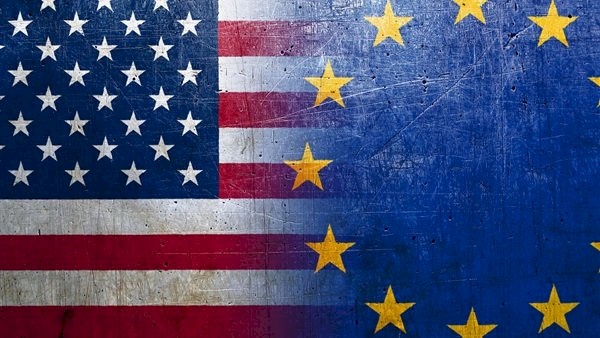
After Raiding "X" Offices.. Europe Declares War on American Tech Companies
SadaNews - European countries have launched their broadest campaign yet against social media platforms, with an increasing number of nations considering banning these services for minors, a move that paves the way for a new confrontation with some of America’s largest companies.
Australia was the first to implement this ban, which covered platforms like "Meta Platforms" such as "Instagram" and "Facebook", alongside "Snap", Elon Musk's "X" platform, "TikTok", and Google-owned "YouTube".
Today, this step is resonating increasingly in Europe, amid threats to block these services for millions of young users, which regulatory bodies describe as harmful and addictive, putting essential advertising revenues at risk.
Heated Debate Between Musk and Spain's Prime Minister
The controversy took a political and ideological turn, even becoming personal, when Spain became the latest country to propose a ban on these services. It turned into a public confrontation between the Spanish socialist leader and Elon Musk, who had previously called for the dismantling of the European Union, and his "X" offices in Paris were raided.
Prime Minister Pedro Sánchez said in a speech delivered in Dubai on Tuesday: "Social media platforms have become a failed state." He added, "I realize it won't be easy. Social media companies are wealthier and more powerful than many countries, including my own. But their power and influence should not intimidate us."
Musk Responds
Musk responded hours later via "X", stating: "Dirty Sánchez is a tyrant and a traitor to the Spanish people."
With at least six other countries—France, the United Kingdom, Portugal, Denmark, Greece, and the Netherlands—alongside the European Union considering similar restrictions, these movements reflect a clear trajectory for upcoming policies and simultaneously escalate the cultural war with the Trump administration and some of the world’s wealthiest individuals.
"Grokk" Fuels European Anger
Representatives from "Meta Platforms", "Snap", "TikTok", "YouTube", and "X" did not respond to requests for comment.
While European regulators have repeatedly criticized American social media companies for monopolistic practices, the widespread acquisition of user data and the proliferation of harmful content across these platforms have contributed to rising hostility toward Silicon Valley in recent weeks.
This is largely due to the wave of outrage sparked by the "Grokk" chatbot from "XA AI", after it produced millions of sexual images without the consent of their owners on the "X" platform. Many of the images included women, but some naked images also featured children.
The company said it would restrict the use of the tool, but regulatory bodies around the world hastened to act, making the issue a hot topic among politicians and voters who have become increasingly sensitive to the matter.
Potential Confrontation Between Europe and America
European moves could lead to a retaliatory response from U.S. President Donald Trump and his inner circle, as he has directed his attacks more than once toward Europe, while the transatlantic partnership, a cornerstone of the global order for the past eight decades, appears closer to collapse.
Trump urged Europe in December to "exercise extreme caution" after tech regulators in the European Union imposed a $140 million fine on the "X" platform for violating digital content rules.
Also read: European Union fines "X" amid free speech dispute with America
Following the debates at the World Economic Forum in Davos, tensions may resurge later this month during the Munich Security Conference, where U.S. Vice President J.D. Vance accused Europeans last year of engaging in "digital censorship".
The personal animosity intensified when Sánchez accused Elon Musk of spreading "misleading information" regarding Spain's initiative to regularize undocumented immigrants, after the billionaire had previously shared a post describing the measure as "electoral engineering."
Zach Myers, research director at the "Center for Regulation in Europe", said: "At the beginning of Trump’s presidency, there were fears of retaliatory responses if countries took a tough stance against major tech companies, but those fears have somewhat diminished in recent months."
Financial Losses Threaten Tech Companies
Platforms face significant losses if they are banned from younger users since platforms like "TikTok" and "Snapchat" have thrived on the engagement of teenagers, whose preferences for features like filters, vertical video, and ephemeral posts have reshaped consumer app design more broadly.
"YouTube" has a wide user base of children, exposing it to frequent political scrutiny in the past.
However, these very features are seen as addictive, while several of the largest platforms are facing lawsuits in the United States, amid accusations that their products are harmful to youth.
Europe is the second largest market for many tech companies after North America, due to the widespread adoption of digital technologies and the maturity of the online advertising ecosystem. For both "Snap" and "Meta Platforms", revenue growth in Europe is outpacing that in the United States.
Alethia Garcia-Herrero, senior researcher at "Bruegel", stated: "Europe is the cash cow for big tech companies, so this is a major problem for them," adding that the United States may view any potential ban as a politically charged step.
Challenges Facing Platform Bans
However, implementing such restrictions is not an easy task, as experts in digital policy also question the availability of sufficient evidence that bans would actually encourage children to spend more time offline.
Australia was the first country in the world to tighten restrictions on children using social media platforms, after tech companies closed accounts of around five million children under the age of sixteen in December.
Tech platforms consider banning services to minors as an extremely complex, if not impossible, task which may lead to broader problems.
Age verification mechanisms may require sharing sensitive documents, such as driving licenses or passports, exposing users to risks of cyber breaches or misuse of data. Bans may also push users toward less legitimate platforms.
Countries seeking to replicate the Australian experience will face challenges unique to each nation.
France and Britain Tighten Restrictions
In France, President Emmanuel Macron has strongly supported imposing age restrictions on social media use. In 2024, he described screen addiction as "a fertile ground for various problems, from bullying and violence to school dropout".
Last week, the French National Assembly approved a ban on these platforms for children under the age of fifteen, with the bill set to be passed to the Senate for further approval.
However, France has encountered difficulties in implementing other measures to regulate online content. The recently passed law banning pornography for minors required users to verify their ages through third-party services, but several indicators showed that a large number of internet users resorted to virtual private networks (VPNs) to hide their identities and circumvent restrictions.
French Minister for Artificial Intelligence and Digital Affairs, Anne Lo Inav, said in a television statement last week: "VPNs are the next item on my agenda."
Similar concerns have arisen in the UK when implementing age verification mechanisms, while the government is currently consulting on other options, including restricting access by age group, enforcing phone usage blackout times, and implementing controls on addictive digital designs. Final decisions on this matter are expected to be made during the summer.
British technology minister Liz Kendall stated in an interview last month: "There’s no point in consulting if you’ve already made your decision." She added, "There are different opinions that each side is strongly attached to."
 Follow the latest Sada News via Google News
After Deschamps' Departure... Zinedine Zidane Tops the Candidates to Lead France

Mbappe Surpasses Messi and Becomes the All-Time Top Scorer in the World Cup

England Defeats France and Achieves Largest World Cup Achievement Since 1966

Messi Refused to Play for Spain and Missed 3 World Cups

Publishers Sue Google for Allegedly Using Books to Train Artificial Intelligence

Google Expands Capabilities of Google Search Console to Support Social Media Accounts

The Mediterranean Table... An Ancient Diet Revealing Its New Secrets for Health and Longev...
