

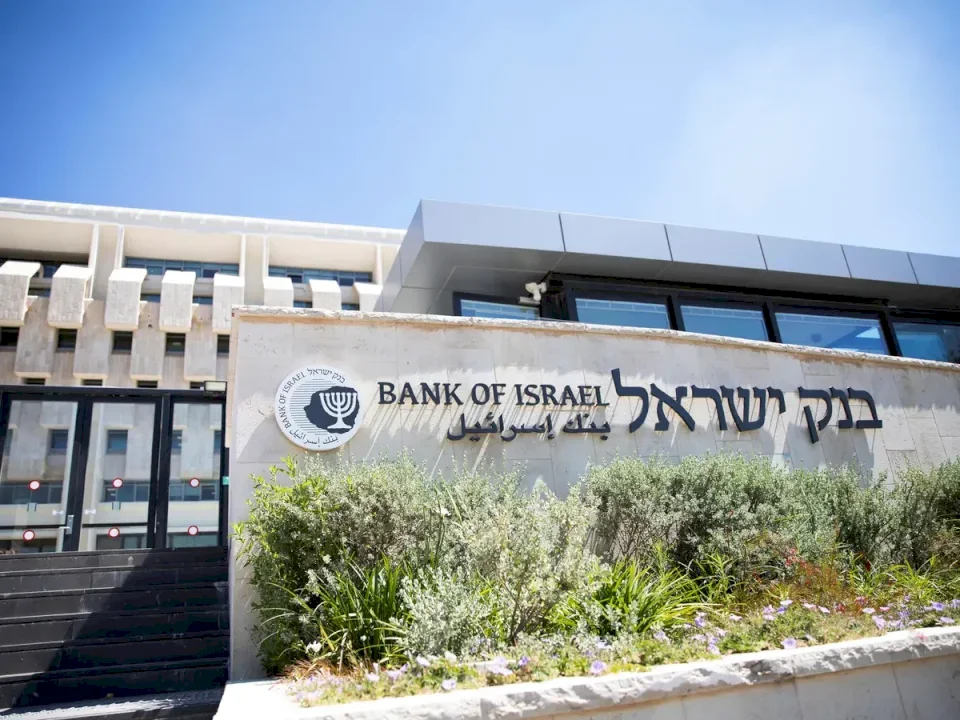
As Long as the Ceasefire with Iran Continues: The Market Expects a Rate Cut in Israel Next Monday
SadaNews - Israeli capital markets currently anticipate a 60% chance of a rate cut in the upcoming decision by the Bank of Israel, scheduled for next Monday. Economists also agree that the Bank of Israel will lower interest rates as long as the ceasefire with Iran continues during the holiday and until the decision is announced.
According to Sada's economic translation, Modi Shafer, "Senior Market Strategist at Bank Hapoalim," estimates that if tensions with Iran do not escalate again, it is highly likely that the Bank of Israel will cut interest rates as early as next week. According to him, this assessment is based on "the strength of the shekel, the high level of interest rates compared to global markets, the sharp decline in core inflation in April, and expectations that inflation will remain within the target range next year (with risks of it declining)." He adds: "The market currently expects a rate cut on Monday with a probability of between 60% and 65%. We still insist on our assessment that the Bank of Israel will cut interest rates two or three times over the next year."
The investment firm IBI also expects the Bank of Israel to reduce the interest rate in one of the upcoming decisions, if not in the next decision, then in early July. This week, Rafi Gozlan, Chief Economist at IBI, noted that the consumer price index for April rose by 1.2%, which is slightly below initial estimates. According to him, in the context of inflation, "the impact of the shekel's appreciation was minimal in April, and overall, the transmission of inflation from the relatively low exchange rate has been weak. In contrast, April saw a relatively surprising weakness in the housing sector and stability in food prices," as translated by Sada's economy team.
The Bank of Israel expects an inflation rate of 2.1% for the next year. He explained: "From the Bank of Israel's perspective, the stability of inflation around the target level, especially amid a moderating housing market that is considered more stable, along with the sharp appreciation of the shekel, supports a certain downward adjustment in interest rates."
On the other hand, the geopolitical uncertainty, the expected increase in government spending following poor performance in the first quarter of the year, and rising global inflation expectations, accompanied by similar expectations for interest rate hikes, are factors supporting the stability of interest rates. According to our assessment, it is reasonable to expect a rate cut in one of the next two decisions, but this anticipated decision will be influenced by geopolitical developments. That is, assuming there is no significant deterioration in the geopolitical situation, we expect a rate cut; however, if the situation worsens, the rate cut will be postponed.
How Will a Rate Cut Affect the Shekel?
In recent weeks, "pressures have increased on the Governor of the Israeli Central Bank," Professor Amir Yaron, to cut interest rates, given the depreciation of the dollar to around 2.9 shekels and its impact on the local industry and exporters. Nevertheless, senior officials at the Bank of Israel have previously clarified that interest rates are a broad economic tool, and decisions are not made solely based on the foreign exchange market but also according to inflation developments, geopolitical conditions, and financial circumstances.
Ronen Menachem, Chief Economist at Mizrahi Tefahot Bank, is skeptical about the impact of a 25 basis point rate cut on the shekel's exchange rate. He says: "In short, the Bank of Israel can cut the interest rate on Monday (by 25 basis points), as both actual inflation (1.9%) and inflation expectations (1.7%) are in the middle of the target range (1-3%), assuming there is no real change in the security situation over the remaining days. The decline in the government budget deficit to 3.8% of GDP and the appreciation of the shekel that curbs inflation also support this trend."
However, Menachem warned that the contraction of the deficit was achieved, among other things, through one-time revenues, which are unlikely to recur, and that the appreciation of the shekel at this stage was no longer proceeding at the same pace. Additionally, he pointed out that the composite economic index for April, published by the Bank of Israel, showed a growth rate that was below the long-term trend.
On the other hand, "Since the decision was made after the publication of the high April index, and since the GDP data for the first quarter, which were published in the meantime, were much better than expected, I would not be surprised if the rate cut is postponed for another month, out of caution. It should be noted that the economic discourse in many countries around the world indicates that interest rates will remain steady, and possibly even rise in the coming months. A local interest rate cut under these circumstances is more complex, but not impossible."
The pressures on the Bank of Israel extend not only to interest rates but also to the possibility of purchasing foreign currencies to curb the appreciation of the shekel. Menachem sees the possibility of a rate cut alongside foreign currency purchases as present, but extremely slim, partly because the inflation rate has not yet reached the minimum target.
He added: "In any case, it is important to read the explanatory notes carefully (in the absence of new economic forecasts this time), especially since the most recent published forecasts assumed the end of the 'roaring hawk' process and fighting in Lebanon by the end of April, but otherwise, tensions continue. Even if the interest rate is cut by a quarter percent, it is doubtful that it would have a real impact on various economic indicators, including the shekel's exchange rate," according to Sada's economic translation, citing a Hebrew report.
 Follow the latest Sada News via Google News
The World Bank Warns: "The Worst-Case Scenario" for Global Growth is Approaching

Trump Prepares to Impose New Tariffs on Dozens of Economies

Gold Surpasses $4,100 as Selling Pressure Eases

Oil Rises for the Fourth Day as Supply Risks Escalate

An Additional $8 Billion.. A New Account from the Pentagon on the Cost of the War with Ira...

London Stock Exchange Enters the Era of 24/7 Trading

Shamaran Petroleum: Suspension of Oil Production in Duhok Fields in the Kurdistan Region o...
